Sea Fl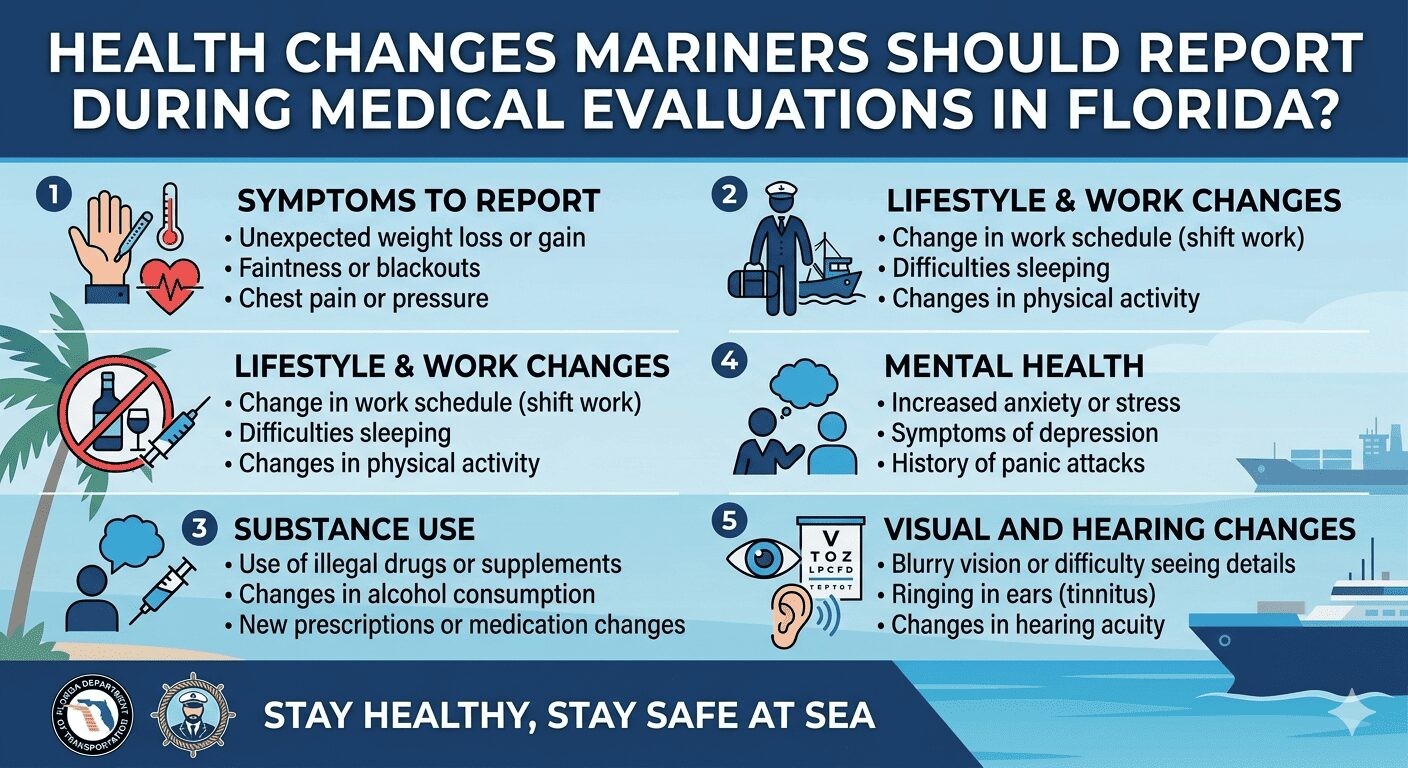
Working as a mariner demands physical resilience, mental sharpness, and the ability to handle unpredictable environments. Because the ocean is an unforgiving workplace, maintaining a valid medical certificate is a fundamental requirement for anyone operating commercial vessels. But what happens when your health status changes between evaluations?
Navigating the medical certification process can feel intimidating, especially when you have experienced a recent health issue. You might worry that disclosing a new medication or a recent surgery will automatically cost you your livelihood. In reality, withholding medical information is far more likely to jeopardize your career and your safety.
This guide breaks down exactly what health changes you need to report during your next evaluation. We will explore everything from new prescriptions to sleep disorders, explaining why this information matters and how proper documentation can actually streamline your approval process.
Why Accurate Health Reporting Matters for Mariners
Maritime environments present unique safety considerations. You are often working in remote locations with limited access to emergency medical care. A minor health complication on land can quickly escalate into a life-threatening crisis at sea. Accurate health reporting ensures you are physically capable of handling both routine duties and emergency procedures.
Maintaining certification compliance also requires complete transparency. Providing your examiner with a complete medical history helps prevent future complications. There is a distinct difference between reporting a condition and being disqualified. In most cases, a new diagnosis simply requires proper management and documentation. Honesty during your evaluation helps you avoid unexpected certification delays later on.
New Medical Diagnoses Should Always Be Discussed
Many mariners are unsure whether new diagnoses need to be reported to their examiner. The short answer is yes. Recently diagnosed conditions, as well as updates to chronic illnesses, play a significant role in your overall fitness for duty.
You should always disclose cardiovascular conditions, respiratory disorders, and neurological concerns. Sharing relevant medical updates allows the examiner to understand your current health status. Bringing documentation from your treating physician helps support your evaluation, proving that your condition is stable and appropriately managed.
Changes in Prescription Medications Can Affect Medical Reviews
Medication regimens frequently change over time. You must report any new prescriptions, medication dosage changes, and long-term medication use during your medical review.
Medications are reviewed during evaluations because some drugs have potential side effects that could impair your ability to work safely. For example, certain medications cause drowsiness or dizziness, which are dangerous when operating heavy machinery or navigating vessels. Discussing your treatment plans and keeping your medication lists updated helps the examiner verify that your prescriptions will not interfere with your maritime duties.
Recent Surgeries and Medical Procedures Should Be Reported
If you have gone under the knife since your last exam, you need to share that information. Surgical procedures, hospital stays, and your current recovery status are critical components of your medical history.
Examiners need to know about your follow-up care and any return-to-work recommendations provided by your surgeon. They may request additional records to confirm that you have fully healed and have no physical limitations. Demonstrating successful recovery through official medical documentation is the best way to keep your certification on track.
Cardiovascular Health Changes Often Require Additional Attention
Heart-related issues are among the most commonly reviewed medical concerns in the maritime industry. Cardiovascular health changes require careful assessment because physical exertion and high-stress situations are routine at sea.
Be sure to report any history of high blood pressure, heart procedures, arrhythmias, or chest pain evaluations. If you have undergone recent cardiac testing, bring those results with you. Providing thorough cardiology documentation when applicable is vital for proving your heart is healthy enough for the demands of maritime work.
Vision and Hearing Changes Should Not Be Overlooked
Sensory abilities are crucial for maritime safety. You rely on clear vision and sharp hearing to navigate safely, communicate with crew members, and interpret warning signals.
Do not overlook changes to your vision or hearing. Report any new corrective lenses, noticeable vision changes, hearing loss, or hearing aid use. If you have had eye surgeries, such as LASIK or cataract removal, you must disclose them. Common follow-up requirements often include updated vision or audiometry tests to ensure you meet the required sensory standards.
Mental Health Updates May Need to Be Disclosed
Mental well-being is just as important as physical health. Working away from home for extended periods can take a toll, and mental health conditions are increasingly recognized and treated within the maritime community.
You should disclose updates regarding anxiety, depression, counseling history, PTSD, or ADHD. The primary focus is on treatment stability. Providing supporting documentation from a mental health professional showing that your condition is well-managed will help facilitate a smooth evaluation process.
Sleep Disorders and Fatigue-Related Conditions
Many mariners underestimate the importance of reporting sleep-related conditions. However, fatigue is a leading cause of maritime accidents. Conditions like sleep apnea and excessive daytime sleepiness directly impact work performance and safety.
If you have undergone sleep studies or use a CPAP machine, you must share this information. Examiners will look closely at treatment compliance. Proving that your sleep disorder is effectively managed reassures the examiner that you are alert and capable of standing watch safely.
What Documentation Should Mariners Bring When Reporting Health Changes?
Walking into an exam empty-handed after a major health change is a guaranteed way to experience certification delays. Come prepared with physician reports, specialist evaluations, and updated medication lists.
You should also bring diagnostic testing results and comprehensive treatment summaries. A Medical Examiner For Mariners in Florida may request supporting records when significant health changes require additional review. Having these documents ready saves time and provides the clinical evidence needed to clear you for duty.
How Reporting Health Changes Can Help Prevent Certification Delays
Early preparation is your best defense against processing delays. When you arrive with organized records and proof that you are following treatment recommendations, the evaluation moves much faster.
Timely specialist evaluations and clear communication with your examiner show that you take your health seriously. Proactive preparation benefits mariners by eliminating the need for back-and-forth paperwork. By gathering your records ahead of time, you effectively avoid last-minute issues that could keep you off the water.
Understanding the Role of the Medical Examiner
The medical examiner’s job is not to look for reasons to fail you; their job is to ensure maritime safety. They achieve this by reviewing your health history and assessing your current fitness for duty based on established standards.
A Medical Examiner for Coast Guards and maritime personnel evaluates reported health changes to help ensure individuals can safely perform their duties while meeting certification standards. They determine whether additional documentation is needed and explain the next steps in the process. Many mariners throughout Florida choose Sea Medicine because of our experience helping maritime professionals navigate certification requirements, documentation requests, and medical evaluations.
Reporting Health Changes Helps Protect Both Safety and Certification
Reporting health changes does not automatically mean you will face certification problems. In many cases, updated information simply helps examiners make informed decisions and determine whether any additional documentation is needed. Mariners who stay proactive, maintain accurate records, and communicate openly about their health are often better positioned to navigate the certification process smoothly and maintain their ability to work safely at sea.
If you need guidance on your upcoming evaluation or want to ensure your medical documentation is in order, Sea Medicine is here to help. Our experienced team understands the specific requirements of maritime medical exams and will work with you to keep your career moving forward.
Ready to schedule your maritime medical evaluation? Contact Sea Medicine today to book your appointment and stay cleared for duty.
People Also Ask
1. What medical conditions should mariners report during certification exams?
Mariners should report all new medical diagnoses, updates to chronic conditions, recent surgeries, cardiovascular issues, mental health conditions, sleep disorders, and any changes in vision or hearing.
2. Do medication changes need to be disclosed during maritime medical evaluations?
Yes. All new prescriptions, dosage adjustments, and over-the-counter medications taken regularly must be reported so the examiner can evaluate potential side effects like drowsiness or dizziness.
3. Can a recent surgery affect maritime certification?
A recent surgery will require review, but it does not automatically disqualify you. You will need to provide documentation showing successful recovery, follow-up care, and a full medical release to return to work without restrictions.
4. What documents should I bring to a maritime medical exam?
Bring a complete list of current medications, recent diagnostic test results, specialist clearances (such as cardiology or sleep medicine reports), and a summary of care from your primary physician regarding any new or chronic conditions.
5. Will reporting a health condition automatically disqualify me from working at sea?
No. Honesty does not equal disqualification. Most conditions, when properly managed and documented, will still allow you to maintain your certification. Withholding information is far more risky to your certification status.


 Pilot Center
 Clean Linen