Pilot Center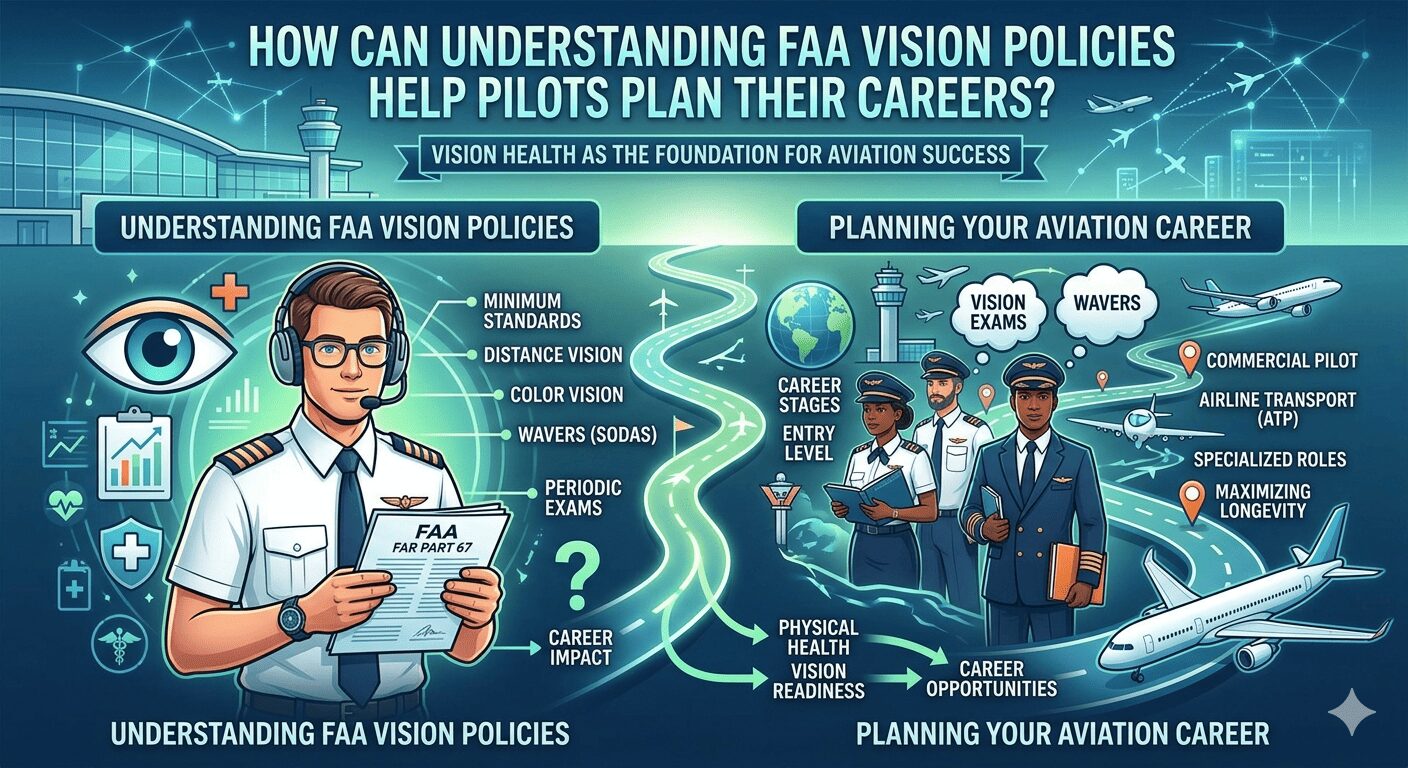
Vision requirements are among the most researched and most misunderstood topics in aviation medicine. For pilots at every stage of their career, from student applicants to seasoned professionals, understanding how the FAA approaches visual standards can make a meaningful difference in how they plan their training, manage their certifications, and pursue long-term goals.
This post breaks down what pilots need to know about FAA vision policies, why these standards exist, and how early awareness can reduce uncertainty and support smarter career decisions.
Why FAA Medical Requirements Matter for Career Planning
Medical certification is not a formality. For most pilots, it is a prerequisite for progressing through training, obtaining a license, and maintaining eligibility to fly professionally. Yet many aspiring pilots only begin thinking about medical requirements after they have already invested time and money in a training program.
Starting the medical evaluation process early gives pilots a clearer picture of their eligibility across different aviation pathways. A student aiming for an airline career will face different certification standards than someone pursuing recreational flying. Understanding those distinctions before enrollment,rather than after,helps avoid costly surprises and supports a more realistic timeline for career progression.
Understanding the FAA’s Focus on Vision Standards
The FAA establishes vision standards primarily to protect flight safety. Pilots must be able to read instruments, interpret airport lighting systems, identify signals, and maintain visual awareness across a wide range of conditions. These tasks demand reliable visual performance, which is why the FAA evaluates not just visual acuity but also depth perception, peripheral vision, and color perception.
Each standard exists for an operational reason. When pilots understand the “why” behind a requirement, it becomes easier to engage with the evaluation process constructively rather than feeling like the system is working against them.
Common Vision Concerns Pilots Research Before Training
Several vision-related topics come up repeatedly among pilots exploring their certification options:
- Color vision deficiencies , One of the most common concerns, particularly among male applicants
- Corrective lenses , Many pilots fly successfully with glasses or contact lenses, though specific standards apply
- Eye surgeries , Procedures such as LASIK may be compatible with certification, but typically require documentation and review
- Visual acuity concerns , Standards vary depending on the class of medical certificate being sought
- Specialized testing requirements , Some applicants may need additional evaluations beyond the standard screening
A common misconception among new pilots is that any vision imperfection is automatically disqualifying. This simply is not accurate. Many conditions are manageable, and awareness of available options early in the process can prevent unnecessary discouragement.
How Early Knowledge Can Prevent Career Surprises
Aspiring pilots frequently want to know whether a vision issue could affect their future opportunities. The honest answer is: it depends,and that’s exactly why early research matters.
Pilots who understand FAA vision requirements before starting training can make more informed decisions about which certificate class to pursue, which medical examiner to visit, and what documentation to gather in advance. Those who discover a potential concern mid-training may face delays or have to reassess their path at a point when the emotional and financial stakes are much higher.
Proactive planning does not guarantee a specific outcome, but it does give pilots more control over their options and timelines.
Why Color Vision Policies Receive Significant Attention
The FAA Pilot Color Vision Test is one of the most discussed aviation medical topics because color perception plays an important role in several flight-related tasks. Pilots must correctly interpret runway lighting, navigate using colored aeronautical charts, and recognize signal light gun colors used by air traffic control. Aircraft instrument displays and warning indicators also rely on color differentiation.
Because of this, the FAA includes color vision screening as part of the standard medical examination. Applicants who do not pass the initial screening are not automatically disqualified,but they do need to understand what comes next.
Understanding That Multiple Testing Pathways May Be Available
Pilots researching FAA-Approved Color Vision Test options are often surprised to learn that multiple testing pathways may be available depending on their situation. The initial screening typically uses pseudoisochromatic plate tests, such as the Ishihara or FALANT. However, pilots who do not pass these can pursue alternative evaluations.
The specific pathway available to a pilot depends on several factors, including the type of operation they intend to conduct, the class of medical certificate they hold or are applying for, and the outcome of prior evaluations. Speaking with a qualified Aviation Medical Examiner (AME) is the most reliable way to understand which options apply to an individual’s circumstances.
How Specialized Testing Can Support Career Planning
The FAA Rabin Cone Contrast Test is one example of a specialized evaluation that may be relevant for certain pilots exploring color vision testing pathways. This type of assessment provides a more detailed picture of color perception capabilities, and its results may support additional determinations related to a pilot’s certification.
For pilots with color vision concerns, understanding which evaluations are available,and when to pursue them,can bring clarity to questions that might otherwise create significant anxiety. These tests do not change the FAA’s standards, but they can help ensure that a pilot’s actual capabilities are accurately assessed.
Why Understanding Policies Can Help Pilots Make Better Training Decisions
Flight school is a significant investment of time and money. Choosing a training program, selecting a career pathway, and mapping out a certification timeline all benefit from a solid understanding of the medical requirements involved.
A pilot who knows their vision will require additional evaluation can factor that into their timeline. A pilot who understands the difference between First, Second, and Third Class medical standards can choose a training path that aligns with their eligibility. These are not minor details,they shape the entire arc of an aviation career.
Gathering accurate information early does not eliminate uncertainty entirely, but it significantly reduces the risk of avoidable delays down the road.
What Pilots Should Do If They Have Vision Concerns
Practical steps matter. If a pilot has questions or concerns about their vision, here is where to start:
- Seek accurate, up-to-date information , Regulatory guidance changes, so always verify current FAA standards through official sources
- Schedule a vision evaluation early , Knowing your baseline before applying for a medical certificate reduces surprises
- Understand your testing options , Ask your AME which evaluations apply to your situation and what alternatives exist
- Consult qualified professionals , An AME with aviation medicine experience can offer guidance specific to your circumstances
- Keep records organized , Documentation from prior evaluations can be valuable during the certification process
Taking these steps early is far less stressful than addressing vision concerns reactively.
Why Misunderstanding FAA Vision Policies Can Create Unnecessary Stress
Much of the anxiety pilots experience around vision requirements stems from misinformation. Online forums and anecdotal accounts can exaggerate the likelihood of disqualification or overlook available options entirely. Pilots who assume the worst,without verifying the details,may delay pursuing their goals for reasons that turn out not to apply to their situation.
Education is a direct antidote to this kind of uncertainty. Pilots who understand the system,what is evaluated, why it matters, and what alternatives exist,approach the process with greater confidence and are less likely to be derailed by incomplete information.
Long-Term Career Planning Starts With Understanding Requirements
A sustainable aviation career requires ongoing attention to medical certification. Standards must be met not just at entry, but throughout a pilot’s active flying years. Understanding what is expected,and how to maintain compliance over time,supports professional growth and reduces the risk of unexpected interruptions.
Many pilots work with Pilot Color Vision Center because understanding aviation-specific vision requirements and testing options can be an important part of successful long-term career planning. Having access to accurate, specialized information helps pilots navigate their medical journey with greater clarity and confidence.
Knowledge Helps Pilots Navigate Their Careers With Confidence
FAA vision policies are more than administrative requirements. They are factors that directly influence training decisions, certification timelines, and long-term career trajectories. Pilots who engage with these standards early,rather than waiting until a problem arises,are better positioned to explore their options, address concerns constructively, and move forward with a clear plan.
Vision concerns do not have to derail an aviation career. With the right information and professional guidance, many pilots find that their path forward is more accessible than they initially assumed.
Ready to get the clarity you need? Connect with the team at Pilot Color Vision Testing to learn more about FAA vision requirements and the testing options that may be available to you. Early awareness is one of the most valuable investments you can make in your aviation career.
Frequently Asked Questions
Why does the FAA have vision requirements for pilots?
The FAA establishes vision standards to protect flight safety. Pilots must be able to perform tasks such as reading instruments, interpreting airport lighting, and identifying color-coded signals. These requirements ensure that visual performance meets the demands of safe aircraft operation.
Can color vision issues affect a pilot’s career?
A color vision deficiency does not automatically disqualify a pilot. Depending on the medical certificate class and intended operation, several evaluation pathways may be available. Some pilots with color vision differences are able to obtain certification through alternative testing methods.
What vision tests are accepted by the FAA?
The FAA uses several approved methods to evaluate color vision, including pseudoisochromatic plate tests and other specialized assessments. The specific tests accepted depend on the evaluation context and the class of medical certificate being sought. An Aviation Medical Examiner can advise on which options apply to a given situation.
What should I do if I fail an FAA color vision screening?
A failed initial screening is not a final determination. Pilots who do not pass the standard test should speak with a qualified AME about available alternatives. Additional evaluations may be available depending on their circumstances and the type of flying they intend to do.
How early should aspiring pilots learn about FAA vision requirements?
As early as possible,ideally before beginning flight training. Understanding medical requirements in advance helps pilots plan their certification timeline, avoid unexpected delays, and make informed decisions about training programs and career pathways.


 Clean Linen
 Pasteleria Azteca