Safwan Sayyal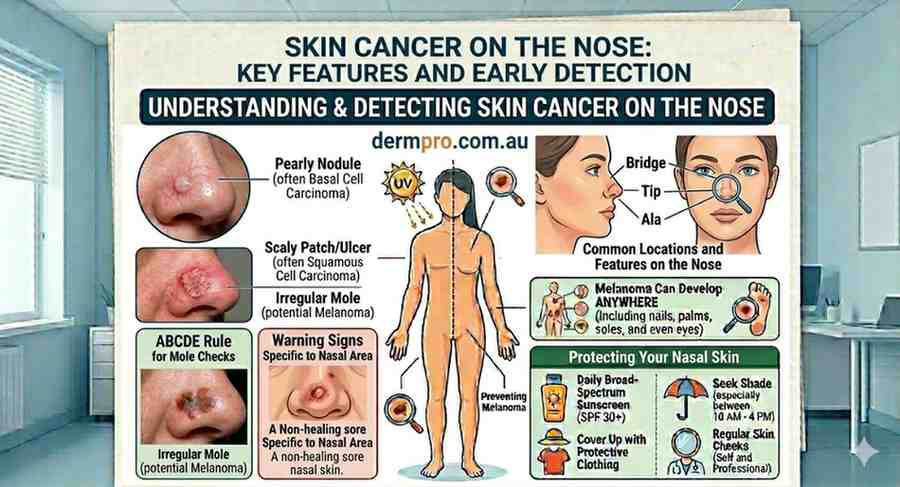
A skin cancer diagnosis can be an unsettling experience, particularly when the lesion develops on a highly visible and structurally complex area like the nose. Because the nose has limited loose skin and distinct anatomical contours, treating skin cancer on the nose requires a delicate balance between absolute oncology clearance and optimal cosmetic preservation.
The nose is one of the most common sites for non-melanoma skin cancers, such as Basal Cell Carcinoma (BCC) and Squamous Cell Carcinoma (SCC), due to its constant, prominent exposure to ultraviolet (UV) radiation. Fortunately, modern dermatological surgery offers exceptionally high cure rates while prioritizing your natural appearance.
In this comprehensive guide, you will learn about the primary treatment pathways, step-by-step surgical procedures, and essential week-by-week aftercare protocols to ensure a smooth recovery.
What is Skin Cancer on the Nose?
Skin cancer on the nose refers to the abnormal, uncontrolled growth of skin cells on the nasal bridge, tip, sidewalls, or ala (nostrils). It most commonly presents as a pearly bump, a firm red nodule, or a sore that bleeds, crusts, and refuses to heal over several weeks.
Because the skin on the nose sits directly over delicate cartilage and bone, undetected or untreated lesions can slowly invade deeper structures. Early intervention by a qualified professional is critical to prevent extensive tissue involvement.
Primary Treatment Options for Nasal Skin Cancer
The choice of treatment depends heavily on the specific cancer type, its size, structural depth, and exact location on the nose.
Mohs Micrographic Surgery
For tumors located on facial features like the nose, eyelids, or lips, Mohs surgery is widely considered the absolute gold standard.
- How it helps: It offers the highest cure rate (up to 99% for new cancers) while preserving the maximum amount of healthy nasal tissue.
- The Process: The surgeon removes the tumor layer by layer, mapping and checking 100% of the margins under an on-site microscope in real-time. The cycle repeats until the tissue is entirely clear.
Standard Surgical Excision
For well-defined, smaller tumors on the wider bridge of the nose, a standard surgical excision may be utilized. The doctor cuts out the visible lesion along with a predetermined safety margin of healthy skin, closing the wound with sutures. The tissue is then sent away to an external pathology lab for evaluation, with results returning in 1–2 weeks.
Non-Surgical Alternative Treatments
For very superficial, early-stage skin spots or instances where surgery isn’t clinically viable, doctors may suggest non-surgical modalities:
- Topical Treatments: Prescribed immunotherapy creams (such as Imiquimod) or chemotherapy gels (such as 5-Fluorouracil) to activate the immune system or target localized cancer cells.
- Radiation Therapy: Targeted external radiation sessions spread over several weeks to destroy cancer cells in patients who cannot undergo a surgical procedure.
- Cryotherapy: Freezing the localized, superficial lesion with liquid nitrogen.
Understanding the Reconstruction Procedure
Once a tumor is successfully cleared from the nose, the resulting wound must be closed. Because nasal skin is tight, simple stitches are not always structurally ideal. Surgeons utilize specialized reconstructive techniques to preserve breathing functions and facial symmetry:
- Local Skin Flap: The surgeon maneuvers nearby loose skin and underlying tissue from the bridge or cheek over the nasal wound, maintaining its blood supply to ensure optimal, natural-looking healing.
- Full-Thickness Skin Graft: A small piece of matching skin is harvested from a hidden donor site (such as behind the ear or near the collarbone) and precisely stitched into the nasal defect.
- Secondary Intention Healing: In specific shallow wounds, the area may be allowed to naturally granulate, close, and heal on its own under careful medical supervision.
Week-by-Week Aftercare and Recovery Timeline
Proper post-operative wound care is vital to protect your surgical site from infection, minimize scarring, and promote a clean aesthetic result.
The First 48 Hours: Managing Swelling
Your surgical site will be covered with a tight pressure dressing to minimize bleeding. Swelling and localized bruising are completely normal inflammatory responses and typically peak around day two. Keep your head elevated on extra pillows while sleeping, apply wrapped cold compresses around the area (avoiding direct pressure on the nose), and take over-the-counter pain relievers as directed by your clinical team.
Days 3 to 7: Gentle Cleaning
Once you are cleared to remove the initial pressure dressing, keep the wound moist and protected. Clean the area daily using sterile water or mild soap according to your surgeon’s explicit instructions. Apply a thin layer of recommended ointment (such as plain petroleum jelly) to prevent hard scabs from forming, which can worsen scars. Cover gently with a fresh non-stick bandage.
Weeks 2 to 4: Suture Removal and Initial Closure
External, non-dissolving stitches on facial wounds are generally removed between days 7 and 14. Once removed, the area will look pink, slightly raised, or tight. Avoid picking at any dry crusts. If cleared by your doctor, you can begin very gentle scar massage with a topical silicone gel to help flatten the tissue.
Months 2 to 12: Long-Term Maturation
The skin surface may look closed, but deeper tissues continue to remodel for up to a full year. The red or pink color will gradually fade into a subtle line. Protecting this fresh skin from UV radiation is vital, as sun exposure can cause permanent dark discoloration (hyperpigmentation).
Frequently Asked Questions
Can I wear my glasses after skin cancer surgery on my nose?
Putting direct weight on a fresh surgical site can disrupt stitches, alter blood circulation to a skin graft, or worsen scarring. You will generally need to avoid resting glasses on your nose for several weeks. Your clinic can show you how to tape your glasses upward to your forehead or recommend lightweight temporary alternatives.
How do I protect the healing area from the sun?
Once the wound surface has fully sealed (usually around week two or three), apply a broad-spectrum, water-resistant sunscreen with an SPF of 30 or higher daily. When outdoors during peak UV hours, pair this with a wide-brimmed hat that casts a complete shadow over your face.
What are the signs of a wound infection?
While mild pinkness and clear fluid weeping are normal initially, you should contact your doctor immediately if you notice progressive redness spreading outward from the wound, increasing throbbing pain, thick yellow or green drainage, or if you develop a fever.
Will my nose look normal after surgery?
Yes. Thanks to the highly advanced flap and graft reconstructive methods utilized in modern facial plastic and dermatological surgery, most nasal scars soften and blend beautifully into the natural contours of the face over 6 to 12 months.
Conclusion
Dealing with skin cancer on the nose requires a precise approach that treats the underlying disease while respecting your facial anatomy. By understanding your treatment pathways whether opting for micrographic clarity or supporting your body through its long-term healing timeline you can move forward with confidence and clarity. Early detection combined with diligent aftercare remains the absolute best recipe for an optimal clinical and aesthetic outcome

 Dandon Dental
 Dynamic Life Clinics