Susan Armadale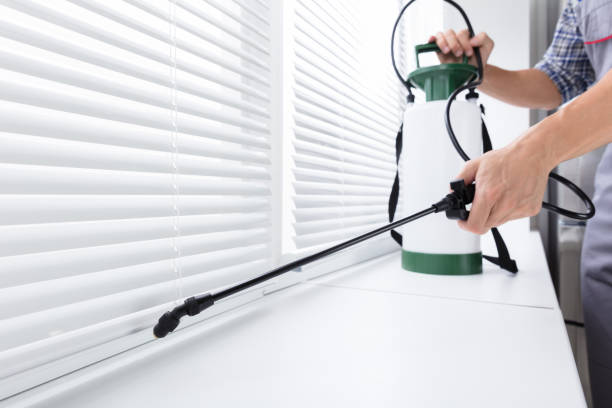
The Spray Bottle Graveyard Under the Kitchen Sink
Most households have one. A collection of half-used spray bottles, some with crusted nozzles, one that only works if held at a specific angle, another that was bought in a moment of ant-invasion panic and used exactly twice. The intentions were good. The results — inconsistent at best.
The thing is, pest management at home isn’t really about having the right chemical. It’s about delivery. A pesticide that never reaches the target area, or gets applied so unevenly that pests simply avoid treated zones, is money and effort wasted regardless of how effective the active ingredient supposedly is. Choosing the right pesticide sprayer for home use isn’t a glamorous decision, but it’s probably the one that determines whether a pest control routine actually works or just creates the illusion of effort.

Why the Sprayer Matters More Than Most People Think
There’s a tendency to treat sprayers as interchangeable — a container with a nozzle, nothing more. That assumption explains a lot of failed pest control attempts.
Different sprayers produce different droplet sizes. Different droplet sizes behave differently in the air and on surfaces. A mist that’s too fine drifts away from the target and disperses into the room. A spray that’s too coarse pools on surfaces, runs off, and leaves gaps in coverage. Neither extreme gives the uniform, even distribution that makes pesticide application actually effective. The right droplet size — medium to coarse for most indoor residual applications — clings to surfaces long enough for the active ingredient to do its work.
Pressure matters too. A consistent, controllable pressure means consistent output. Cheap trigger bottles lose pressure as the liquid level drops. Pump sprayers with pressure release valves maintain output far more reliably across a full tank. That consistency translates directly to coverage quality — and coverage quality is what separates a treated perimeter from a suggestion of one.
The Main Types Worth Knowing
Trigger sprayers are the default for most people. Grab-and-go convenience, no setup, widely available. For spot treatments — a crack along the baseboard, a windowsill with ant activity, a localised problem area — they’re perfectly adequate. The limitation shows up when coverage needs to extend across larger surfaces. Trigger fatigue is real, output pressure varies, and coverage becomes patchy without even noticing.
Handheld pump sprayers are a step up in every meaningful way for home use. Fill the tank, pump up pressure, spray. Output stays consistent across the tank. The wand extends reach into corners, beneath appliances, along wall-floor junctions — spots that a trigger bottle misses entirely because it can’t be angled without dripping. A one-litre or two-litre handheld pump is genuinely the most practical tool for anyone doing regular perimeter treatments indoors or treating a full room.
Battery-powered sprayers take the manual labour out of the equation. No repeated pumping, consistent motorised pressure throughout the application. For larger homes or anyone dealing with mobility limitations, the difference is significant. The trade-off is cost and the occasional maintenance the motor requires. Worth it for regular users. Probably overkill for occasional spot treatments.
Backpack sprayers are the outdoor workhorses — large capacity, sustained pressure, designed for extended use across gardens, patios, and external building perimeters. For managing pests that enter from outside — and most of them do — treating the exterior is arguably more important than treating the interior. A backpack sprayer makes that practical without needing to refill every few minutes.
What Gets Overlooked When Buying
Nozzle adjustability. This gets ignored in product listings and almost never mentioned in casual recommendations, but it’s genuinely important. A sprayer that only produces one spray pattern limits what it can do. A fan spray pattern works for broad surface coverage. A cone pattern suits targeted application into crevices. A stream setting reaches distance or penetrates dense vegetation outdoors. A sprayer with an adjustable nozzle is a versatile tool; one without is a single-use instrument.
Tank material is another thing worth a second look. Some pesticide concentrates — particularly those with oil-based carriers or higher acidity — degrade certain plastics over time, causing warping, leaks, or chemical contamination. Polyethylene tanks handle the widest range of formulations without issue.
And cleaning. A sprayer that’s difficult to rinse thoroughly will contaminate the next batch of product, reduce efficacy, and potentially damage the seals. Straightforward disassembly, wide tank openings, and accessible filters make maintenance actually happen rather than being perpetually deferred.
Matching the Sprayer to the Pest Problem
The sprayer selection should follow the pest, not the other way around.
Crawling insects — ants, cockroaches, silverfish — are primarily managed through residual surface treatments along their travel routes. A pump sprayer with a fan nozzle, applied along baseboards, behind appliances, and under sinks, covers this well. The goal is a consistent film that insects walk through repeatedly.
Flying insects require different thinking. Airborne applications for mosquitoes, for example, call for fine-mist output — which changes the nozzle requirement entirely. For anyone dealing with persistent fly problems indoors, identifying where breeding is occurring matters as much as spray equipment. The most effective best house fly killer approach combines sanitation to eliminate breeding sources with targeted contact sprays near entry points — and a sprayer with adjustable output handles both aspects without requiring a second tool.
Outdoor perimeter treatment, where insects enter along foundations and through gaps, benefits from the capacity and pressure of a larger pump or backpack sprayer applied to a two to three foot band around the building’s base.

The Consistency Question
Pest management isn’t a single event. It’s a cycle — treatment, monitoring, re-treatment at appropriate intervals before populations rebuild. The sprayer that actually gets used is the effective one. A cumbersome, leaky, difficult-to-clean tool that lives at the back of a cupboard contributes nothing.
Reliability, ease of use, and appropriate capacity for the space being treated — those are the practical filters. Everything else is secondary. A sprayer chosen on those terms, paired with an appropriate product and applied consistently, delivers the kind of results that the graveyard under the kitchen sink never managed to produce.


 Chandan Kumar
 Harry dgsquares