cavin smith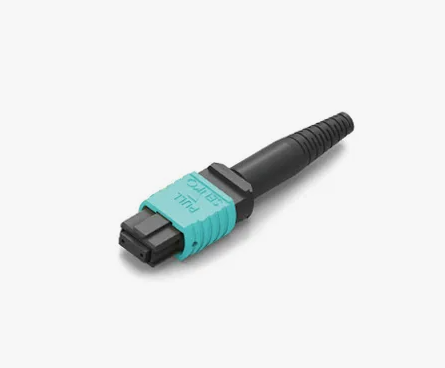
As data centers and communication networks continue to expand, the demand for faster and more efficient connectivity solutions is growing rapidly. Organizations require network infrastructures capable of supporting high-bandwidth applications, cloud computing, and large-scale data transmission. The MPO fiber connector has emerged as a critical component in meeting these modern networking requirements.
The MPO fiber connector is widely used in high-density fiber optic environments because it enables multiple fiber connections within a single interface. Its compact design, scalability, and ability to support high-speed data transmission make it an essential solution for data centers, enterprise networks, and telecommunications systems.
What Is an MPO Fiber Connector?
MPO stands for Multi-Fiber Push-On, a type of fiber optic connector designed to connect multiple optical fibers simultaneously. Unlike traditional fiber connectors that typically connect one or two fibers, MPO connectors can accommodate multiple fibers in a single connector housing.
This design significantly increases connection density while reducing the amount of space required for cabling infrastructure. MPO connectors are commonly available in configurations supporting 8, 12, 16, 24, or more fibers.
How MPO Fiber Connectors Work
MPO connectors use a push-pull mechanism that allows for quick and secure connections. Precision alignment pins ensure that the optical fibers are accurately positioned, minimizing signal loss and maintaining transmission quality.
By combining multiple fibers into a single connector, MPO technology simplifies network deployment and enables efficient management of complex fiber optic systems.
Key Benefits of MPO Fiber Connectors
High-Density Connectivity
One of the most significant advantages of MPO connectors is their ability to support multiple fiber connections within a compact footprint. This high-density design is especially valuable in data centers where space optimization is a priority.
By reducing the number of individual connectors required, MPO solutions help maximize rack space and improve overall network organization.
Faster Installation
Traditional fiber optic installations often require numerous individual cable connections. MPO connectors streamline the process by allowing multiple fibers to be connected at once.
This reduces installation time, lowers labor costs, and simplifies network deployment projects.
Scalability for Future Growth
As organizations expand their network infrastructure, scalability becomes increasingly important. MPO technology supports future upgrades by accommodating higher data transmission requirements without requiring major infrastructure changes.
This flexibility makes MPO connectors a long-term investment for growing businesses.
Improved Cable Management
Large network environments can become difficult to manage when hundreds or thousands of individual fiber connections are involved. MPO connectors help reduce cable congestion and improve organization.
Simplified cabling structures make maintenance and troubleshooting more efficient while enhancing airflow within equipment racks.
Support for High-Speed Applications
Modern applications such as cloud computing, artificial intelligence, and high-performance computing require substantial bandwidth. MPO connectors are designed to support high-speed network standards, including 40G, 100G, 200G, and 400G Ethernet environments.
Their ability to handle large amounts of data makes them ideal for demanding networking applications.
Common Applications of MPO Fiber Connectors
Data Centers
Data centers are among the largest users of MPO technology. The high-density nature of MPO connectors allows operators to maximize connectivity while minimizing space requirements.
As data center traffic continues to grow, MPO solutions play a vital role in supporting efficient and scalable infrastructure.
Telecommunications Networks
Telecommunication providers rely on MPO connectors to support high-capacity fiber optic networks. These connectors help deliver reliable connectivity for voice, data, and internet services.
Their performance and efficiency make them a preferred choice for large-scale communication systems.
Enterprise Networks
Many businesses use MPO fiber infrastructure to support internal communication systems, cloud services, and network expansion projects.
The ability to deploy multiple fiber connections quickly makes MPO technology highly attractive for enterprise environments.
High-Performance Computing
Research institutions, financial organizations, and technology companies often require high-speed data processing capabilities. MPO connectors provide the bandwidth and reliability needed to support these advanced computing environments.
MPO Fiber Connector Types
Different MPO connector configurations are available to meet various networking requirements.
MPO-8 Connectors
These connectors contain eight optical fibers and are commonly used in 40G and 100G Ethernet applications.
MPO-12 Connectors
MPO-12 connectors are among the most widely used configurations and support a broad range of networking environments.
MPO-16 Connectors
Designed for higher-capacity applications, MPO-16 connectors provide increased fiber density and improved network scalability.
MPO-24 Connectors
These connectors support larger fiber counts and are often used in high-density data center deployments where maximizing connectivity is essential.
Best Practices for MPO Fiber Connector Installation
Proper installation and maintenance are crucial for achieving optimal performance.
Keep Connectors Clean
Dust and contaminants can affect signal quality. Regular cleaning helps maintain reliable performance and minimize insertion loss.
Follow Polarity Standards
Correct polarity ensures that transmitted and received signals are properly aligned. Following established standards helps prevent connectivity issues.
Inspect Before Deployment
Testing and inspecting connectors before installation can identify potential defects and reduce troubleshooting time later.
Use Quality Components
Selecting high-quality MPO connectors and cabling solutions helps ensure long-term reliability and network efficiency.
The Future of MPO Fiber Connectivity
As network speeds continue to increase, MPO technology is expected to play an even greater role in supporting next-generation infrastructure. The growth of cloud computing, artificial intelligence, edge computing, and hyperscale data centers is driving demand for high-density fiber connectivity solutions.
MPO connectors provide the scalability and performance required to meet these evolving requirements while simplifying network management and deployment.
Conclusion
The MPO fiber connector has become a fundamental component of modern fiber optic infrastructure. Its ability to support high-density connectivity, simplify installation, improve cable management, and enable high-speed data transmission makes it invaluable for today’s networking environments.
As organizations continue to invest in faster and more scalable communication systems, the MPO fiber connector will remain a key technology driving network performance, efficiency, and future growth.



 YWE Business Solutions