Lucy Sterling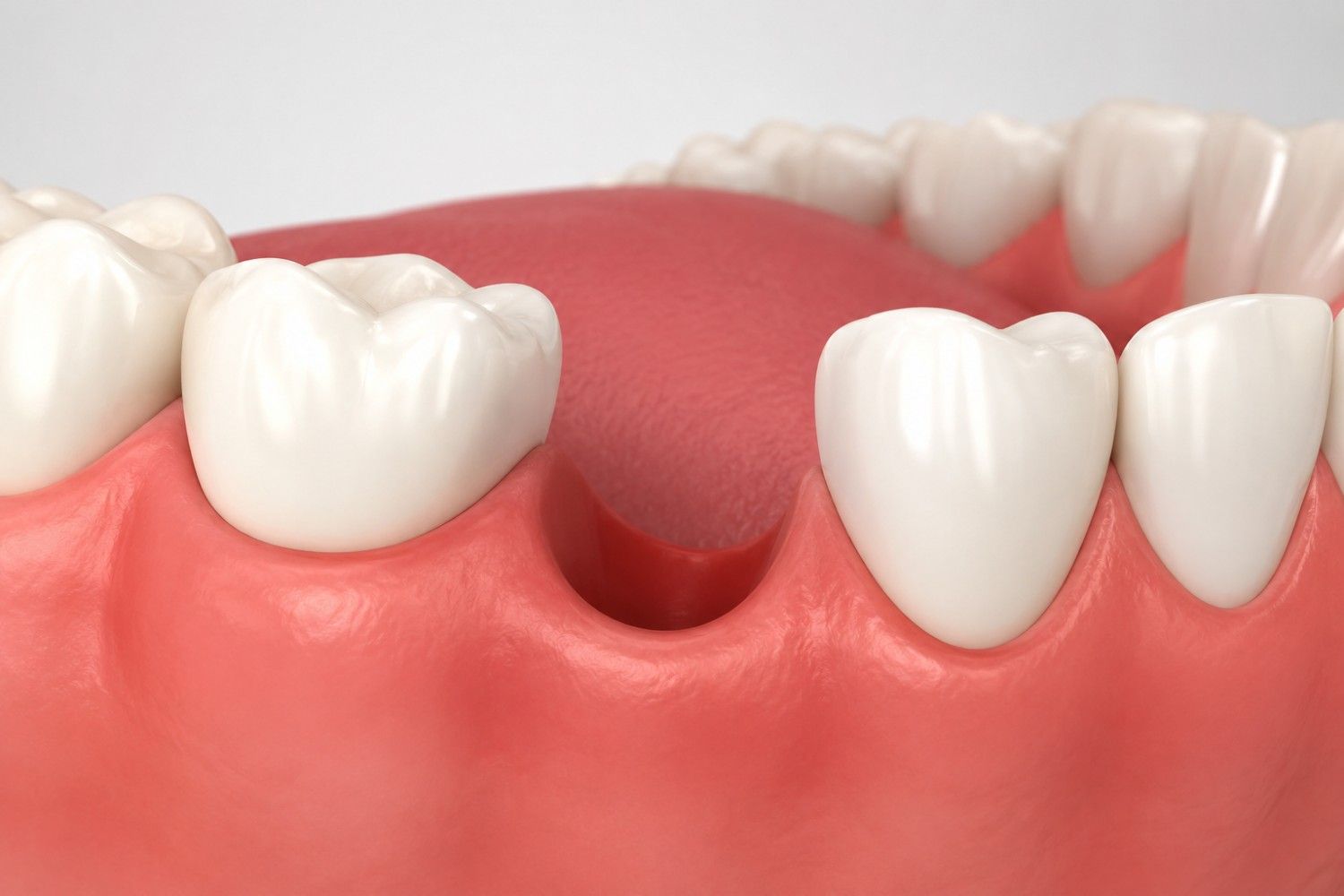
Losing a tooth as an adult feels different to losing one as a child. There is no tooth fairy, no replacement on the way, and no guarantee the gap will stay harmless if left alone. Yet a surprising number of adults across Australia put off tooth replacement — sometimes for months, sometimes permanently — because the missing tooth is not visible, is not causing pain, or the treatment feels like something that can wait.
The reality is that a missing tooth rarely stays a simple cosmetic issue. Over time, an untreated gap sets off a chain of events in your mouth that becomes progressively harder and more expensive to address. Understanding what actually happens when a tooth is lost — and what your replacement options look like — puts you in a far better position to make a timely decision.
What Happens Inside Your Jaw When a Tooth Is Lost
The most significant and least understood consequence of tooth loss is what happens to the jawbone beneath the gap. Every tooth root stimulates the surrounding bone through the pressure of biting and chewing. When that root is removed, the bone no longer receives that stimulation and begins to resorb — essentially, the body starts to break it down and redirect those minerals elsewhere.
This process, called alveolar bone resorption, begins within weeks of extraction and continues steadily over time. Research indicates that up to 25% of bone width can be lost in the first year alone. After several years, the bone loss can become significant enough to alter facial structure — causing the cheeks to appear sunken and the lower face to shorten — and to complicate or rule out certain replacement options like dental implants, which require sufficient bone volume to integrate successfully.
This is why timing matters. The longer a gap is left without a replacement or a bone preservation procedure, the fewer and more complex the treatment options become.
The Knock-On Effects You May Not Expect
Beyond bone loss, a missing tooth creates a ripple effect across the surrounding dentition that most patients do not anticipate:
Teeth drift and tilt. The teeth on either side of a gap gradually move into the empty space over months and years. Opposing teeth — those directly above or below the gap — may begin to over-erupt, growing downward or upward into the space. This disrupts your bite, changes how your jaw closes, and can create uneven wear across the remaining teeth.
Bite collapse. As multiple teeth shift position, the entire occlusal system — the way your upper and lower teeth meet — becomes unbalanced. This places excessive force on teeth that were not designed to carry that load, increasing the risk of cracking, fracture, and wear.
Gum disease risk increases. Teeth that have drifted are harder to clean effectively. Gaps in the gum line can trap food and bacteria. Both factors raise the risk of developing gum disease in areas that were previously healthy.
Jaw joint strain. An altered bite pattern can place uneven stress on the temporomandibular joint (TMJ), contributing to jaw pain, clicking, and headaches in some patients.
Your Tooth Replacement Options
The good news is that modern dentistry offers highly effective solutions for replacing missing teeth — options that preserve bone, restore function, and look entirely natural. For a thorough overview of what happens when a tooth is left unreplaced and the full range of treatment pathways, it is worth reading in detail before your consultation. Here is a clinical summary of the main options:
Dental Implants
A dental implant is the gold standard for single tooth replacement. A titanium post is placed surgically into the jawbone, where it fuses with the bone over a period of three to six months through a process called osseointegration. A custom-made crown is then attached on top, creating a result that looks, feels, and functions like a natural tooth.
Importantly, implants are the only replacement option that actively preserves jawbone by mimicking the stimulation of a natural root. They do not rely on adjacent teeth for support and can last decades with proper care. The limitation is that implants require adequate bone volume — which is why early intervention, before significant resorption has occurred, consistently produces better outcomes.
Dental Bridges
A dental bridge spans the gap left by a missing tooth by anchoring an artificial tooth (called a pontic) to the natural teeth on either side, which are prepared and crowned to support the bridge. Bridges are a well-established, effective option — particularly where implants are not suitable — and can be completed in fewer appointments than an implant.
The consideration with a bridge is that the adjacent teeth must be permanently modified to act as supports. These teeth are healthy tooth structure that would not otherwise need treatment. For some patients this is the right trade-off; for others, particularly younger patients, the preference is to preserve those teeth intact.
Dentures
For patients missing multiple teeth, partial or full dentures remain a practical and cost-effective solution. Modern dentures are more natural-looking and comfortable than older versions, and implant-supported dentures now offer a far more stable alternative to conventional removable options. Dentures do not prevent bone resorption in the way implants do, but remain an appropriate solution for many patients depending on their overall health, bone levels, and preferences.
When Should You Act?
The straightforward answer is: sooner rather than later. Immediately following an extraction, a bone graft can be placed to preserve the socket volume while you decide on a replacement option — this is called a socket preservation procedure and significantly improves outcomes if an implant is planned later. If a gap has already been present for some time, a thorough clinical assessment including x-rays and a CBCT scan will determine what bone remains and which options are viable.
Every patient’s situation is different. Age, general health, the location of the missing tooth, the condition of adjacent teeth, and budget all play a role in determining the most appropriate path forward. The key is to have that conversation with a qualified dentist before the window for simpler, more cost-effective treatment closes.
For residents across the Macarthur region, Bradbury Dental Surgery offers comprehensive tooth replacement consultations, including dental implants, bridges, and dentures, with a team experienced in guiding patients through what can feel like a complex decision. If you are looking for a dental practice in Campbelltown that takes the time to explain your options clearly and without pressure, getting in touch is a straightforward first step.
A missing tooth is never just a gap. The earlier it is assessed and addressed, the more options remain on the table — and the better the long-term outcome for your oral health.


 HiiMS Hospital
 Jeena Sikho HiiMS