Bill Deuters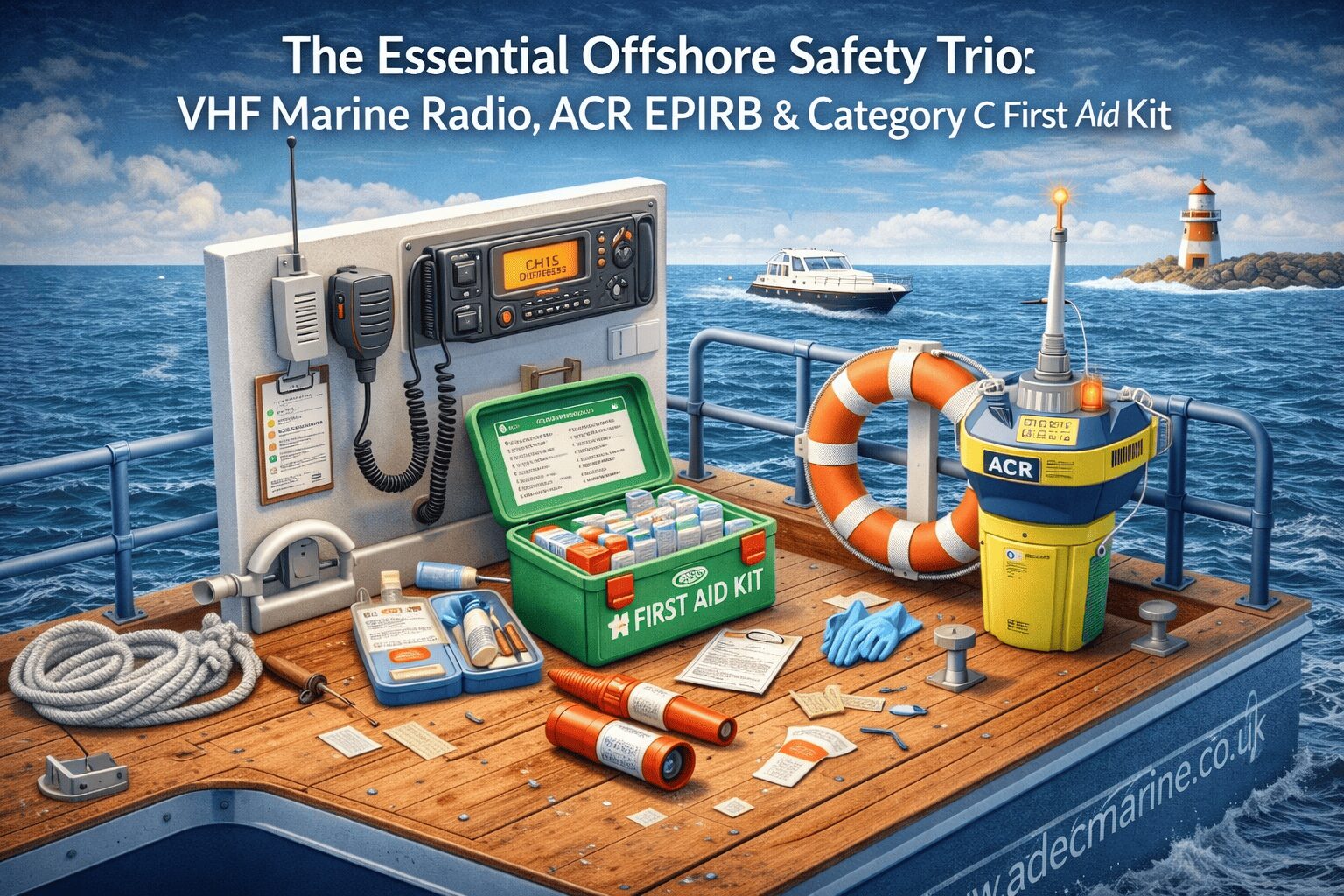
Whether you operate a fishing vessel, manage a commercial boat, or enjoy offshore sailing, three critical pieces of safety gear form the backbone of maritime emergency readiness:
- VHF Marine Radio
- ACR EPIRB
- Category C First Aid Kit
These aren’t just compliance items. They are life-saving systems designed to protect your crew when the unexpected happens.
This guide explains how each works, why they matter, and how they work together to create a complete offshore safety strategy — fully aligned with modern marine regulations and best practices.
VHF Marine Radio: Your First Line of Communication
A VHF Marine Radio (Very High Frequency radio) is the primary communication device for vessels at sea.
Unlike mobile phones, VHF radios are specifically designed for marine environments and allow direct communication between:
- Nearby vessels
- Harbor authorities
- Coastguard services
- Emergency rescue teams
Why It’s Critical
In an emergency, seconds matter. A VHF Marine Radio enables you to:
- Send a distress signal on Channel 16
- Communicate your GPS coordinates
- Receive weather warnings
- Coordinate rescue efforts
Modern Digital Selective Calling (DSC) models allow one-touch distress alerts, automatically transmitting your vessel’s identity and location.
Key Features to Look For
When selecting a VHF Marine Radio, consider:
- DSC functionality
- Waterproof rating (IPX7 or higher)
- Integrated GPS
- Clear digital display
- Long-range antenna capability
A properly installed and registered VHF system significantly improves response time during emergencies.
ACR EPIRB: Global Emergency Positioning Beacon
If your vessel faces catastrophic failure or sinking, an ACR EPIRB becomes your global rescue signal.
EPIRB stands for Emergency Position Indicating Radio Beacon. When activated, it sends a distress signal via satellite to international search and rescue authorities.
Why ACR EPIRB?
ACR is one of the most trusted marine safety manufacturers worldwide. An ACR EPIRB typically offers:
- 406 MHz satellite distress signal
- GPS positioning accuracy
- Automatic water activation
- 48+ hour battery life
- Global COSPAS-SARSAT system integration
Unlike standard distress calls, EPIRBs transmit directly to global satellite networks, ensuring your emergency is detected even when no vessels are nearby.
When Is an EPIRB Required?
An ACR EPIRB is highly recommended — and often mandatory — for:
- Offshore voyages
- Commercial fishing vessels
- Long-distance cruising
- Bluewater sailing
If your VHF signal cannot reach shore, an EPIRB ensures your distress signal still does.
Category C First Aid Kit: Onboard Medical Readiness
While communication devices handle rescue, onboard medical preparedness handles survival.
A Category C First Aid Kit is designed specifically for offshore and commercial marine environments where professional medical help may be hours away.
What Is a Category C First Aid Kit?
Category C kits are typically required for:
- Offshore commercial vessels
- Extended voyages
- Fishing boats
- Charter operations
They contain more advanced medical supplies than standard recreational kits.
Typical Contents Include:
- Trauma dressings
- Sterile bandages
- Antiseptics
- Burn treatments
- Emergency blankets
- CPR mask
- Splints
- Seasickness medication
- Medical gloves & sterile tools
In offshore conditions, even minor injuries can escalate quickly. A properly stocked Category C First Aid Kit allows immediate response to stabilize injuries before rescue or docking.
How These Three Work Together
Marine safety isn’t about one device — it’s about layered protection.
| Equipment | Primary Function | When It’s Used |
|---|---|---|
| VHF Marine Radio | Direct emergency communication | Mechanical failure, collision, distress calls |
| ACR EPIRB | Global satellite distress alert | Vessel sinking, offshore emergencies |
| Category C First Aid Kit | Medical response | Injury, trauma, burns, onboard illness |
Together, they create a complete safety ecosystem:
- Injury occurs → Category C First Aid Kit provides immediate treatment.
- Situation escalates → VHF Marine Radio alerts nearby vessels or coastguard.
- Severe emergency offshore → ACR EPIRB activates global rescue response.
This layered system significantly increases survival outcomes.
Compliance & Offshore Safety Standards
Many maritime authorities require vessels operating offshore to carry:
- A certified VHF Marine Radio
- A registered EPIRB
- An approved first aid kit based on voyage category
Failing to carry compliant marine safety equipment can result in:
- Insurance issues
- Regulatory fines
- Voyage restrictions
- Increased liability
More importantly, it compromises crew safety.
Maintenance & Best Practices
Owning equipment is only the first step. Proper maintenance ensures reliability.
VHF Marine Radio
- Test transmission regularly
- Check antenna connections
- Update MMSI registration
ACR EPIRB
- Register with national authority
- Check battery expiration
- Inspect hydrostatic release unit
- Perform monthly self-test
Category C First Aid Kit
- Replace expired medications
- Restock used items
- Store in waterproof container
- Ensure crew knows its location
Preparedness only works when equipment is functional and accessible.
Why Marine Safety Equipment Is Non-Negotiable
Weather changes quickly. Engines fail without warning. Accidents happen even to experienced captains.
Investing in:
- A reliable VHF Marine Radio
- A certified ACR EPIRB
- A compliant Category C First Aid Kit
means you are not depending on luck — you are depending on systems designed to save lives.
Modern marine safety is not about fear. It’s about professionalism, responsibility, and readiness.
Final Thoughts
The ocean demands respect.
Before your next offshore journey, ask yourself:
-
Is your VHF Marine Radio fully operational?
-
Is your ACR EPIRB registered and in date?
-
Is your Category C First Aid Kit complete and accessible?
Prepared vessels don’t panic.
Prepared crews respond.
And in marine environments, preparation isn’t just smart — it’s essential.


 eva blake