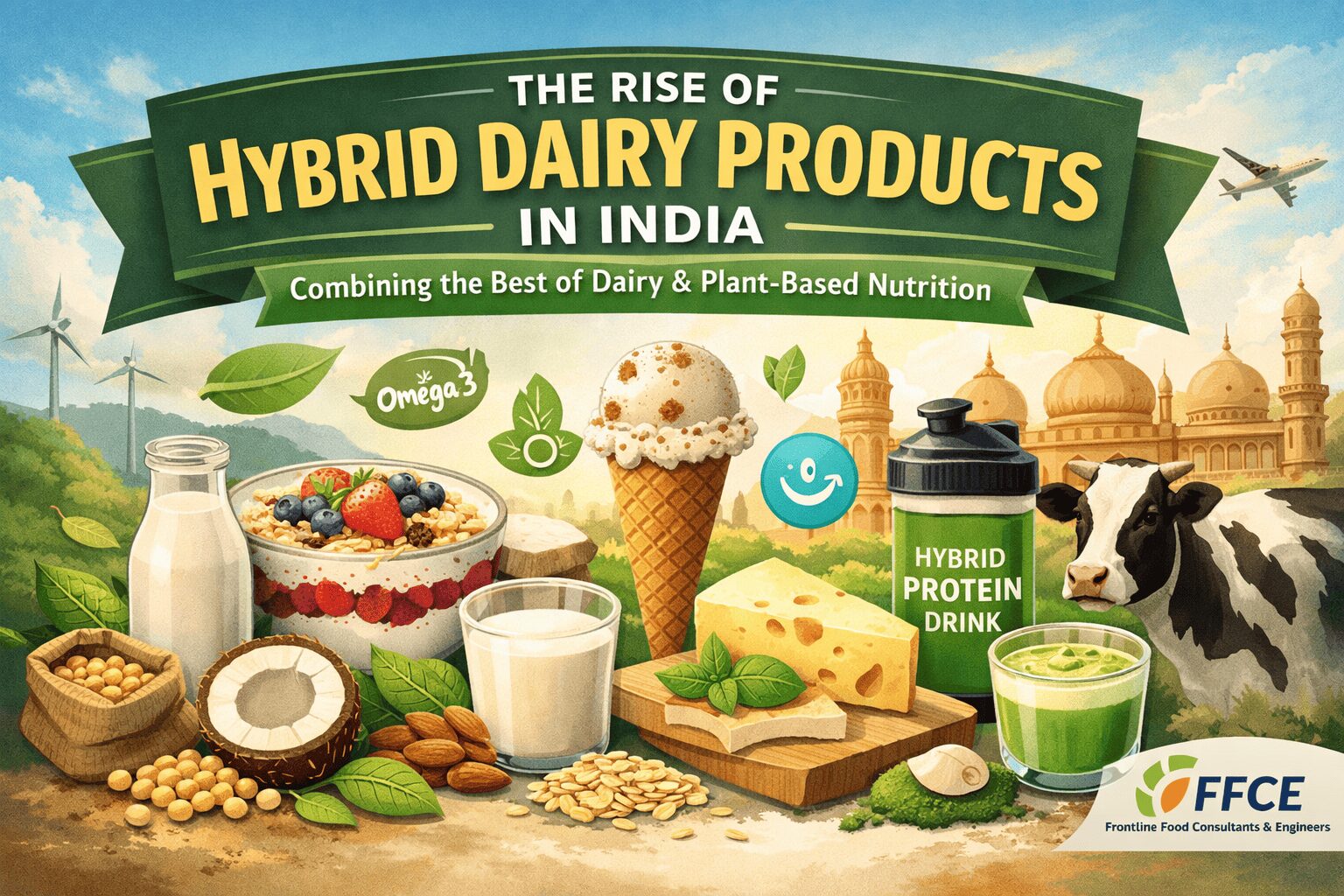
Hybrid Dairy Products Market in India FFCE India

The Indian dairy industry is one of the largest and fastest-growing globally, with milk and dairy products considered staples of everyday nutrition. Consumer attitudes have started to shift toward consuming hybrid dairy products – foods that blend traditional dairy and plant ingredients or enhanced functional ingredients. The current opportunities correspond to the addition of healthy, clean and innovative dairy formats, an exciting opportunity for established and new players in the Indian food space.

Hybrid Dairy Products: A Definition

  • Hybrid dairy products are novel combinations of plant-based substitutes (with sources including soy, oats, almond, coconut or pea proteins) or enhanced functional components (with potential improvements including prebiotics, omega-3’s, nutritional fibers, or natural sweeteners) with milk bases (e.g., cow, buffalo, camel).
  • Here are some examples:
  • Hybrid yogurt – are dairy/oats/soy based yogurt for a creamy feel and additional fiber.
  • Hybrid ice creams – which are based on dairy cream plus almond or coconut milk, for a lighter overall profile.
  • Hybrid cheeses – which have added plant oils or proteins for improved nutrition with less saturated fat.
  • Hybrid protein drinks – which are whey proteins combined with plant proteins for a complete amino acid profile.

Technical Aspects of Hybrid Dairy Product Development

1. Problems with Formulation

  • Protein compatibility: The solubility, pH stability, and heat stability of plant proteins and dairy proteins (casein and whey) vary.  Lipids: Lipids can actually show altered functionality when treated at different stages of development into fat phase specs. Sometimes we do require emulsifiers and stabilizers such as locust bean gum, carrageenan, and maltodextrins.
  • Flavor masking: Most plant proteins come with earthy, beany overtones from the plants they were obtained from. The sensory acceptability of the plant proteins could be improved through fermentation processes, enzymatic hydrolysis, or by adding natural flavorings.
  • Fat phase: We need to use plant oils (coconut, sunflower, canola, etc.) to achieve (appropriate) melting behaviours and mouthmouthfeel of dairy fats on a lipid spec.

2. Technologies for Processing

●        UHT/HTST  Although hybrid systems can have problems with protein precipitation and denaturation, pasteurization is essential for microbiological safety.
●        Homogenizing: For both animal and plant proteins, high-pressure homogenizing would help to emulsify and distribute fat and protein components.
●        Fermenting: Live cultures such as the Bifidobacterium, Lactobacillus are mostly included in the hybrid yogurt and beverage formulations.
●        Spray drying and encapsulation: protein formulations for blends and hybrid milk products in encapsulated format may protect nutrients (e.g., probiotics, omega-3s) from degradation during processing.


3. Shelf-Life Stability

  • Hybrid products are susceptible to phase separation and sedimentation due to differences in protein isoelectric points. Hydrocolloids should help, and fat globule size and proper packaging (using aseptic PET bottles, for example, rather than glass bottles or Tetra Pak using sterilized filling machines, etc), will aid to make the system more stable.
  • Additionally, regarding the way plant oils in hybrid products are sensitive to O2, consider modified atmosphere packaging (MAP) or an antioxidant in the product (such as vitamin E, rosemary extract, etc.).

4. Regulatory and Safety Considerations in India

  • FSSAI Guidelines: The requirement of clear labeling for all products is especially important because the products combine dairy and plant bases. Statements on product attributes such as “lactose-friendly” or fortified must be FSSAI compliant.
  • Allergen labelling: Because plant-based ingredients can contain soy, nut or gluten-based components, those conditions must be labelled for consumer health safety.
  • HACCP / FSMS requirements: Hybrid systems require additional consideration for microbial hazards and additional steps in monitoring for the microbial safety of plant-based ingredients as they can amend the localized microbial contaminants.     

Market Environment and Consumer Trends

  1. Health-conscious consumers: Hybrid dairy is meeting
  2. Flexitarian diets: The flexitarian cohort, or first-time consumers of hybrids, is growing as consumers seek balance—not fully vegan diet, but willing to explore blends.
  3. Premiumization: Urban India, particularly with rising disposable income, yearns for artisan and functional hybrids like high-protein yogurt and oat-based dairy beverages.
  4. Flavours and innovation: Global influences are also in the blend with exciting offerings like matcha dairy products, almond and cow milk lattes, or turmeric and plant dairy products.

Role of Food Consultants like FFCE

  • Working with a hybrid dairy product in India requires the right technical and regulatory expertise. Here is where food consultants such as Frontline Food Consultants and Engineers (FFCE) can be invaluable:
  • Product formulation & R&D: Creating stable dairy-plant protein matrices, optimizing flavor, and adding functional fortification.
  • Process design & machinery selection: Helping manufacturers choose the UHT, homogenization, fermentation and spray dry equipment to successfully create hybrid products.
  • Quality & Safety Compliance: Creating and implementing a HACCP plan, FSMS and FSSAI compliant labels and nutritional claims.
  • Shelf-life studies:  Conducting accelerated shelf-life tests and stability studies.
  • Market entry strategy:  Advising new and established brands on the successful placement of hybrid dairy products in the crowded FMCG space in India.

Future Outlook

There is a considerable opportunity to grow the hybrid dairy sector in India with the advent of:

  • Hybrid protein powders & sports nutrition drinks.
  •  
  • Gut-friendly probiotics in hybrid yogurt formats.
  •  
  • Low-fat hybrid cheeses in quick service restaurants and retail.
  •  
  • Hybrid dairy desserts (e.g., kulfi-style, which is made from a coconut base, paneer-based on an almond milk blend).
  •  
  • Export opportunities: Indian companies can target export of hybrid dairy categories to Middle East and Southeast Asia, where flexitarianism is greatly increasing.

Conclusion

Hybrid dairy product portfolios present a mix of tradition and innovation that provides all the nutritional goodness of milk products with the sustainability and functionality of plant-based ingredients. The mash-up of nutrition and sustainability meets changing consumer preferences in India, and companies entering the hybrid dairy space will have vast opportunities for growth potential. Using a food consultant like FFCE can help entrepreneurs to manage their technical challenges, regulatory issues, and sensory attributes to help them tremendously with entering the market place to gain long-lasting consumer acceptance.


Related Posts

How Technology Is Changing the Way We Cook and Eat

The modern kitchen is evolving rapidly as technology becomes a larger part of everyday life. From smart refrigerators to voice-controlled cooking devices, technology is transforming how people prepare meals, store…

Smart Packaging Market Size to Surge as IoT-Enabled Packaging Gains Popularity Worldwide

The global Smart Packaging Market is experiencing significant growth as industries increasingly focus on improving product safety, extending shelf life, and enhancing consumer engagement. Smart packaging integrates advanced technologies such as sensors, indicators, QR codes, and RFID tags into traditional packaging systems to provide real-time information about product quality, freshness, and authenticity. These innovations are transforming the packaging industry by enabling manufacturers, retailers, and consumers to monitor product conditions throughout the supply chain. The global Smart Packaging Market size was valued at USD 23.41 billion in 2023 and is projected to reach USD 36.74 billion by 2031, growing at a CAGR of 5.88% from 2024 to 2031. The rising demand for advanced packaging solutions in the food, pharmaceutical, and consumer goods industries is driving market growth. In addition, the rapid expansion of e-commerce, increasing concerns about food safety, and growing consumer awareness regarding product quality are further contributing to the adoption of smart packaging technologies. Get the Full Detailed Insights Report: https://www.kingsresearch.com/smart-packaging-market-680  Market Overview Smart packaging refers to packaging systems that incorporate technologies designed to monitor, detect, or communicate information about the condition of the packaged product. These systems can include active components that interact with the product, as well as intelligent features that provide information about product freshness, storage conditions, and authenticity. The growing complexity of global supply chains has increased the need for packaging solutions that ensure product integrity during transportation and storage. Smart packaging addresses these challenges by offering features such as temperature monitoring, freshness indicators, oxygen scavengers, and antimicrobial packaging materials. These innovations help manufacturers reduce product spoilage, improve inventory management, and enhance consumer trust. Moreover, advancements in Internet of Things (IoT) technologies and digital labeling are creating new opportunities for smart packaging solutions. For example, QR codes and NFC-enabled packaging allow consumers to access product information, track product origins, and verify authenticity using smartphones. This level of transparency is particularly valuable in industries such as pharmaceuticals and premium food products. Market Drivers Increasing Demand for Food Safety and Shelf-Life Extension One of the primary factors driving the smart packaging market is the growing demand for food safety and extended shelf life. The food and beverage industry is under constant pressure to minimize food waste while maintaining product freshness. Smart packaging technologies such as oxygen scavengers, moisture regulators, and antimicrobial coatings help preserve food quality and extend product shelf life. Active packaging solutions play a crucial role in controlling environmental factors within the package, thereby reducing spoilage and maintaining nutritional value. This is particularly important for perishable products such as meat, seafood, dairy products, and ready-to-eat meals. Growth of the Pharmaceutical Industry The pharmaceutical sector is another major contributor to the growth of the smart packaging market. Counterfeit drugs and improper storage conditions pose significant challenges for pharmaceutical manufacturers and regulatory authorities. Intelligent packaging technologies such as RFID tags, tamper-evident labels, and temperature indicators help ensure product authenticity and maintain drug efficacy during transportation. In addition, smart packaging solutions enable better tracking and traceability of pharmaceutical products across the supply chain. This not only helps prevent counterfeit products from entering the market but also improves regulatory compliance and patient safety. Rising Adoption of Connected Packaging The increasing adoption of connected packaging solutions is transforming the way brands interact with consumers. By integrating technologies such as QR codes, NFC tags, and augmented reality features into packaging, companies can deliver interactive experiences that enhance brand engagement. Connected packaging allows consumers to access detailed product information, promotional content, and sustainability data simply by scanning a package with their smartphones. This digital interaction is particularly popular among younger consumers who seek transparency and personalized experiences from brands. Market Restraints Despite its numerous advantages, the smart packaging market faces certain challenges. One of the primary barriers to adoption is the high cost associated with advanced packaging technologies. The integration of sensors, electronic components, and specialized materials increases the overall cost of packaging, which may limit adoption among small and medium-sized manufacturers. Additionally, the complexity of manufacturing processes and the need for specialized infrastructure can create operational challenges for packaging companies. Regulatory compliance and standardization issues also pose challenges, particularly in industries such as pharmaceuticals and food packaging where strict safety regulations apply. Market Opportunities The growing emphasis on sustainable packaging solutions presents significant opportunities for the smart packaging market. Many companies are developing eco-friendly smart packaging materials that reduce environmental impact while maintaining functionality. For instance, biodegradable sensors and recyclable smart labels are being introduced to address sustainability concerns. These innovations align with global initiatives aimed at reducing plastic waste and promoting circular economy practices. Furthermore, the integration of blockchain technology with smart packaging is emerging as a promising trend. Blockchain-enabled packaging systems allow companies to create transparent and tamper-proof records of product journeys, enhancing supply chain visibility and consumer trust.…

Leave a Reply

Your email address will not be published. Required fields are marked *

You Missed

Hybrid Dairy Products Market in India FFCE India

Hybrid Dairy Products Market in India FFCE India

Affordable Skincare Routine in Pakistan for Clear and Glowing Skin

Affordable Skincare Routine in Pakistan for Clear and Glowing Skin

How Technology Is Changing the Way We Cook and Eat

How Technology Is Changing the Way We Cook and Eat

Fastest Way to Get a Medical Marijuana Card Approval in 2026

Fastest Way to Get a Medical Marijuana Card Approval in 2026

Smart Packaging Market Size to Surge as IoT-Enabled Packaging Gains Popularity Worldwide

Smart Packaging Market Size to Surge as IoT-Enabled Packaging Gains Popularity Worldwide

How Senior Living Marketing Impacts First Impressions

How Senior Living Marketing Impacts First Impressions