Olivia Gray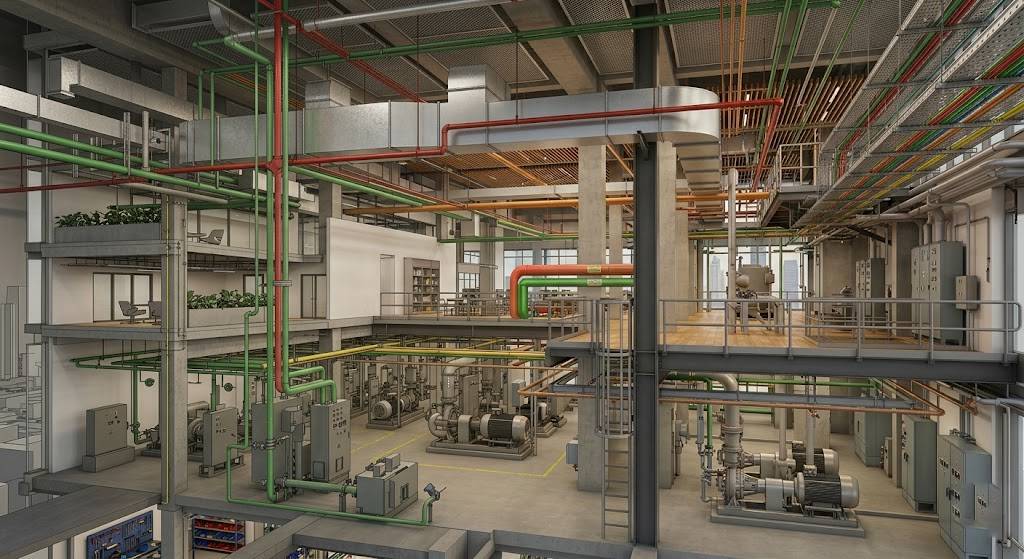
There is a significant difference between a BIM model that is good enough for coordination and a BIM model that is ready for fabrication. Coordination models show where systems go and confirm that they do not conflict with each other. Fabrication-ready models go further: they define every fitting, every connection, every hanger point, and every dimension that a fabricator needs to manufacture components off-site and a crew needs to install them in the field.
MEP 3D Modeling Services that produce fabrication-ready models are a specialized discipline. They combine the coordination workflow of MEP BIM Coordination Services with the additional detail and accuracy that fabrication demands. The result is a model that drives productivity from the shop floor to the jobsite.
For general contractors who require fabrication-ready models from their subcontractors, working with a provider that understands BIM for General Contractors workflows ensures that the models integrate with the overall project coordination process.
What Makes a Model Fabrication Ready?
A fabrication-ready MEP model is built to a Level of Development of 400 or higher. At LOD 400, every component in the model is sized, positioned, and detailed to the point where it can be fabricated and installed without additional field measurement or adjustment. This means ductwork is modeled with all fittings, transitions, and connections. Piping is modeled with exact lengths, fitting types, and end conditions. Electrical conduit is modeled with bends, couplings, and support locations.
The model also includes fabrication metadata: material specifications, insulation requirements, flow ratings, and connection types. This information can be extracted from the model to generate fabrication schedules, material lists, and work orders.
Mechanical Fabrication Models
For mechanical contractors, a fabrication-ready ductwork model includes every piece of duct, every fitting, every access door, and every flexible connection. The model is typically broken into spools or sections that correspond to how the ductwork will be fabricated and shipped. Each spool has a unique identifier that ties it to the installation sequence and the delivery schedule.
This level of detail enables BIM for Mechanical Contractors to drive their shop fabrication process directly from the model. Duct fabrication software can import the model data and generate cutting lists and machine instructions automatically, reducing the time from model to fabricated product.
Electrical Fabrication Models
Electrical fabrication-ready models include detailed conduit routing with exact bend locations, pulling points, and junction box positions. Cable tray models show the exact layout of all tray sections, fittings, and support points. Panel schedules and circuit routing are documented in the model.
Electrical contractors can use fabrication-ready models to pre-assemble conduit runs in the shop, pre-wire panel feeders, and prepare cable tray sections for rapid field assembly. This reduces the amount of electrical work that needs to be done in the field, improving both safety and productivity.
Plumbing Fabrication Models
Plumbing fabrication-ready models define every pipe segment with exact lengths, fitting types, and end configurations. Spool drawings extracted from the model give fabricators all the information they need to cut and assemble pipe in the shop. Hangers and supports are located in the model so that installer know exactly where to place them before running pipe.
Integration with Fabrication Software
One of the key advantages of fabrication-ready BIM models is that they can be exported directly to fabrication software. Mechanical, electrical, and plumbing fabrication shops use specialized software that can import model data and drive automated cutting and forming equipment. This integration eliminates manual re-entry of dimensions and specifications, reducing errors and speeding up the fabrication process.
Schedule and Cost Impact
The schedule and cost benefits of fabrication-ready MEP models are substantial. Shop fabrication is typically two to three times faster than field fabrication for the same scope of work. Material waste is reduced because components are cut to exact dimensions. Safety improves because workers spend less time at height or in confined spaces. And installation quality is higher because shop-fabricated components are built to consistent tolerances.
For general contractors and project owners, the use of fabrication-ready BIM models by MEP subcontractors translates into a faster, more predictable construction schedule. When trades arrive on site with pre-fabricated assemblies and accurate installation drawings, the pace of work accelerates and the potential for conflict and delay is reduced.
Conclusion
Fabrication-ready MEP 3D modeling is where BIM technology delivers its most tangible value to trade contractors. It connects the digital model directly to the physical product, eliminating the gap between design intent and field reality. For mechanical, electrical, and plumbing contractors who want to improve their productivity and quality, fabrication-ready BIM modeling is the path forward.

 Clearnet Communications
 Nirwana AI