Nirwana AI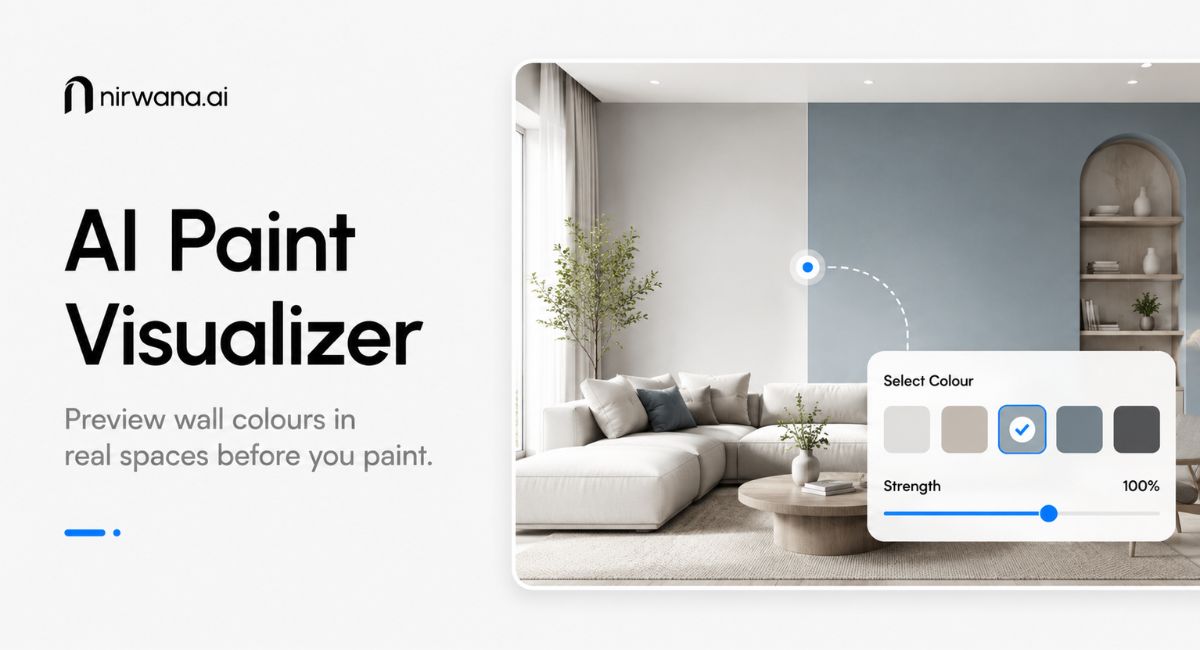
Choosing a paint colour sounds simple until you are standing in front of hundreds of nearly identical shades. One white feels too cold, another looks slightly yellow, and the grey that looked perfect on a small swatch suddenly appears much darker on an entire wall.
This uncertainty is common in the paint-buying journey. Customers often struggle to imagine how a colour will look in their actual space, under their lighting, and alongside their existing furniture. As a result, they delay decisions, request more samples, or choose a safe colour they may not truly love.
An AI paint visualizer makes this process easier by allowing customers to preview different paint colours in a realistic image of their own space before making a purchase. Instead of relying only on imagination or physical swatches, they can make a more informed and confident decision.
Why Choosing the Right Paint Colour Is So Difficult
Paint colours rarely look exactly the same in every environment. Their appearance can change depending on natural light, artificial lighting, wall texture, room size, surrounding materials, and even the time of day.
A soft beige displayed on a product card may look warmer inside a bedroom with yellow lighting. A deep blue that appears elegant in a catalogue may make a small room feel darker than expected. Even two similar shades of white can create completely different moods.
Customers must also consider how the colour will work with:
- Flooring and tiles
- Curtains and upholstery
- Furniture finishes
- Doors and window frames
- Accent walls
- Decorative accessories
Trying to evaluate all these details mentally is difficult. This is one reason customers often take several days or weeks to finalise a paint colour.
What Is an AI Paint Visualizer?
An AI paint visualizer is a digital tool that helps users apply and preview paint colours on walls within a photograph of a real room or exterior space.
The customer uploads an image, selects the wall or surface they want to repaint, and experiments with different colours. The technology detects the wall boundaries and creates a realistic preview while preserving important details such as furniture, windows, lighting, shadows, and architectural elements.
Unlike a basic colour overlay, an AI-powered solution understands the structure of the space. This produces a result that feels much closer to an actual painted wall.
Customers can compare multiple options without purchasing sample pots or repainting the same section repeatedly.
How Paint Visualisation Is Changing Customer Behaviour
Today’s customers prefer to research and compare products before speaking with a salesperson. They expect digital experiences that help them understand what they are buying, especially when the final result will affect their home for several years.
A static colour chart provides information, but it does not provide enough context. Customers want to see how the product will look in their environment.
With an AI paint visualizer, the buying process becomes more interactive. Instead of asking, “Will this colour look good in my living room?” the customer can upload a photograph and see the result directly.
For example, a homeowner renovating a living room may be choosing between warm white, light beige, and muted sage green. By previewing all three options on the same wall, they can quickly understand which colour works best with their wooden flooring, sofa, and lighting.
This turns a confusing decision into a visual comparison.
Benefits of Using an AI Paint Visualizer
1. Customers Make Decisions More Confidently
The biggest advantage of visualisation is confidence. Customers are more comfortable selecting a colour when they have already seen a realistic preview.
Although digital visualisation cannot replace every real-world factor, it provides far more clarity than a small swatch. It helps customers narrow down their choices and move forward without constant second-guessing.
2. Fewer Colour Selection Mistakes
Choosing the wrong shade can lead to repainting costs, material waste, additional labour, and customer dissatisfaction.
An AI paint visualizer allows users to compare lighter, darker, warmer, and cooler shades before placing an order. This reduces the chances of selecting a colour that clashes with the space or creates an unexpected effect.
3. A Faster Sales Process
Paint retailers and sales teams often spend considerable time showing shade cards, discussing combinations, and helping customers imagine the final result.
Visualisation makes these conversations more productive. A salesperson can show the customer several suitable colours in the actual room rather than explaining each option verbally.
This shortens the decision-making process and allows the sales team to serve more customers effectively.
4. Better Online Customer Engagement
Paint brands invest heavily in websites and digital catalogues, but customers may leave if they cannot understand how a colour will look in a real setting.
An interactive visualizer gives visitors a reason to stay, experiment, and explore more shades. This creates a more engaging online experience and can guide customers towards requesting a consultation, visiting a store, or purchasing a product.
5. More Personalised Recommendations
Every customer’s space is different. The same paint colour may look completely different in two homes.
With AI-based visualisation, brands can provide recommendations based on the customer’s actual room. A user with dark flooring and limited daylight may prefer lighter shades, while someone with a large, bright room may be comfortable exploring deeper tones.
This makes the buying journey feel more personal and useful.
How Nirwana.ai Supports Paint Visualisation
Nirwana.ai helps paint brands, retailers, and home-improvement businesses provide realistic colour previews using customers’ own space images.
The platform can identify wall areas while preserving key room details, shadows, edges, fixtures, and lighting conditions. This helps the selected paint shade appear naturally integrated into the photograph rather than looking like a flat digital layer.
Customers can test multiple colour options, compare combinations, and explore different wall selections. For example, they may apply one shade across all walls or use a contrasting colour for an accent wall.
The experience can be integrated into a brand’s website, used by sales teams in stores, or presented through digital kiosks during customer consultations.
Real-World Use Cases for Paint Businesses
Paint Brand Websites
A paint manufacturer can add an AI paint visualizer to its website and connect it with its digital colour catalogue. Visitors can upload their room image, explore shades, save their preferred options, and move towards the next step in the buying process.
Retail Stores and Experience Centres
Store employees can use the visualizer on a tablet, desktop, or kiosk. Customers can bring a photograph of their space and receive a personalised preview during the consultation.
This creates a more memorable experience than simply browsing colour cards.
Architects and Interior Designers
Design professionals can use visualisation to communicate colour concepts with clients. Instead of sending only reference images, they can show how the proposed colour palette may look in the client’s actual room.
This helps reduce misunderstandings and speeds up approvals.
Exterior Paint Selection
Exterior colours are particularly difficult to imagine because they must work with the building’s structure, roof, windows, landscape, and surrounding environment.
Nirwana.ai can also help users test exterior paint combinations, making it easier to compare main wall colours, trims, borders, and accent sections before painting begins.
What Makes a Good Paint Visualisation Experience?
A useful visualizer should do more than apply a transparent colour over a photograph. It should accurately identify surfaces, maintain realistic lighting, preserve shadows, and respect architectural boundaries.
The tool should also be easy to use. Customers should be able to upload an image, select a colour, view the result, and compare alternatives without needing technical knowledge.
Mobile compatibility is equally important because many customers will upload photographs directly from their phones. A smooth and responsive experience encourages them to experiment with more colours and spend more time engaging with the brand.
Conclusion
Choosing paint no longer needs to depend entirely on imagination. An AI paint visualizer gives customers a clearer and more realistic way to explore colours in their own spaces before making a final decision.
For paint brands and retailers, it can improve customer confidence, reduce selection mistakes, strengthen online engagement, and support faster sales conversations.
As visual buying experiences become more common, businesses that help customers see the final result will be better positioned to earn their trust. Exploring an AI-powered paint visualisation solution can be a practical first step towards making colour selection simpler, faster, and more enjoyable.


 Meenal Agarwal
 Charles James