harry brook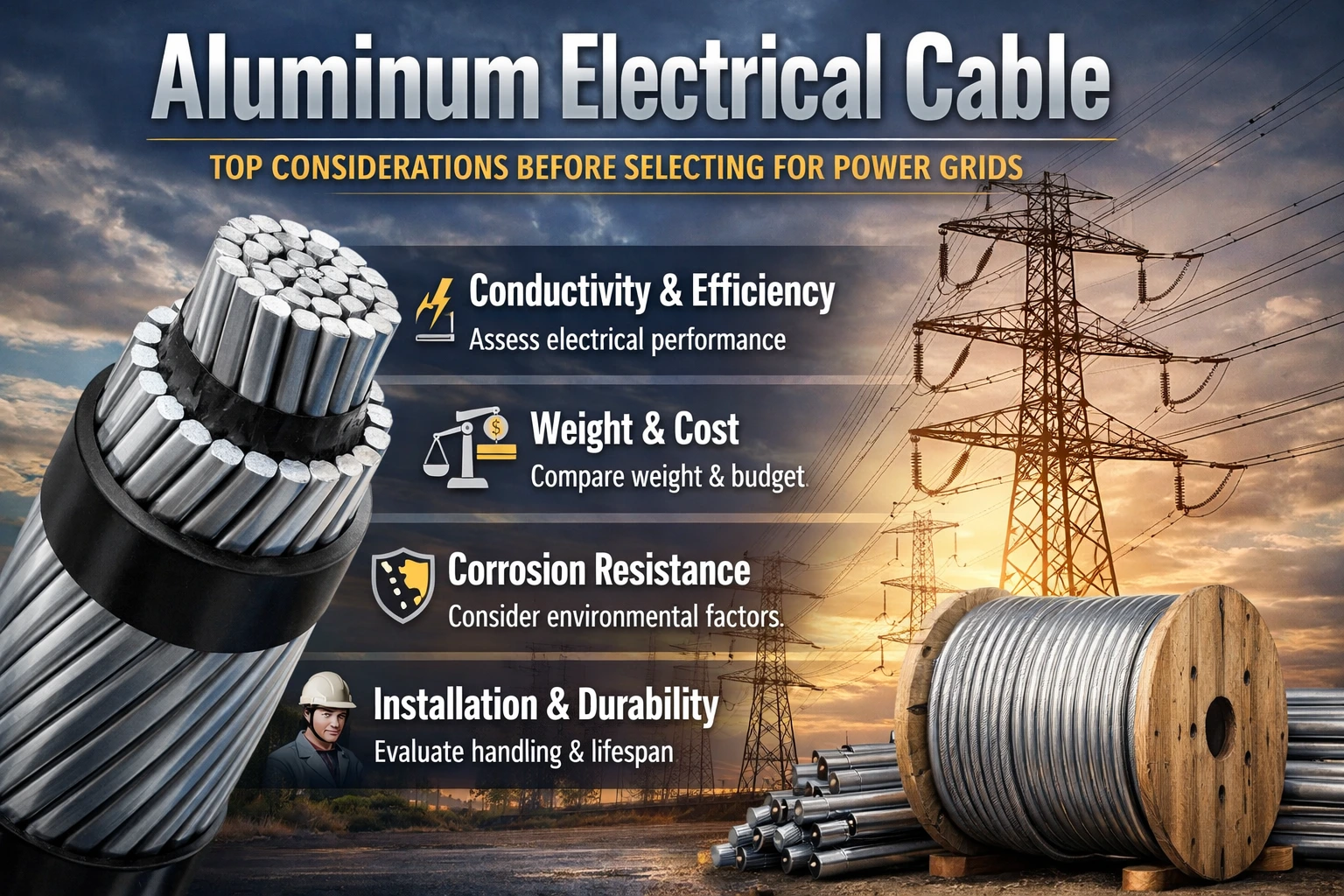
Aluminum cable has become a cornerstone in modern power transmission and distribution systems due to its cost efficiency, lightweight nature, and excellent electrical performance. For utilities, EPC contractors, and procurement teams, selecting the right aluminum cable is critical for ensuring reliability, long-term performance, and project cost optimization. As a global manufacturer, HNBF Power delivers high-quality aluminum conductor solutions tailored for diverse grid and infrastructure applications.
Why Aluminum Cable Is Preferred in Power Infrastructure
Aluminum has steadily replaced copper in many power applications, particularly in overhead and medium-voltage networks. The primary reasons include:
- Cost Advantage: Aluminum is significantly more cost-effective than copper, enabling large-scale projects to remain within budget without compromising performance.
- Lightweight Design: Aluminum cables weigh approximately 50% less than copper, reducing installation complexity and structural load on towers and poles.
- Corrosion Resistance: Aluminum naturally forms an oxide layer that protects against environmental degradation, making it suitable for outdoor and harsh environments.
- Adequate Conductivity: While aluminum has lower conductivity than copper, its larger cross-sectional design compensates effectively in most applications.
For engineers and procurement teams, these advantages translate into reduced capital expenditure, easier logistics, and scalable deployment across long-distance transmission networks.
Types of Aluminum Cable Used in Power Systems
HNBF Power manufactures a wide range of aluminum cable products designed to meet international standards and project-specific requirements.
AAC (All Aluminum Conductor)
AAC cables are composed entirely of aluminum strands, offering high conductivity and excellent corrosion resistance. They are typically used in urban distribution networks where shorter spans are common and mechanical strength requirements are moderate.
AAAC (All Aluminum Alloy Conductor)
AAAC cables utilize aluminum-magnesium-silicon alloys, providing improved mechanical strength compared to AAC. These conductors are ideal for coastal and high-corrosion environments due to their enhanced durability and resistance to environmental stress.
ACSR (Aluminum Conductor Steel Reinforced)
ACSR cables combine aluminum strands with a steel core, delivering high tensile strength and excellent sag performance. This makes them suitable for long-span transmission lines and heavy-load applications.
ABC (Aerial Bundled Cable)
ABC systems consist of insulated aluminum conductors bundled together, commonly used in low-voltage distribution networks. They improve safety, reduce power theft, and minimize outages caused by external factors.
LV Power Cable and Concentric Cable
For underground and building distribution, aluminum-based LV power cables and concentric cables provide reliable performance with cost efficiency. These are widely used in residential, commercial, and industrial power supply systems.
Key Technical Considerations for Aluminum Cable Selection
Selecting the right aluminum cable requires a balance of electrical, mechanical, and environmental factors. Procurement teams and engineers should evaluate:
Electrical Performance
- Current-carrying capacity (ampacity)
- Voltage rating
- Resistance and power loss characteristics
Proper sizing ensures optimal energy efficiency and reduces operational losses over the cable’s lifecycle.
Mechanical Strength
- Tensile strength for overhead lines
- Sag and tension characteristics
- Resistance to wind and ice loading
ACSR and AAAC are often preferred for projects requiring higher mechanical durability.
Environmental Conditions
- Corrosion resistance in coastal or industrial areas
- Temperature tolerance
- UV and weather resistance for outdoor installations
AAAC and ABC cables are particularly suitable for challenging environments.
Installation Requirements
- Overhead vs. underground deployment
- Ease of handling and installation
- Compatibility with existing infrastructure
The lightweight nature of aluminum cable simplifies installation and reduces labor costs, especially in large-scale projects.
Common Applications of Aluminum Cable
Aluminum cables are widely used across various sectors of the power industry:
- Transmission Lines: ACSR and AAAC conductors are extensively used for high-voltage overhead transmission.
- Distribution Networks: AAC and ABC cables are ideal for urban and rural power distribution.
- Industrial Projects: LV aluminum cables support machinery, plants, and industrial facilities.
- Renewable Energy Systems: Aluminum cables are increasingly used in solar and wind power installations due to their cost efficiency and scalability.
For EPC contractors, aluminum cable offers flexibility in design and deployment across diverse project environments.
Procurement Challenges and How HNBF Power Solves Them
Procurement teams often face challenges such as inconsistent quality, delayed deliveries, and lack of technical support. HNBF Power addresses these pain points through:
- Strict Quality Control: All products comply with international standards, ensuring consistent performance and reliability.
- Custom Manufacturing: Tailored conductor designs based on project specifications, including span length, load requirements, and environmental conditions.
- Global Supply Capability: Efficient production and logistics to meet tight project timelines.
- Technical Support: Expert guidance for cable selection, installation, and maintenance.
By partnering with HNBF Power, buyers gain access to a reliable supply chain and engineering expertise that supports project success from planning to execution.
Future Trends in Aluminum Cable Technology
The demand for aluminum cable continues to grow with the expansion of smart grids, renewable energy, and urban infrastructure. Innovations include:
- High-temperature low-sag (HTLS) conductors for increased capacity
- Advanced alloy materials for improved strength and durability
- Enhanced insulation technologies for ABC and underground cables
These advancements are helping utilities increase efficiency while minimizing environmental impact and operational costs.
FAQs About Aluminum Cable
What is aluminum cable mainly used for?
Aluminum cable is primarily used in power transmission and distribution systems, including overhead lines, underground networks, and industrial applications.
Is aluminum cable reliable for long-term use?
Yes, when properly designed and installed, aluminum cable offers excellent durability, corrosion resistance, and long service life.
How does aluminum cable compare to copper cable?
Aluminum cable is more cost-effective and lightweight, while copper offers higher conductivity. Aluminum is preferred for large-scale and long-distance applications.
Can aluminum cable be used in harsh environments?
Yes, especially AAAC and ABC cables, which are designed to withstand corrosion, UV exposure, and extreme weather conditions.
What factors affect aluminum cable performance?
Key factors include conductor size, installation method, environmental conditions, and load requirements.
Partner with HNBF Power for Reliable Aluminum Cable Solutions
Choosing the right aluminum cable is essential for achieving efficiency, reliability, and cost control in power projects. HNBF Power combines advanced manufacturing, strict quality standards, and customized engineering support to deliver solutions that meet the evolving demands of modern power systems.
Contact HNBF Power today to discuss your project requirements and get tailored aluminum cable solutions designed for optimal performance and long-term value.


 tiptop einrichtung
 Mark Denard