harry brook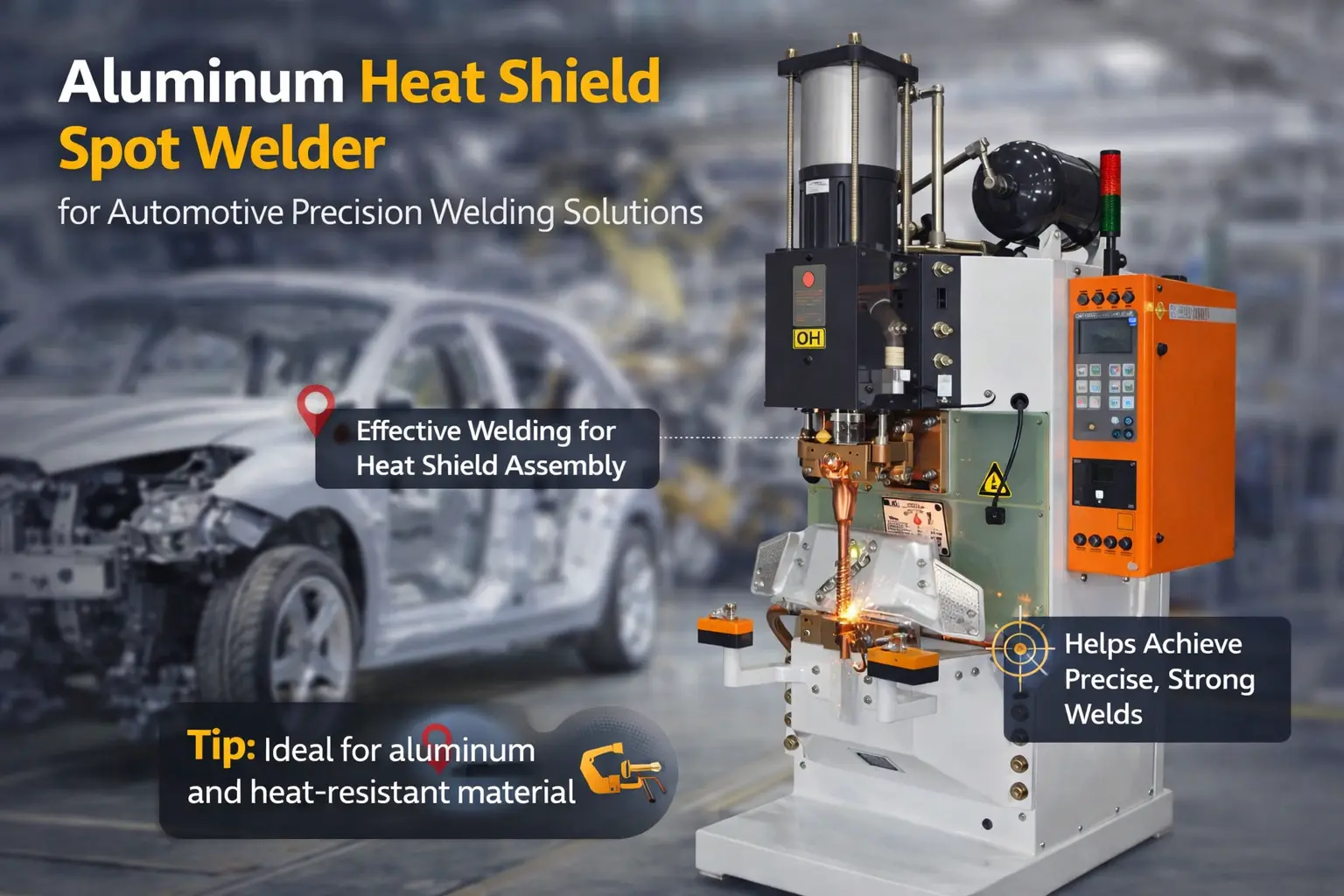
In today’s manufacturing landscape, aluminum spot welding has become one of the most critical joining processes for industries focused on lightweight structures, energy efficiency, and high-strength assemblies. From automotive body-in-white production to aerospace structures and EV battery systems, manufacturers increasingly rely on precise and stable aluminum joining technologies.
However, aluminum is also one of the most challenging materials to weld due to its high thermal conductivity, strong oxide layer, and rapid heat dissipation. This is where a high-performance aluminum spot welder becomes essential especially advanced resistance welding systems designed for industrial-scale production.
As a global leader in resistance welding technology, Heron Welder delivers high-precision spot welding machines, MFDC systems, and automated welding solutions engineered specifically for demanding materials like aluminum.
What Is an Aluminum Spot Welder?
An aluminum spot welder is a specialized resistance welding machine designed to join aluminum sheets by applying controlled pressure and high electrical current through copper electrodes.
The process creates a localized weld nugget by generating heat from electrical resistance at the interface of the materials. Once the current stops, the molten zone solidifies under pressure, forming a strong metallurgical bond.
Unlike steel welding, aluminum spot welding requires:
- Higher current levels
- Extremely fast heat input cycles
- Precise electrode force control
- Advanced current waveform stability
This makes standard AC spot welders less effective, while modern MFDC (Medium Frequency Direct Current) systems are widely preferred for industrial use.
Why Aluminum Is Difficult to Spot Weld
Aluminum’s properties create significant welding challenges that demand advanced machine control:
1. High Electrical Conductivity
Aluminum conducts electricity rapidly, meaning heat dissipates too quickly to form a stable weld without high current input.
2. Oxide Layer Formation
A thin but extremely stable oxide layer forms instantly on aluminum surfaces, increasing contact resistance inconsistency.
3. Rapid Heat Dissipation
Heat spreads quickly away from the weld zone, requiring precise energy concentration in milliseconds.
4. Porosity and Cracking Risks
If parameters are not controlled, defects such as porosity, weak nuggets, or cracks may appear.
According to industrial studies, improper aluminum spot welding can lead to defect rates up to 8–12% in mass production environments, significantly affecting yield and cost efficiency.
How Aluminum Spot Welding Works (Process Principle)
The aluminum spot welding process typically includes three main stages:
1. Pre-Squeeze Stage
Electrodes apply pressure (typically 1000–2000N) to ensure full contact between sheets and break surface resistance variations.
2. Heating Stage
A high-intensity current (often 25–80kA depending on thickness) flows through the joint, generating heat at the interface and forming a molten weld nugget.
3. Forging & Cooling Stage
Current stops while pressure is maintained, allowing the molten zone to solidify into a strong, compact joint.
This precise sequence ensures consistent weld strength and reduces defects in high-volume production.
Why MFDC Aluminum Spot Welders Are Industry Standard
Modern manufacturing heavily relies on MFDC aluminum spot welders due to their superior control and efficiency compared to traditional AC machines.
Key Advantages of MFDC Technology
1. Stable DC Output
No current zero-crossing ensures continuous energy delivery, improving weld consistency.
2. Higher Energy Efficiency
MFDC systems achieve over 90% energy utilization compared to much lower efficiency in AC systems.
3. Precision Control
Millisecond-level current regulation enables accurate compensation for aluminum’s variability.
4. Reduced Spatter & Electrode Wear
Stable current flow minimizes electrode damage and improves surface quality.
5. Better Multi-Spot Performance
Ideal for automation lines requiring repeated and consistent weld quality.
Heron’s MFDC resistance welding systems are engineered to handle complex aluminum and dissimilar metal applications with high stability and repeatability.
Industrial Applications of Aluminum Spot Welding
1. Automotive Manufacturing
Aluminum spot welders are widely used in:
- EV battery trays
- Lightweight body structures
- Door panels and reinforcements
Aluminum helps reduce vehicle weight, improving energy efficiency and performance.
2. Aerospace Industry
Aircraft manufacturers use aluminum spot welding for:
- Structural frames
- Interior components
- Lightweight load-bearing assemblies
Precision and reliability are critical in this sector.
3. Electrical & Energy Systems
Applications include:
- Busbars
- Battery packs
- Power distribution components
4. Industrial Equipment Manufacturing
Used in enclosures, machinery housings, and metal assemblies requiring high strength-to-weight ratio.
Aluminum Spot Welding vs Traditional Welding Methods
| Feature | Aluminum Spot Welding | MIG/TIG Welding |
|---|---|---|
| Speed | Very high | Moderate |
| Automation compatibility | Excellent | Limited |
| Heat distortion | Low | Higher |
| Production efficiency | High-volume suitable | Lower for mass production |
| Cost per weld | Low | Higher |
Spot welding is preferred in mass production environments due to speed, repeatability, and automation readiness.
Best Practices for Aluminum Spot Welding
To achieve high-quality welds, engineers must carefully optimize process parameters:
1. Proper Surface Preparation
Removing contaminants and controlling oxide layers improves consistency.
2. Electrode Material Selection
Copper-based alloys with optimized geometry help maintain stable current density.
3. Controlled Welding Force
Correct electrode force ensures stable contact resistance and reduces spatter.
4. Optimized Current Profile
High-current short-duration pulses are essential for aluminum welding success.
5. Regular Maintenance
Electrode wear and cooling system efficiency directly affect weld quality.
Why Choose Heron Aluminum Spot Welding Solutions
Heron Welder specializes in advanced resistance welding technologies designed for industrial-scale production environments.
Our solutions include:
- MFDC aluminum spot welding machines
- Automated welding production lines
- Projection and seam welding systems
- Self-piercing riveting (FSPR) solutions
- Intelligent welding controllers and monitoring systems
With decades of engineering expertise, Heron focuses on delivering:
- Stable weld quality for aluminum and dissimilar metals
- High-efficiency production systems
- Custom automation integration
- Reduced operational cost and downtime
Whether you are building EV components, aerospace assemblies, or industrial structures, Heron provides tailored welding solutions that meet global manufacturing standards.
FAQs About Aluminum Spot Welding
1. Can aluminum be spot welded easily?
Aluminum is difficult to weld due to high conductivity and oxide layers, but modern MFDC spot welders make it highly reliable.
2. What type of welder is best for aluminum?
MFDC (Medium Frequency DC) spot welders are the most effective for aluminum applications.
3. Is aluminum spot welding strong?
Yes, when properly controlled, it creates strong, durable joints suitable for automotive and aerospace use.
4. What industries use aluminum spot welding the most?
Automotive, EV manufacturing, aerospace, energy storage, and industrial fabrication industries.
5. What makes Heron aluminum spot welders different?
Heron systems combine advanced MFDC technology, automation compatibility, and precision control for industrial-grade performance.
Conclusion
Aluminum spot welding is no longer just a specialized process it is a core technology driving modern lightweight manufacturing across multiple industries. However, achieving consistent, high-quality welds requires advanced control systems, stable current delivery, and intelligent automation.
Heron Welder delivers next-generation aluminum spot welding solutions designed to meet these exact demands with precision and reliability.
Looking to upgrade your production line or develop a customized aluminum welding system?
Contact Heron Welder today to request a quote or speak with our engineering team about tailored resistance welding and automation solutions for your factory.


 Boxo Packaging
 jack devid