seenivasan v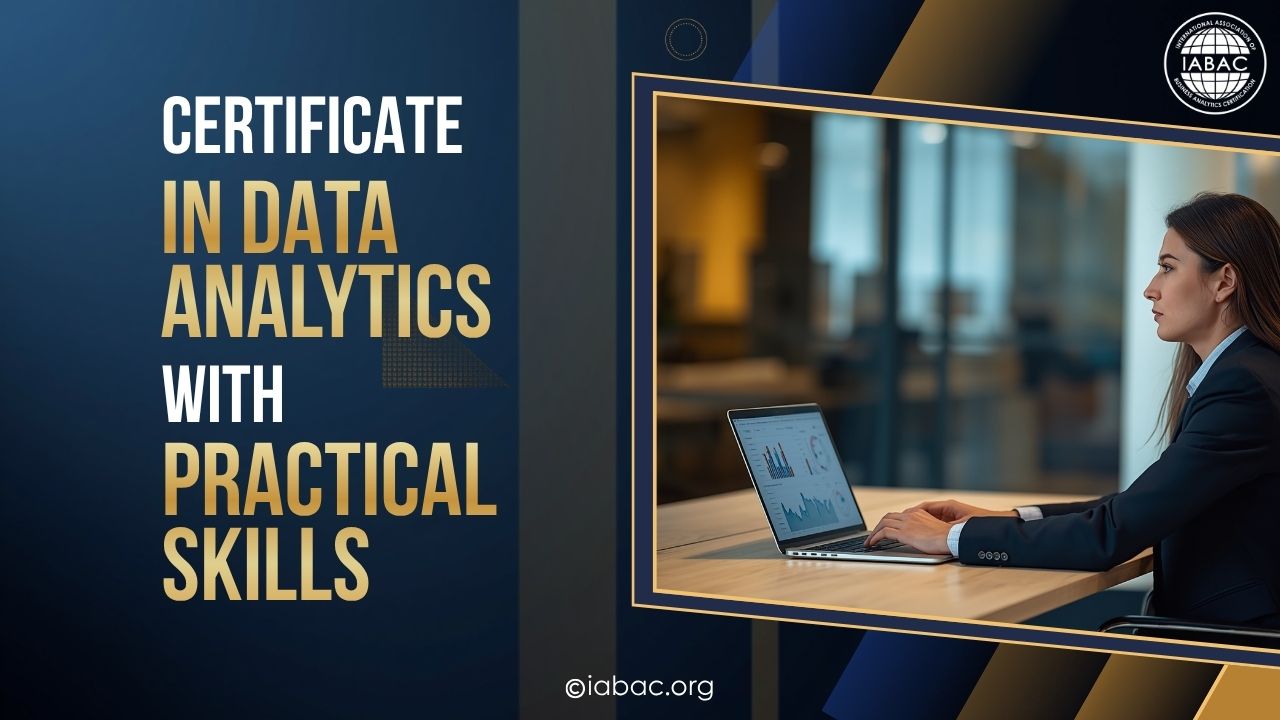
Data is everywhere today. Every time we shop online, use a mobile app, book a ticket, or browse social media, data is being created. Businesses collect this information to understand customers, improve products, and make better decisions. However, raw data alone has little value unless someone knows how to analyze it.
This is where a certificate in data analytics becomes useful. It helps learners understand how to collect, organize, analyze, and present data in a meaningful way. More importantly, a good certification focuses on practical skills instead of only teaching theory.
Whether you are a student, a working professional, or someone planning a career change, learning practical data analytics skills can help you become job-ready. In this blog, you will learn why practical learning matters, what skills you gain, and how a certificate can support your career.
What Is a Certificate in Data Analytics?
A certificate in data analytics is a professional learning program that teaches the knowledge and skills needed to work with data. These programs are designed to help learners understand how data can solve business problems and support better decision-making.
Unlike a traditional college degree, a certificate program is usually shorter and focuses on industry-relevant topics. It combines theoretical concepts with practical exercises so learners can apply what they study.
A typical certificate program covers:
- Data collection methods
- Data cleaning techniques
- Spreadsheet analysis
- SQL for working with databases
- Data visualization
- Statistical concepts
- Dashboard creation
- Business reporting
- Real-world projects
The goal is not just to understand concepts but also to use them in practical situations.
Why Practical Skills Matter More Than Theory
Learning definitions and formulas is important, but employers usually look for candidates who can solve real business problems.
Imagine two candidates applying for the same data analyst role.
The first candidate knows the theory behind data analysis but has never worked on a real dataset.
The second candidate has completed several projects, cleaned messy data, built dashboards, and explained business insights.
Most employers will choose the second candidate because they can start contributing more quickly.
Practical learning helps students:
- Build confidence
- Improve problem-solving abilities
- Understand business requirements
- Gain experience with industry tools
- Create an impressive portfolio
When you practice regularly, concepts become much easier to understand and remember.
Benefits of Choosing a Practical Data Analytics Certificate
A practical certification offers advantages beyond classroom learning.
Better Understanding
Working on real datasets helps learners understand how businesses actually use data.
Improved Confidence
Hands-on practice reduces fear of working with large datasets and analytical tools.
Strong Portfolio
Projects completed during certification can be added to your portfolio when applying for jobs.
Faster Learning
Practical exercises make complex topics easier to understand because learners apply concepts immediately.
Better Interview Preparation
Many interview questions involve solving business scenarios. Practical experience makes it easier to answer confidently.
Essential Practical Skills You Learn
A good certificate in data analytics develops both technical and business skills.
Data Collection
Before analysis begins, data must be gathered from different sources such as databases, spreadsheets, websites, or applications.
Learners understand how to collect accurate and relevant information.
Data Cleaning
Real-world data often contains missing values, duplicate records, spelling mistakes, and formatting errors.
Cleaning the data improves its quality and makes analysis more reliable.
SQL
SQL is one of the most important skills for data analysts.
It helps professionals retrieve information from databases, filter records, combine tables, and generate reports.
Learning SQL through practical exercises builds confidence in handling business data.
Microsoft Excel
Excel continues to be one of the most widely used tools in analytics.
Learners practice:
- Pivot Tables
- Charts
- Lookup functions
- Conditional formatting
- Data filtering
- Basic automation
These skills are useful in almost every industry.
Data Visualization
Charts and dashboards make information easier to understand.
Students learn how to present findings clearly so managers and business leaders can make informed decisions.
Good visualizations simplify complex information.
Working with Real Business Projects
One of the biggest advantages of practical learning is exposure to real business scenarios.
For example, learners may analyze:
- Retail sales data
- Customer feedback
- Marketing campaign performance
- Financial reports
- Website traffic
- Product performance
- Employee performance data
These projects help learners understand how data supports business growth.
Instead of simply answering textbook questions, students solve actual business problems.
Popular Tools Covered During Training
Most practical certificate programs introduce learners to commonly used industry tools.
Some of the most popular include:
- Microsoft Excel
- SQL
- Power BI
- Tableau
- Python (for data analysis)
- Google Sheets
Learning multiple tools increases flexibility because different companies use different software.
However, understanding the concepts behind analytics is even more important than learning any single tool.
Statistics Show Growing Demand
The demand for data professionals continues to increase across industries.
According to the U.S. Bureau of Labor Statistics, employment for data-related occupations is expected to grow much faster than the average for many other professions over the coming years.
Similarly, reports from LinkedIn’s Jobs on the Rise have consistently listed data analyst roles among the fastest-growing careers in many countries.
These trends show that organizations increasingly rely on data-driven decision-making, creating strong opportunities for skilled professionals.
How Practical Learning Builds Job-Ready Skills
Many learners worry that completing a certification may not be enough to get a job. The difference often comes down to practical experience.
When you work on hands-on assignments, you learn how to think like a data analyst. You begin asking questions such as:
- What problem am I trying to solve?
- Is the data complete and accurate?
- Which chart explains the results clearly?
- What insights will help the business?
This type of thinking develops through practice, not by reading theory alone.
Practical learning also helps you become comfortable working under deadlines, organizing data, and presenting findings in a professional way.
Who Should Pursue a Certificate in Data Analytics?
One of the best things about data analytics is that people from different educational and professional backgrounds can learn it.
A certificate in data analytics is suitable for:
Students
Students can build industry-relevant skills before graduation, making them more attractive to employers.
Fresh Graduates
Graduates who have limited work experience can strengthen their resumes by showcasing practical analytics projects.
Working Professionals
Professionals in finance, marketing, sales, healthcare, HR, operations, and customer service can use analytics to improve their daily work and explore better career opportunities.
Career Changers
Many people switch to data analytics because it offers opportunities across multiple industries. A practical certification provides the foundation needed for this transition.
Business Owners
Entrepreneurs can use analytics to understand customer behavior, monitor sales, identify trends, and make better business decisions.
Career Opportunities After Completing a Certificate
A certificate in data analytics can open the door to many career paths.
Some common job roles include:
- Data Analyst
- Business Analyst
- Reporting Analyst
- Operations Analyst
- Marketing Analyst
- Financial Analyst
- Product Analyst
- Junior Data Consultant
- Business Intelligence Analyst
These roles exist in industries such as banking, healthcare, retail, manufacturing, education, logistics, technology, telecommunications, and e-commerce.
As you gain experience, you can move into senior analyst, analytics manager, or consulting positions.
How to Choose the Right Certificate Program
Not every certification offers the same learning experience. Before enrolling, consider the following factors.
Practical Curriculum
Choose a program that includes assignments, projects, and case studies instead of only recorded lectures.
Industry-Relevant Tools
Ensure the course covers widely used tools such as Excel, SQL, Power BI, Tableau, or Python.
Experienced Trainers
Learning from professionals with industry experience provides practical insights beyond textbooks.
Project-Based Learning
Working on real datasets helps you build confidence and prepare for actual business challenges.
Assessments
Regular quizzes, assignments, and project evaluations help measure your progress.
Certification Recognition
A recognized certification adds credibility to your resume and demonstrates your commitment to learning.
Common Challenges Beginners Face
Starting a new skill can feel overwhelming, but most challenges become easier with regular practice.
Learning SQL
SQL may seem difficult initially, but practicing simple queries every day builds confidence.
Understanding Statistics
Basic statistical concepts become easier when you apply them to real datasets instead of memorizing formulas.
Cleaning Data
Real-world datasets are often messy. Learning to organize and clean data is an important part of becoming a successful analyst.
Choosing the Right Visualization
Not every chart suits every dataset. Practical experience helps you select the best way to present information.
Tips to Get the Most from Your Certification
You can improve your learning experience by following a few simple habits.
- Practice every day, even if only for 30 minutes.
- Work on different types of datasets.
- Build small projects after each topic.
- Review your mistakes and learn from them.
- Stay curious and keep exploring new business problems.
- Create a portfolio of completed projects.
- Continue learning even after earning your certificate.
Consistency matters more than studying for long hours once in a while.
The Future of Data Analytics
Data is becoming one of the most valuable business resources. Organizations are collecting more information than ever before and need skilled professionals who can turn that information into useful insights.
As businesses continue their digital transformation, the demand for data analytics professionals is expected to remain strong.
Future trends include:
- Greater use of cloud-based analytics
- Faster business reporting
- Self-service dashboards
- Real-time decision-making
- Increased demand for data-driven planning
Professionals with practical analytics skills will be well-positioned to take advantage of these opportunities.
Conclusion
A certificate in data analytics is much more than a learning credential. It is an opportunity to develop practical skills that employers value. By working with real datasets, learning industry-standard tools, and solving business problems, you become better prepared for today’s job market.
Whether you are beginning your career, looking for a promotion, or planning a career change, practical learning can make a significant difference. Focus on building strong analytical thinking, practicing regularly, and applying your knowledge to real-world situations.
If you’re looking for an industry-recognized credential, consider the IABAC Data Analytics Certification to validate your practical analytics skills and improve your career prospects.


 Raja Ganapathi
 Akshay Parjapati