FixElectrical Panel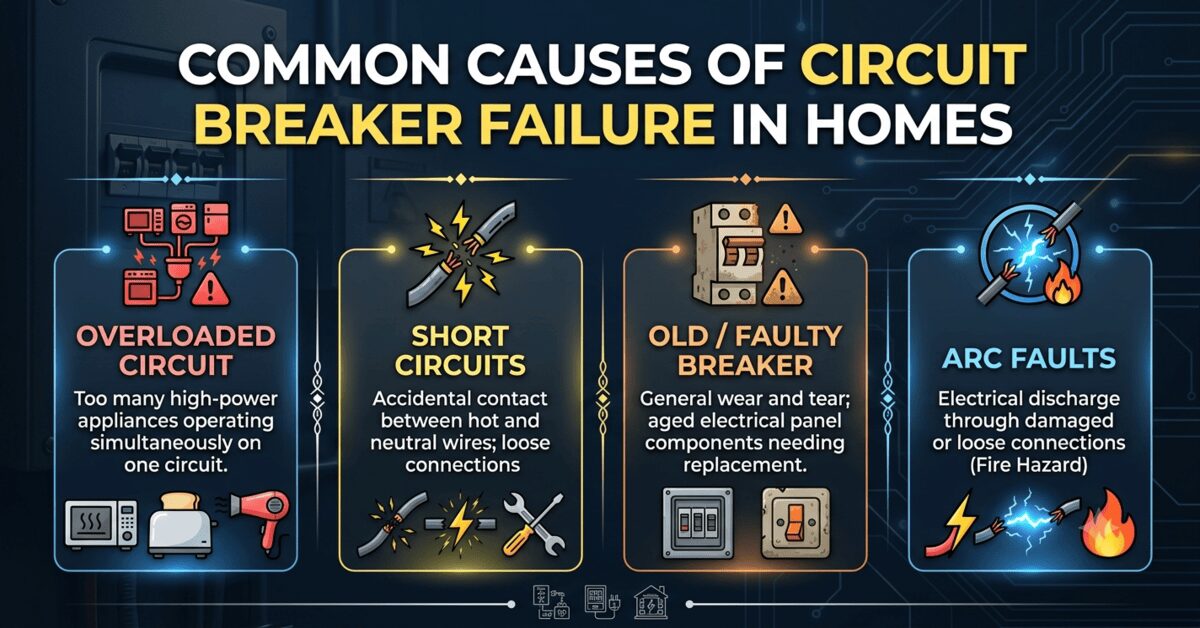
A circuit breaker is one of the most important safety components in a home’s electrical system. Its job is simple but critical: stop the flow of electricity when it detects an overload, short circuit, or ground fault. By interrupting the electrical current, it helps protect your wiring, appliances, and household from serious damage and reduces the risk of electrical fires.
Although circuit breakers are designed to last for many years, they are not immune to wear and tear. Frequent tripping, age, moisture, loose connections, and electrical overloads can all affect their performance. Understanding the most common causes of circuit breaker failure can help homeowners recognize potential problems before they become expensive or dangerous.
1. Electrical Overloads
Electrical overloads are one of the leading reasons a circuit breaker trips or eventually fails. An overload happens when too many devices or appliances draw power from the same circuit at the same time.
For example, running portable heaters, microwaves, air conditioners, and other high-wattage appliances simultaneously on one circuit can exceed its capacity. While occasional overloads may only cause temporary tripping, repeated stress can weaken the breaker over time.
Common signs include:
- Breakers that trip repeatedly
- Flickering lights
- Warm outlets or switches
- Appliances losing power unexpectedly
Distributing electrical loads more evenly throughout the home helps reduce unnecessary strain on the electrical system.
2. Short Circuits
A short circuit occurs when a hot wire comes into contact with another conductor, such as a neutral wire or ground wire. This creates a sudden surge of electrical current that the breaker immediately detects.
Short circuits may be caused by:
- Damaged wiring
- Loose electrical connections
- Faulty outlets
- Defective appliances
- Rodent damage inside walls
Unlike simple overloads, short circuits can present a significant fire hazard if left unresolved. Homeowners should avoid repeatedly resetting a breaker that trips immediately after being turned back on.
3. Ground Faults
Ground faults are similar to short circuits but occur when electricity unintentionally travels directly to ground instead of following its intended path.
These issues commonly develop in:
- Bathrooms
- Kitchens
- Laundry rooms
- Outdoor electrical systems
- Garages
Moisture greatly increases the likelihood of ground faults. Modern homes often use Ground Fault Circuit Interrupter (GFCI) protection in these areas to reduce the risk of electric shock.
If ground faults occur frequently, they should be inspected by a qualified electrician.
4. Aging Circuit Breakers
Like most mechanical devices, circuit breakers eventually wear out.
Most quality breakers can function reliably for decades, but factors such as repeated tripping, environmental conditions, and heavy electrical usage gradually reduce their effectiveness.
Older breakers may:
- Trip without an obvious cause
- Fail to reset properly
- Feel loose inside the electrical panel
- Fail to trip when they should
An aging breaker may appear to work normally while providing less protection than intended, making routine electrical inspections increasingly important as a home ages.
5. Loose Electrical Connections
Electrical systems naturally expand and contract as temperatures change. Over many years, this movement can loosen wire connections inside outlets, switches, junction boxes, or the electrical panel.
Loose connections create resistance, which generates heat.
Symptoms may include:
- Buzzing sounds
- Burning odors
- Discolored outlets
- Intermittent power
- Warm electrical panel components
Ignoring loose connections can eventually damage both wiring and circuit breakers.
6. Moisture and Water Damage
Electricity and moisture are a dangerous combination.
Water entering an electrical panel through roof leaks, flooding, condensation, or plumbing leaks can cause corrosion on breaker components.
Corroded breakers may:
- Trip unpredictably
- Fail to trip during dangerous conditions
- Develop rust
- Become difficult to operate
Homes located in humid climates should have electrical panels inspected periodically to identify early signs of moisture damage.
7. Faulty or Damaged Appliances
Sometimes the breaker itself is not the problem.
A malfunctioning appliance with damaged internal wiring may repeatedly overload or short the circuit whenever it is plugged in.
Common offenders include:
- Space heaters
- Refrigerators
- Washing machines
- Dishwashers
- Window air conditioners
Testing appliances individually can help determine whether the breaker or the connected equipment is causing the issue.
8. Improper Electrical Installations
Electrical work that does not meet current safety standards can contribute to premature breaker failure.
Examples include:
- Incorrect breaker sizing
- Overloaded circuits
- Poor wire terminations
- Mixing incompatible breaker brands
- Improper panel modifications
Improper installations may function temporarily while creating hidden safety risks that become more serious over time.
9. Corrosion Inside the Electrical Panel
Corrosion affects the metal contacts responsible for delivering electrical current safely through the breaker.
Possible causes include:
- High humidity
- Water intrusion
- Chemical exposure
- Aging equipment
Corrosion increases electrical resistance, which generates additional heat and reduces breaker reliability.
Visible rust or corrosion inside an electrical panel should never be ignored.
10. Manufacturing Defects or Product Wear
Although uncommon, some circuit breakers may fail due to manufacturing defects or internal mechanical wear.
A breaker contains several moving parts that must operate instantly during dangerous electrical conditions. If these components become worn or defective, the breaker may not respond properly.
This is another reason homeowners should avoid assuming that a breaker is functioning correctly simply because it has not tripped recently.
Warning Signs That a Circuit Breaker May Be Failing
A failing circuit breaker often provides warning signs before complete failure.
Watch for symptoms such as:
- Breakers that trip frequently
- Burning smells near the electrical panel
- Buzzing or humming noises
- Breakers that will not reset
- Lights flickering throughout the home
- Warm or hot breaker switches
- Visible scorch marks
- Rust or corrosion inside the panel
If any of these signs appear, avoid repeatedly resetting the breaker without identifying the underlying cause.
Preventing Circuit Breaker Problems
While not every breaker failure can be prevented, homeowners can reduce the likelihood of electrical issues by following a few simple maintenance practices.
These include:
- Avoid overloading circuits with multiple high-powered appliances.
- Schedule periodic electrical inspections.
- Replace damaged outlets or switches promptly.
- Keep the electrical panel dry and free from moisture.
- Address flickering lights or unusual electrical behavior early.
- Use appliances according to manufacturer recommendations.
- Upgrade outdated electrical panels when necessary.
Routine maintenance helps extend the life of your electrical system while improving overall household safety.
Final Thoughts
Circuit breakers play an essential role in protecting homes from electrical hazards. While occasional tripping is often a sign that the safety system is doing its job, repeated problems should never be ignored. Overloads, short circuits, loose connections, moisture, aging equipment, and faulty appliances are among the most common causes of circuit breaker failure.
Recognizing these warning signs early can help prevent costly repairs and improve the safety of your home’s electrical system. If a breaker continues to trip, shows signs of damage, or no longer operates properly, having the electrical panel inspected by a qualified professional is the safest course of action.
For homeowners experiencing recurring electrical issues, learning more about Circuit Breaker Repair in Denver can help determine whether repair or replacement is the appropriate solution for restoring safe and reliable power.


 INAUSCO DIGITAL
 Oxygen Auto