David James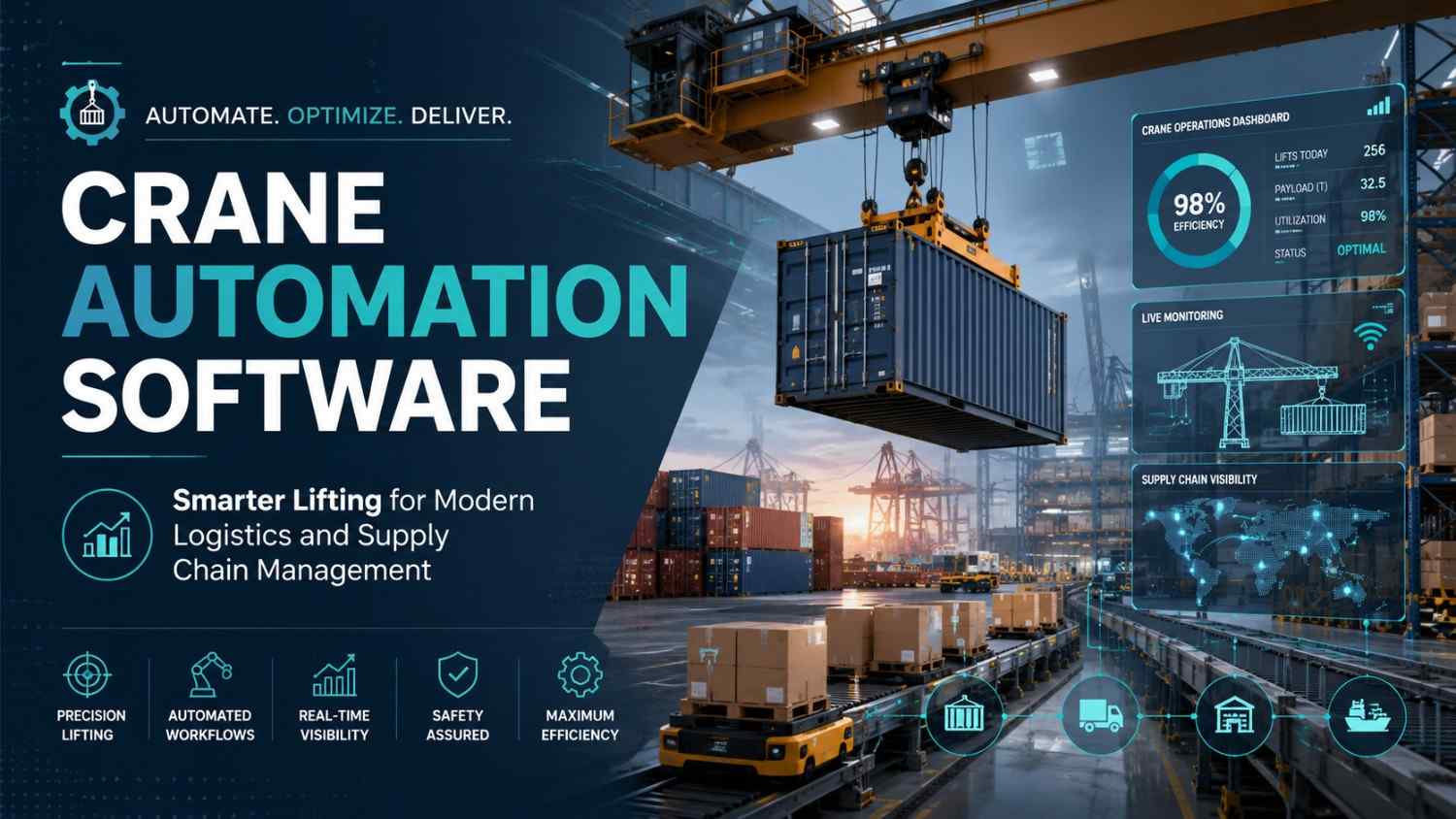
One delayed lift can interrupt an entire supply chain.
In warehouses, ports, manufacturing facilities, steel yards, construction material hubs, and distribution centers, cranes often move the materials that are too heavy, too large, or too valuable for ordinary handling methods. When crane operations depend on manual instructions, paper records, radio calls, or disconnected systems, the result is often delay, confusion, safety risk, and poor visibility.
A crane automation system changes that.
Instead of treating crane work as a standalone task, an automated system connects lifting equipment, sensors, controls, software, operators, inventory data, and supply chain workflows. This gives logistics teams a smarter way to plan, monitor, and optimize heavy-material movement.
For USA-based businesses that depend on cranes to keep goods moving, automation is not only about replacing manual effort. It is about creating safer, faster, and more predictable operations.
What Is a Crane Automation System?
A crane automation system is a combination of hardware, software, controls, sensors, and digital workflows that helps cranes operate with less manual coordination and greater precision.
Depending on the facility, the system may support overhead cranes, gantry cranes, bridge cranes, container cranes, yard cranes, or automated storage cranes.
A crane automation system may include:
- Crane control software
- Programmable logic controllers
- Sensors and positioning systems
- Load monitoring devices
- Anti-collision technology
- Remote operation tools
- Automated job scheduling
- Warehouse or yard system integration
- Safety alerts and inspection tracking
- Real-time dashboards and reporting
The goal is to make crane movement safer, more accurate, and better connected to the wider logistics operation.
In simple terms, a crane automation system helps answer four critical questions:
- What needs to move?
- Which crane should move it?
- Where should it go?
- How can the lift be completed safely and efficiently?
Why Crane Automation Matters in Logistics
Logistics depends on flow. Materials must arrive, move, store, stage, and ship without unnecessary friction. When cranes are part of that process, they often become one of the most important links in the operation.
Manual crane coordination can create several challenges:
- Long wait times for crane availability
- Miscommunication between operators and supervisors
- Inaccurate material locations
- Unsafe lifting conditions
- Equipment conflicts
- Production delays
- Truck loading delays
- Poor visibility into crane utilization
- Unexpected maintenance issues
These problems become more serious as operations grow. A small warehouse may manage crane work with manual coordination. But a high-volume facility with multiple cranes, shifts, docks, storage zones, and shipment deadlines needs a more reliable process.
A crane automation system helps bring structure, visibility, and consistency to the lifting workflow.
Core Components of a Crane Automation System
Crane Control Software
Control software is the digital brain of the system. It helps manage movement commands, job sequencing, safety logic, equipment status, and communication between cranes and other systems.
In advanced environments, control software can help automate repetitive travel paths, reduce unnecessary movement, and coordinate multiple cranes working in the same facility.
Sensors and Positioning Technology
Sensors help the system understand where the crane, hook, trolley, bridge, and load are located. Positioning technology improves accuracy and helps reduce the risk of wrong-location moves.
This is especially useful in facilities with tight aisles, dense storage areas, heavy inventory, or multiple crane zones.
Load Monitoring
Load monitoring helps confirm that a crane is operating within safe limits. It can support safer lifting by tracking load weight, lift behavior, and potential overload conditions.
This is critical because cranes often handle materials that can damage equipment, inventory, or people if lifted incorrectly.
Anti-Collision and Zone Control
In facilities with more than one crane, collision risk becomes a serious concern. Anti-collision features and zone controls can help prevent cranes from entering restricted areas or interfering with each other.
This is especially valuable in steel yards, manufacturing plants, ports, and warehouses with shared crane runways.
Automated Job Dispatching
Automated job dispatching helps send the right task to the right crane or operator. Jobs can be prioritized based on shipment deadlines, production needs, equipment availability, load type, safety requirements, or location.
This reduces manual scheduling and helps teams move materials in a smarter sequence.
Integration with Supply Chain Systems
A crane automation system becomes more powerful when it integrates with a warehouse management system, yard management platform, ERP, transportation management system, or supply chain management app.
Integration helps connect crane movement with inventory, orders, production schedules, dock appointments, and outbound shipping.
Instead of updating several systems manually, teams can use connected data to improve decision-making.
Benefits of a Crane Automation System
Improved Safety
Safety is one of the most important benefits of crane automation. Automated controls, sensors, alerts, inspections, and rule-based movement can help reduce risk in high-load environments.
A crane automation system can support safer operations by helping teams:
- Avoid overload conditions
- Maintain safer travel paths
- Track inspection status
- Reduce unnecessary manual intervention
- Prevent crane-to-crane conflicts
- Monitor restricted zones
- Standardize operating procedures
Automation does not replace operator training or safety programs. It strengthens them by adding visibility and control.
Faster Material Movement
When crane tasks are scheduled and dispatched digitally, materials can move faster through the facility. Operators receive clearer instructions, managers see crane availability, and teams spend less time waiting for updates.
This can improve receiving, internal transfer, production support, staging, loading, and shipping.
In logistics, speed matters. But controlled speed matters more. A crane automation system helps teams move faster without sacrificing accuracy or safety.
Better Inventory Accuracy
Heavy materials are often difficult to move and costly to misplace. If a steel coil, machine part, container, or large component is stored in the wrong location, workers may spend significant time finding and repositioning it.
By connecting crane movement with inventory data, companies can improve material traceability. Each lift can update location records, reducing confusion and unnecessary handling.
Reduced Downtime
Crane downtime can stop or slow multiple workflows at once. A crane automation system can help track equipment health, usage patterns, fault codes, inspection results, and maintenance needs.
This supports preventive maintenance and helps teams address issues before they become major failures.
Stronger Supply Chain Visibility
Crane activity often affects production, storage, and shipping. When managers can see crane status and material movement in real time, they can make better decisions.
For example, if an outbound load is delayed because a crane is unavailable, the system can help teams identify the problem earlier and adjust labor, dock schedules, or shipping plans.
More Consistent Operations
Manual processes often vary from shift to shift. One supervisor may prioritize jobs differently from another. One operator may record moves more carefully than another.
A crane automation system creates more consistent workflows by standardizing job instructions, safety checks, movement rules, and reporting.
Consistency improves quality, safety, and customer reliability.
Real-World Use Cases
Warehouses Handling Heavy Goods
Warehouses that store machinery, steel, lumber, pipe, industrial components, or oversized products can use a crane automation system to improve receiving, storage, picking, and staging.
For example, the system can assign a crane to unload a truck, confirm the storage location, update inventory, and schedule the next move for outbound shipment.
Manufacturing Plants
Manufacturers often use cranes to move raw materials, tools, assemblies, and finished products. If crane movement is not coordinated with production schedules, workstations may wait for materials.
A crane automation system helps align lifting activity with production flow, reducing delays between departments.
Ports and Container Terminals
Ports and terminals depend on cranes to move containers between ships, yards, trucks, and rail. Automation helps improve sequencing, reduce bottlenecks, and coordinate large volumes of cargo.
In these environments, crane automation supports both speed and visibility.
Steel and Metal Service Centers
Steel facilities handle heavy and high-value materials such as coils, beams, plates, and sheets. Crane automation can help track material locations, reduce double handling, and support safer movement through the facility.
Accurate tracking is especially useful when customers expect precise order fulfillment and on-time shipment.
Construction Material Yards
Facilities that handle precast concrete, structural steel, timber, pipe, or large building materials can use crane automation to reduce loading errors and improve truck turnaround times.
This can support better service for contractors, carriers, and project teams.
How a Crane Automation System Supports Supply Chain Management
A crane may seem like one piece of equipment, but in many facilities it controls the pace of material flow.
A crane automation system supports supply chain management by connecting physical movement with digital planning. It helps teams know where materials are, which crane is available, whether equipment is safe to use, and how crane activity affects shipments or production.
This supports stronger supply chain execution in several ways:
- More accurate inventory location data
- Faster response to delays
- Better coordination between teams
- Improved equipment utilization
- Lower risk of missed shipments
- Stronger safety and maintenance visibility
- Better reporting for continuous improvement
In a modern supply chain, visibility is power. Crane automation gives teams visibility into a part of the operation that is often difficult to manage manually.
How to Choose the Right Crane Automation System
Define Your Operational Goals
Before choosing a solution, identify the specific problems you want to solve. Common goals include:
- Reducing crane wait times
- Improving safety
- Increasing throughput
- Reducing downtime
- Improving inventory accuracy
- Supporting remote operation
- Connecting crane activity with supply chain systems
Clear goals make it easier to compare vendors and measure success.
Evaluate Integration Capabilities
A https://lifitlogistic.com/crane automation system should work with your existing technology stack. Look for integration with warehouse management, ERP, yard management, transportation, inventory, and maintenance systems.
Without integration, automation may create another data silo.
Check Safety and Compliance Support
The system should support safe operations through inspection tracking, load monitoring, alerts, user permissions, maintenance records, and audit trails.
Safety-related features should be easy to use and visible to the right teams.
Prioritize Usability
Operators, supervisors, maintenance teams, and managers all need to use the system. A complicated interface can slow adoption.
Look for clear dashboards, simple job views, practical alerts, and role-based access.
Plan for Scalability
Your first automation project may involve one crane, one workflow, or one facility. Over time, you may want to expand to more cranes, more users, more zones, or more integrated systems.
Choose a solution that can grow with your operation.
Actionable Tips for Implementation
Start with a workflow audit. Map how crane tasks are currently requested, assigned, completed, and recorded.
Choose one high-impact area first. For example, automate outbound staging or receiving before expanding across the entire facility.
Involve operators early. Operators understand the real conditions of crane movement and can identify practical issues before rollout.
Clean your data. Automation depends on accurate load IDs, location names, equipment records, and process rules.
Train supervisors and maintenance teams. Crane automation affects planning, safety, maintenance, and reporting, not only crane operation.
Measure performance before and after implementation. Track crane utilization, job completion time, downtime, safety alerts, inspection completion, inventory accuracy, and truck waiting time.
Review results regularly. Use system data to improve workflows, layout, staffing, maintenance planning, and safety procedures.
Common Mistakes to Avoid
Automating a Broken Process
Automation works best when the process is understood first. If the current workflow is unclear, automation may simply make confusion faster.
Map and improve the process before digitizing it.
Ignoring Safety Culture
Technology supports safety, but it cannot replace a strong safety culture. Training, communication, inspections, and leadership accountability still matter.
Treating Crane Automation as an IT Project Only
A crane automation system affects operations, maintenance, safety, logistics, and workforce planning. It should involve cross-functional input from the beginning.
Measuring Only Speed
Throughput matters, but speed alone is not the goal. Teams should also measure safety, accuracy, downtime, inventory quality, labor productivity, and customer service impact.
Conclusion
A crane automation system can transform heavy-material handling from a manual, reactive process into a connected and measurable part of logistics operations. By combining controls, sensors, software, safety tools, and supply chain integration, companies can improve safety, speed, visibility, and reliability.
For warehouses, ports, manufacturing plants, steel yards, distribution centers, and construction material hubs, the value is practical. Better crane automation can reduce delays, improve inventory accuracy, lower downtime, and help teams move heavy loads with greater confidence.
If your business depends on cranes to keep materials moving, now is the time to explore a crane automation system that fits your operation. The right solution can help your supply chain lift smarter, move faster, and perform with more control.



 Solbello Shade