nento usa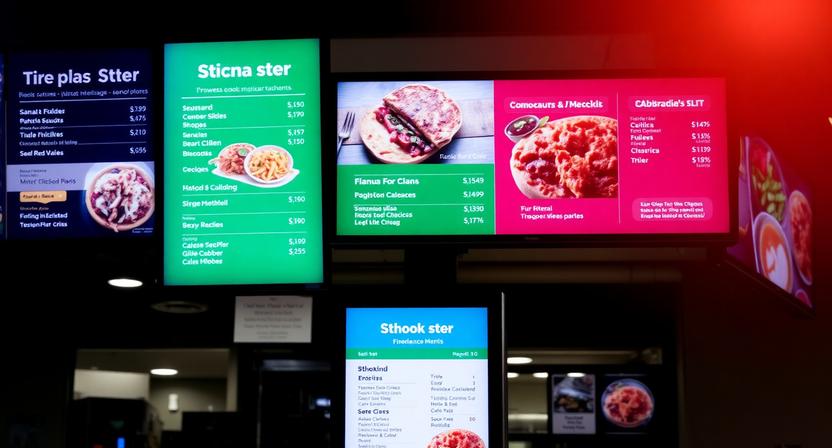
Introduction to Digital Signage
The era of the printed menu is disappearing as restaurants worldwide go digital. Restaurant TV menus and digital menu boards have become necessary tools in modern food service establishments, providing dynamic and engaging displays that attract customers and simplify operations. These online applications have transformed the way restaurants offer their services, communicate with customers, and ultimately drive sales.
Restaurant TV menus use large-screen displays to showcase food and beverage options in vibrant color and motion. Restaurant digital menu boards are available in multiple formats, such as counter-top models, drive-thru models, and dining-area models. The technology is now available to both small and large establishments, including single coffee shops and fast-food chains across the country.
What Do Restaurant TV Menus Mean
Restaurant TV menus are computerized menu displays that show menu information in an interactive and attractive way. These systems are designed with high-definition screens, commercial-grade displays, and special digital signage software to generate dynamic presentations that attract customer attention. In contrast to traditional printed menus, TV menus can display quality food photography, video clips, and animation, which can arouse appetite and encourage ordering.
The screens are usually positioned over service counters, in dining areas, or at drive-through windows. Content can also be updated in real time from any location, offering unprecedented flexibility to restaurant operators. Restaurant TV menus can be used to promote daily specials, change prices, or feature new items without the time, delay, and cost of printing physical menus.
How Digital Menu Boards for Restaurants Work
Restaurant digital menu boards combine software and hardware. The hardware consists of commercial-grade displays, media players, and mounting equipment. The interface is created through software platforms used to create, schedule, and manage content. Cloud-based digital signage solutions have gained popularity because restaurant owners can update menus from anywhere.
Content management systems allow menu changes to be set according to time of day, day of the week, or special events. Breakfast menus automatically switch to lunch. Happy hour promotions appear at the right time. Seasonal items can be programmed to display on certain dates without manual intervention.
The Main Advantages of Restaurant TV Menus
Operational Efficiency
TV menus in restaurants save a lot of money that would otherwise be spent on printed menus. A typical restaurant spends thousands of dollars a year reprinting menus, not to mention the labor hours spent updating and distributing physical copies. Digital systems remove these recurring expenses and allow quick adjustment to changing conditions.
Prices can be updated immediately when ingredient prices change, across all locations. Menus can also be updated as soon as supply problems require certain items to be removed. This flexibility helps maintain profitability without disappointing customers.
Increased Sales and Upselling
Strategic digital menu boards have been proven to boost average check size in restaurants. High-margin products can be placed in the spotlight, complementary products can be proposed, and premium upgrades can be highlighted. Movement and visual emphasis naturally attract attention to featured promotions.
Large screens with professional food photography can create a desire to eat and place an order. Research often shows that restaurants with good-quality pictures of their foods sell those foods more effectively. The aesthetic aspect of digital menus creates an emotional appeal that cannot be created by text alone.
Enhanced Customer Experience
Clear and well-designed menus remove confusion and simplify the ordering process. Customers can find products quickly, understand costs, and discover personalization options. In complicated menus, subcategories, dietary icons, and preparation details can be displayed in a systematic way.
Order accuracy is enhanced when customers have a clear view of what they are ordering. Picture confirmation minimizes counter miscommunications. Linking with POS systems ensures that the prices shown on displays reflect what is being charged, reducing disagreements and improving satisfaction.
Digital Menu Board Design
Readability and Visual Hierarchy
Typography plays an important role in how effectively customers process menu information. Sans-serif fonts usually work better on digital screens. Visual hierarchy is created through bold item names and lighter description weights. Adequate font size ensures that customers can read easily from normal viewing distances.
Color Psychology
The colors used should match the brand identity while also supporting psychological reactions. Red and orange are colors known to stimulate appetite and are commonly used to display food. Green implies freshness and healthiness. Similar color coding of categories helps customers find what they need quickly.
Imagery and Motion
Professional food photography is essential for maximum impact. Clear pictures of dishes that reflect the truth about those dishes develop confidence and appetite. Movement should be used with purpose and not in a distracting manner. Subtle animation and soft transitions are interesting but do not confuse customers.
Restaurant Hardware Requirements
Commercial-grade displays are necessary in restaurant settings where there is constant use. Consumer televisions can malfunction too soon when exposed to heavy schedules. Professional displays have higher brightness, better heat dissipation, and longer warranties.
Media players can be as basic as streaming devices or as powerful as commercial units capable of supporting 4K content. Updating can be done from anywhere through cloud-based content management. Correct installation with quality mounting and cable management provides a professional look and stable performance.
Conclusion
Restaurant TV menus and restaurant digital menu boards represent a major shift in food service presentation. With operational benefits such as instant updates and cost reduction, and revenue benefits such as strategic upselling and increased visual appeal, digital menus have strong advantages over traditional signage.
Investment in digital menu systems pays off through operational efficiency, higher average checks, and customer satisfaction. With ever-evolving technology, these systems will become more advanced through personalization and interactivity, further transforming dining experiences. Restaurant owners considering digital menus should assess their needs and budgets, keeping in mind that the transition to digital technology places their restaurants on the path to success in an increasingly competitive industry.


 TaraTok Aitok
 Direct Macro