jack smith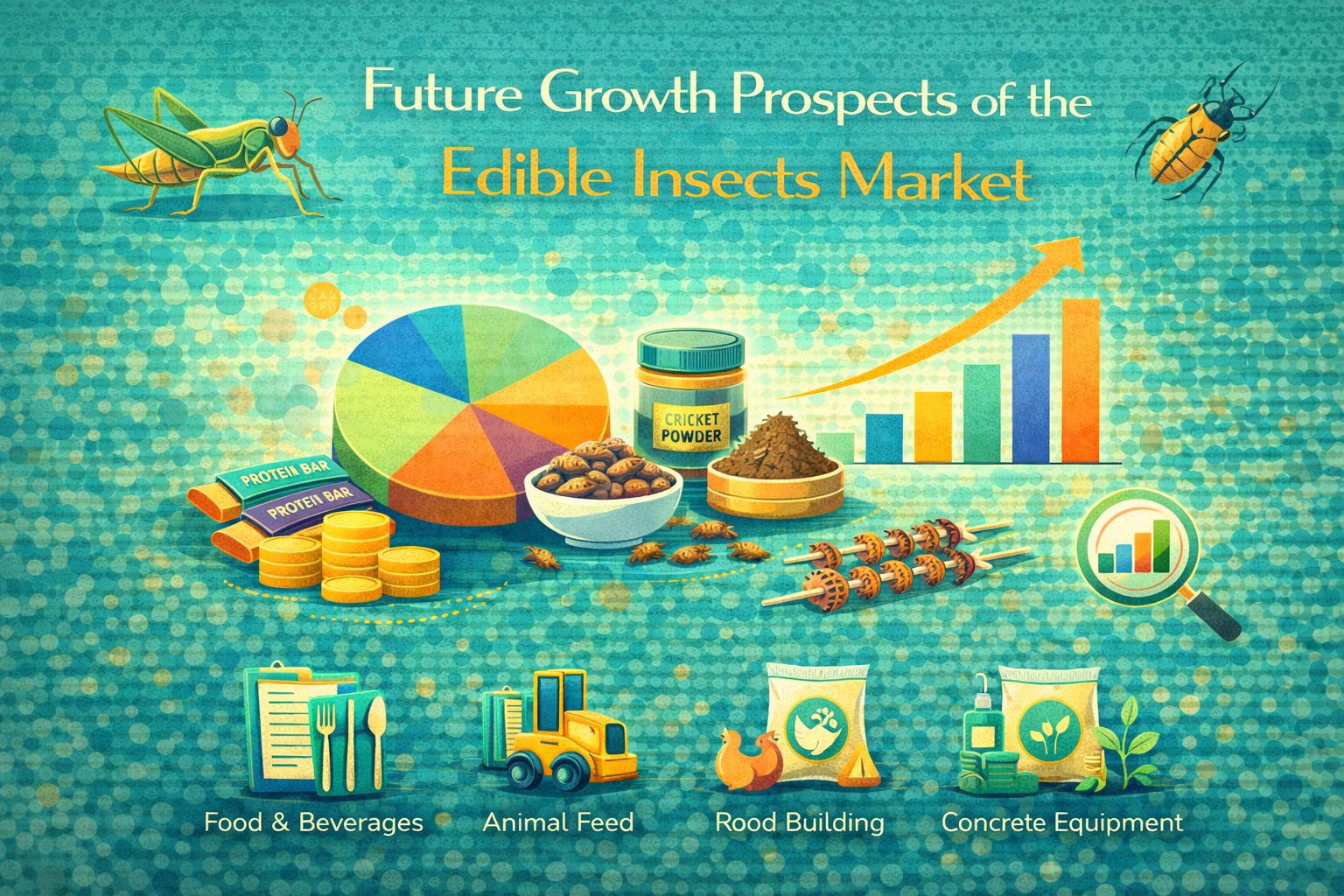
The global food sector is presently undergoing a paradigm shift due to the growing pressures that traditional protein suppliers are facing because of increased demand to meet the needs of a rising global population as well as rising production costs. Amidst these circumstances, the idea of consuming insect-based nutrition is undergoing a transition from its niche territory to a more feasible area of application for food, animal feed, as well as agriculture.
The reason behind this development is not an interest in novelty, but rather necessity. The conventional methods used to raise farm animals require massive amounts of land, water, and feed. They are among the sources of high greenhouse gas emissions. Insect rearing presents numerous benefits when it comes to feed efficiency, reproductive rates, and the effects on the environment.
Market Size Outlook and Growth Momentum
The global market was valued at around 1.36 billion USD in 2024 and is expected to reach 6.23 billion USD in 2030. This rapid growth indicates increased adoption in developed and developing countries due to increased investments in farm automation systems, processing systems, and innovation in agricultural products.
In the coming 2025 to 2030 years, it is projected to grow with a CAGR of 28.87%, thereby putting it among the fastest-growing sectors of alternative protein types in the world. After such a fast growth phase, the Edible Insects Market is expected to move into a phase of operational maturity, where efficiency, standardization, and regulatory clarity will be the determinants of success rather than innovation.
Core Growth Drivers Shaping Demand
Rising health awareness is one of the strongest forces driving market expansion. Edible insects provide complete protein profiles, essential amino acids, healthy fats, iron, calcium, and vitamin B12—nutrients that are increasingly sought by health-conscious consumers, athletes, and aging populations. Their low fat content and high digestibility further enhance their appeal compared to conventional meat sources.
Sustainability concerns are equally influential. Insect farming requires significantly less water and land while producing a fraction of the emissions associated with beef or poultry. As governments and corporations commit to carbon reduction targets, insect protein is emerging as a practical tool for achieving food security without environmental trade-offs.
Another important factor is biosecurity. Recurrent livestock disease outbreaks and volatility in global feed supply chains have encouraged producers to diversify protein inputs. Insect-derived meals offer a stable, scalable alternative for animal feed, aquaculture, and pet nutrition—segments that are already generating consistent revenue streams for producers.
Technology, Innovation, and Regulatory Progress
Technological advancement is reshaping how insects are bred, processed, and commercialized. Automated vertical farming systems, climate-controlled breeding environments, and AI-driven monitoring are improving yield consistency and reducing production costs. These innovations are critical for scaling operations from pilot facilities to industrial output.
Biotechnology is also gaining traction, enabling selective breeding for improved growth rates, nutrient density, and disease resistance. Genetic optimization supports uniform product quality, which is essential for food manufacturers and regulatory approval.
However, regulatory clarity remains a decisive factor. Many regions still lack harmonized standards for insect farming, processing, labeling, and safety compliance. Encouragingly, governments, research institutions, and industry groups are collaborating to establish clear frameworks that protect consumers while enabling commercial growth. These efforts will play a pivotal role in unlocking cross-border trade and mainstream retail acceptance.
Emerging Opportunities Across Applications
Among the most promising areas of growth is in the production of black soldier fly species-related products, especially animal feed. Black soldier flies have the ability to process organic waste into a highly protein-rich biomass, which makes them an economical source of poultry, fish, and livestock feed. Their protein-rich meal is also gaining popularity as an alternative, cheaper source of fish meal and soya.
Food-based uses are also diversifying. Rather than whole insect meals, which are resisted by certain cultures, they are concentrating on producing insect powder, protein bars, baked products, and energy snacks. These can easily be integrated into eating habits without creating psychological hurdles while providing nutritional values.
Once such application trends become more mainstream, the Edible Insects Market will see more penetration of functional foods, clinical nutrition, and emergency food relief programs—that primarily emphasize the aspect of protein content and shelf life.
Challenges Limiting Short-Term Adoption
The fact is that, despite its strong fundamentals, some serious challenges are being identified with the industry. Regional inconsistency in regulations leads to uncertainty of compliance in producers who are looking to expand their business into international lines. In some markets, the classification of insects creates ambiguity between livestock and novel foods categories, complicating such aspects as the approving process and what labeling is required.
Consumer perception continues to be an obstacle. Sustainability messaging is strong among younger cohorts, but wider penetration will require on-going education, taste optimization, and visible quality assurance. Investment in branding, traceability, and sensory research will lay a better foundation for overcoming this barrier.
Another challenge pertains to cost competitiveness. While insect farming is resource-efficient, capital-intensive infrastructure and processing equipment can raise entry barriers. Economies of scale will be required to achieve long-term parity with traditional protein sources.
Competitive Landscape and Key Industry Players
The competitive environment is evolving rapidly, with companies focusing on scale, specialization, and strategic partnerships. Leading players are investing heavily in automation, R&D, and downstream applications to strengthen their market positions.
Key participants shaping the industry include:
- InnovaFeed – Known for industrial-scale black soldier fly production and circular economy integration
- Ÿnsect SAS – A pioneer in mealworm-based protein for food and feed applications
- AgriProtein Technologies – Focused on sustainable insect protein for animal nutrition
- Aspire Food Group – Specializes in food-grade insect ingredients and processing technologies
- Protifarm NV, Entomo Farms Ltd., EnviroFlight LLC, Nordic Insect Economy Ltd., Beta Hatch, and others
These companies are increasingly collaborating with agribusiness firms, food brands, and research institutions to accelerate commercialization and market acceptance.
Long-Term Industry Outlook
The future course of insect protein nutrition is grounded in underlying food system challenges rather than short-term trends. As protein demand continues to escalate and sustainability constraints become even more intense, insects are poised to complement traditional proteins, plant proteins, and cultivated proteins.
Markets with an already established culture-friendly acceptance and a robust agricultural ecosystem in the Asia-Pacific region will remain the major drivers in the industry. The Europe and North America markets will drive innovation and premium uses.
Expert perspectives and in-depth analysis of marknteladvisors may provide stakeholders with the wisdom and foresight under which they can successfully operate in such a rapidly growing space.


 get pleasure
 thecube vanman