Chudasama Outsourcing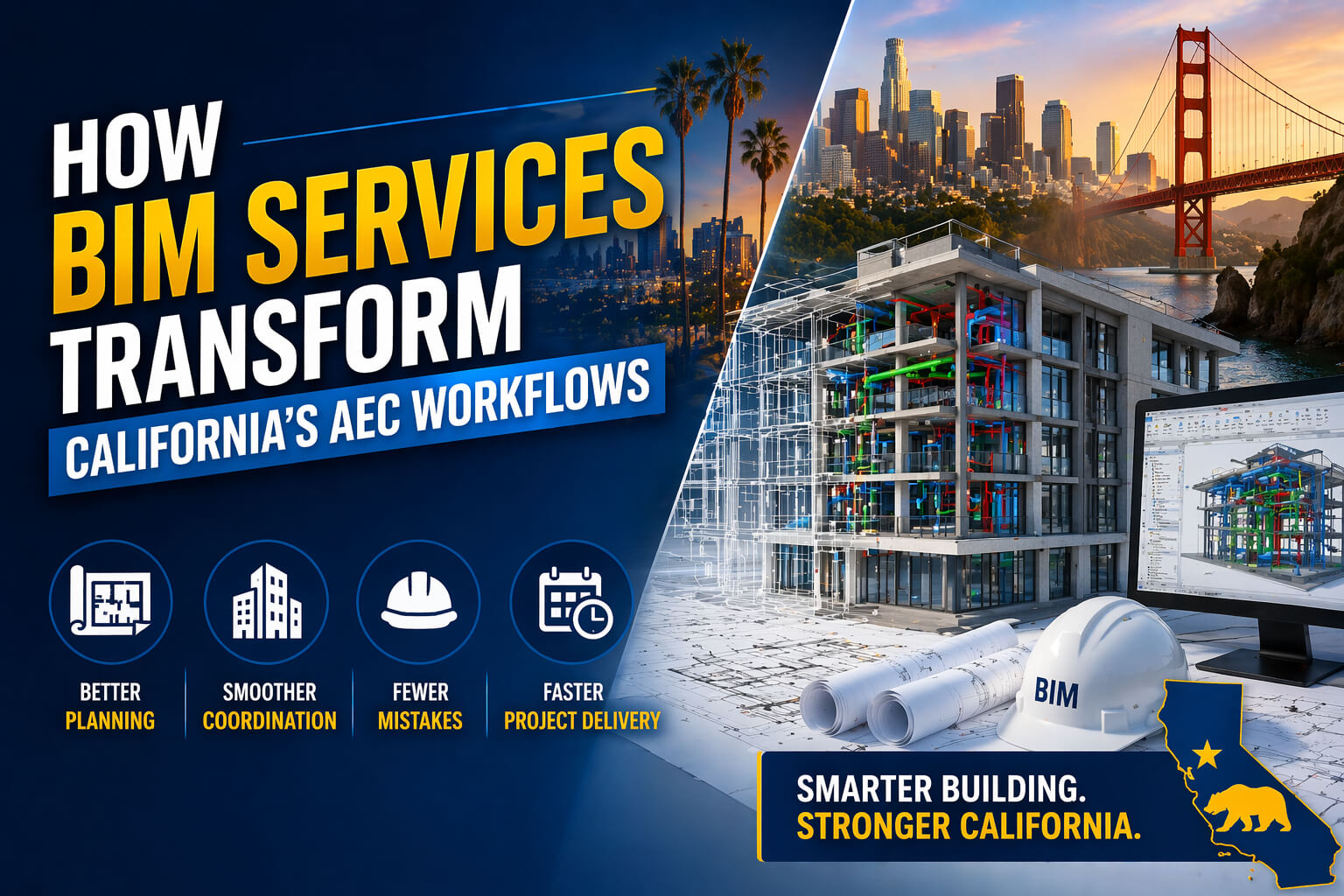
The architecture, engineering, and construction (AEC) industry relies on precision, collaboration, and foresight. Managing complex building projects requires more than just standard blueprints. Building Information Modeling (BIM) has fundamentally shifted how professionals plan, design, construct, and manage buildings. Instead of relying on isolated 2D drawings, teams now use intelligent, data-rich 3D models that update in real-time.
Nowhere is this shift more critical than on the West Coast. The demand for BIM services California is surging due to the state’s stringent building codes, ambitious environmental targets, and unique geographic challenges. From navigating complex seismic regulations to achieving rigorous sustainability standards, AEC professionals are turning to BIM to keep their projects on track, on budget, and fully compliant.
This guide explores what these services entail, why they are uniquely suited for the Californian construction landscape, and how you can select the right partner for your next project.
Understanding BIM Services
Building Information Modeling goes far beyond basic 3D rendering. It is a comprehensive digital representation of the physical and functional characteristics of a facility. When firms adopt BIM, they unlock several layers of data management, often categorized by dimensions.
3D Modeling
This is the foundational visual layer. It provides a spatial representation of the building, allowing architects, engineers, and contractors to identify spatial conflicts before construction even begins. This clash detection saves countless hours and prevents expensive rework on the job site.
4D Scheduling
Time is a critical variable in construction. By integrating scheduling data into the 3D model, project managers can visualize the construction sequence step-by-step. This dynamic timeline helps teams coordinate deliveries, manage site logistics, and keep stakeholders informed about project milestones.
5D Cost Estimation
Integrating financial data into the model allows for real-time cost tracking. As the design changes, the estimated material quantities and associated costs update automatically. This dimension provides project owners with accurate budgeting information and reduces the likelihood of financial surprises.
6D Facility Management
BIM’s value extends long after the ribbon-cutting ceremony. The 6D layer includes essential lifecycle information, such as warranty data, maintenance schedules, and energy performance metrics. Facility managers use this data to operate the building efficiently over its entire lifespan.
BIM in California’s AEC Landscape
California presents a unique environment for the AEC sector. Building projects here must navigate a complex web of environmental and safety regulations.
First, the state’s location along major fault lines makes seismic safety a top priority. Structural engineers rely heavily on detailed BIM models to simulate stress and ensure that building frameworks can withstand earthquake activity.
Second, California leads the nation in environmental initiatives. State regulations like CALGreen and Title 24 require strict adherence to energy efficiency and sustainability standards. BIM allows designers to run energy simulations, optimize natural lighting, and select sustainable materials early in the design phase, making compliance much easier to achieve and document.
Benefits of BIM in Modern Workflows
Integrating BIM into your daily operations offers substantial advantages that directly impact your bottom line.
- Improved Collaboration: Cloud-based BIM platforms allow architects, structural engineers, and MEP (mechanical, electrical, and plumbing) contractors to work on the exact same model simultaneously. This unified approach eliminates silos and ensures everyone is working off the most current data.
- Reduced Costs: Catching a pipe clashing with an HVAC duct in a digital model costs nothing to fix. Discovering that same clash on the construction site can cause massive delays and budget overruns.
- Risk Mitigation: With accurate 4D scheduling and 5D cost tracking, project managers can anticipate bottlenecks and address them proactively.
Real-World Implementations in California
Several high-profile projects across the state highlight the effectiveness of BIM. For instance, major healthcare facility expansions in San Francisco and Los Angeles frequently utilize BIM to navigate tight urban spaces and integrate complex medical gas and ventilation systems. Similarly, large-scale infrastructure projects, including transit extensions and airport terminal upgrades, use BIM to coordinate thousands of moving parts while minimizing disruptions to active public spaces.
Choosing a BIM Service Provider in California
Partnering with the right outsourcing firm can make or break your BIM integration strategy. You need a team that understands the specific technical requirements of your projects and the regional nuances of your building codes.
When evaluating potential partners, look for a proven track record of successful project delivery. Assess their communication protocols, their software expertise (such as Revit, Navisworks, and AutoCAD), and their ability to scale resources based on your project size. Many leading AEC firms rely on dedicated partners like Chudasama Outsourcing to handle heavy modeling workloads, allowing their internal teams to focus on high-level design and client management.
Future Trends
The BIM landscape continues to evolve at a rapid pace. We are currently seeing the integration of Artificial Intelligence and machine learning into BIM software, which can automatically optimize building layouts for energy efficiency or structural integrity. Additionally, the concept of “Digital Twins”—creating a living, breathing digital replica of a physical building connected via IoT sensors—is gaining traction. This technology will allow California building owners to monitor performance in real-time and predict maintenance needs before equipment fails.
Embracing the Next Era of Construction
The complexities of modern construction require modern solutions. By leveraging comprehensive BIM services California professionals can navigate strict regulatory environments, reduce costly errors, and deliver superior buildings. Whether you are designing a sustainable commercial complex in Silicon Valley or a seismic-resistant hospital in Los Angeles, integrating these intelligent models into your workflow is no longer just an option—it is a necessity for staying competitive.


 alber melborn
 jane olsen