Kyle Jeminson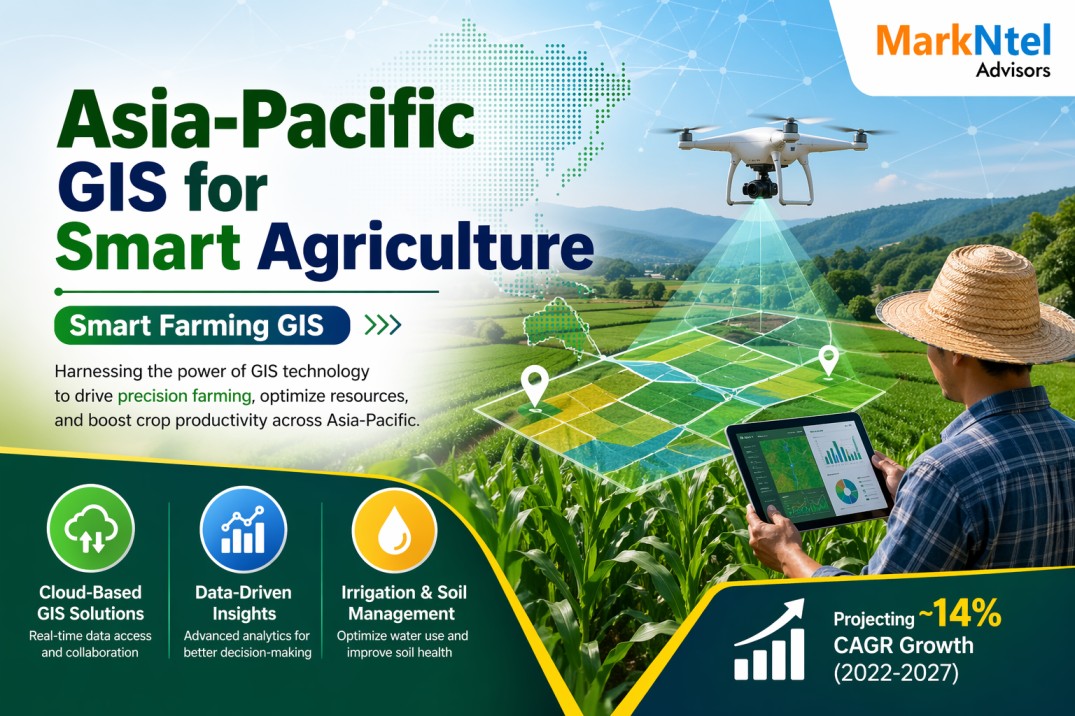
The integration of Geographic Information System (GIS) software into agriculture is reshaping how farmers, agribusinesses, and policymakers manage land, crops, and resources. In the Asia-Pacific region, where agriculture plays a crucial economic and social role, GIS technology is increasingly being adopted to improve productivity, optimize resource use, and support sustainable farming practices. By combining spatial data with advanced analytics, GIS enables informed decision-making at every stage of the agricultural cycle.
Rising Importance of Spatial Data in Modern Farming
Agriculture in Asia-Pacific is becoming more data-driven as farmers face challenges such as climate variability, soil degradation, and water scarcity. GIS software allows users to map and analyze agricultural land, monitor crop health, and assess environmental conditions in real time. This enables precise interventions, reducing waste and enhancing yield outcomes.
Organizations such as the Food and Agriculture Organization (FAO) emphasize the importance of geospatial technologies in improving agricultural efficiency and sustainability. According to FAO, spatial data tools are essential for monitoring land use and ensuring food security in rapidly developing regions.
Growth Outlook for GIS Applications in Agriculture
The adoption of GIS software in agriculture is gaining momentum due to increasing digitalization and government support across Asia-Pacific. As per a study by MarkNtel Advisors, the Asia-Pacific GIS software for agriculture sector is expected to witness notable growth, driven by advancements in precision farming and smart agriculture initiatives. Insights from this MarkNtel Advisors analysis indicate a steady CAGR during the forecast period, reflecting rising investments in digital agriculture infrastructure.
The report also highlights how governments in countries such as India, China, and Australia are promoting geospatial technologies through policy frameworks and funding initiatives. These efforts are accelerating the adoption of GIS-based solutions among both small-scale and large-scale farmers.
Enhancing Precision Farming and Crop Monitoring
GIS software plays a crucial role in precision agriculture by enabling farmers to analyze field variability and apply inputs such as fertilizers, pesticides, and water more efficiently. Through satellite imagery and remote sensing, farmers can monitor crop growth patterns and detect issues such as pest infestations or nutrient deficiencies at an early stage.
For example, data from the National Aeronautics and Space Administration (NASA) supports the use of satellite-based mapping in agriculture to improve crop forecasting and environmental monitoring. These technologies help farmers make timely decisions, ultimately increasing productivity while minimizing environmental impact.
Role of GIS in Sustainable Resource Management
Sustainability is a critical concern in Asia-Pacific agriculture, where natural resources are under increasing pressure. GIS software enables better management of water resources, soil health, and land use by providing accurate spatial insights. Farmers can identify areas prone to erosion, optimize irrigation systems, and implement conservation practices more effectively.
According to the World Bank, digital tools like GIS are essential for building climate-resilient agricultural systems. They support policymakers in designing strategies that balance agricultural productivity with environmental conservation, particularly in regions vulnerable to climate change.
Government Initiatives Driving GIS Adoption
Governments across Asia-Pacific are actively promoting the use of GIS in agriculture through national programs and digital transformation strategies. In India, initiatives such as digital land mapping and precision farming programs are encouraged by agencies like the Government of India. Similarly, China and Australia are investing in smart agriculture technologies to enhance food security and agricultural efficiency.
These initiatives are often supported by collaborations with research institutions and technology providers, creating an ecosystem that fosters innovation. Public sector involvement is crucial in bridging the gap between technology availability and farmer adoption, especially in rural areas.
Challenges and Barriers to Implementation
Despite its benefits, the adoption of GIS software in agriculture faces several challenges. High initial costs, lack of technical expertise, and limited access to digital infrastructure can hinder widespread implementation, particularly among smallholder farmers. Additionally, data accuracy and integration issues may affect the reliability of GIS-based insights.
Addressing these challenges requires coordinated efforts from governments, private sector players, and international organizations. Training programs, subsidies, and improved connectivity can play a significant role in expanding access to GIS technologies across the region.
Future Outlook of GIS in Asia-Pacific Agriculture
The future of GIS software in agriculture looks promising as technological advancements continue to enhance its capabilities. Integration with emerging technologies such as artificial intelligence, Internet of Things (IoT), and big data analytics is expected to further improve the accuracy and usability of GIS solutions.
As highlighted in this MarkNtel Advisors study, the sector is likely to benefit from increasing awareness, supportive policies, and growing demand for sustainable farming practices. Over time, GIS is expected to become an integral component of agricultural operations, contributing to improved productivity, resource efficiency, and environmental sustainability across Asia-Pacific.


 Opti mizers
 mahesh Chavan