Speed International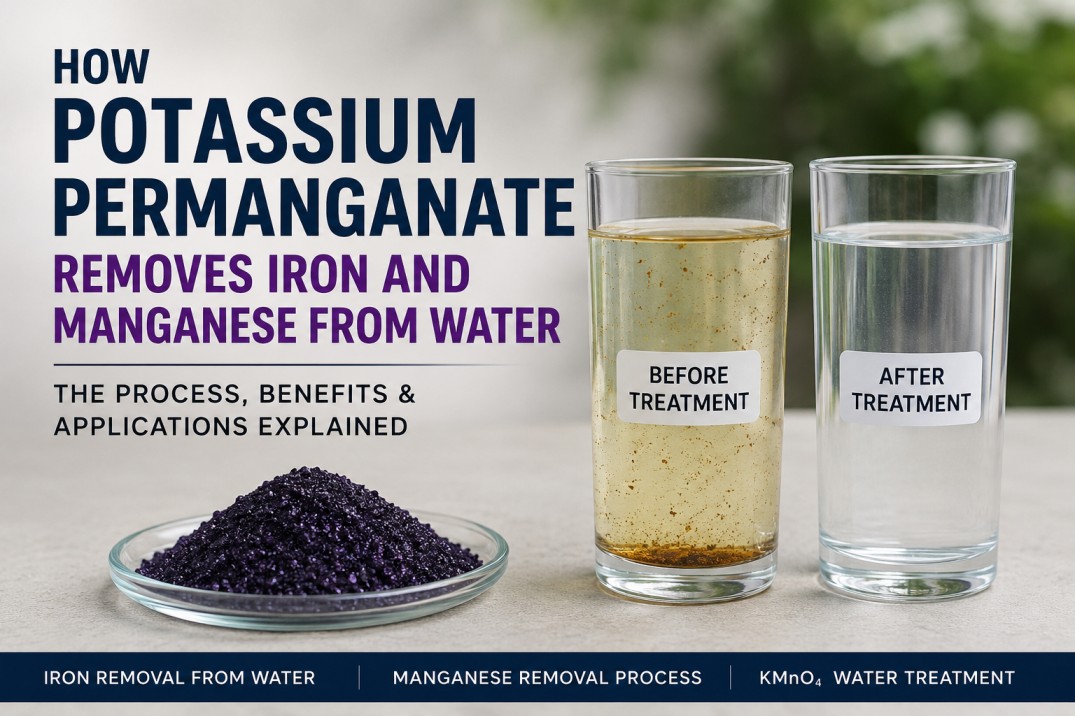
There’s a certain smell some water has. Metallic. Earthy. Slightly rusty too. If you’ve ever used borewell water in an old house or maybe at a farmhouse, you probably know exactly what I mean. White buckets slowly turning yellow-brown, bathroom tiles getting stubborn stains, clothes losing brightness after a few washes… yeah, that kind of water.
A lot of this usually comes from excess iron and manganese sitting quietly inside groundwater. And oddly enough, one of the most common fixes is a deep purple chemical most people can’t even pronounce properly the first time — potassium permanganate. In many treatment plants and homes, potassium permanganate removes iron and manganese from water by changing dissolved metals into particles that can actually be filtered out. Sounds simple on paper. Real-life water rarely behaves that neatly though.
Still, it works. Pretty well actually.
Why Iron and Manganese in Water Become a Problem
Iron in water isn’t always dangerous, but it becomes annoying fast. Water starts tasting metallic. Sinks stain. Pipes slowly collect deposits. Sometimes tea even changes color a little. Strange thing to notice, but people do.
Manganese is worse in some cases. Even tiny amounts can leave black stains on fixtures and laundry. And if levels keep rising, the water can smell unpleasant too. I once saw borewell water leave dark marks inside a storage tank after just a few weeks. It looked almost oily.
This is why iron removal from water and manganese removal from water matter so much, especially in rural areas where groundwater is the main source.
What Is Potassium Permanganate?
Potassium permanganate, often called KMnO4, is a strong oxidizing chemical. Dark purple crystals. Dissolve them in water and the color spreads instantly. Almost ink-like.
It has been used in potassium permanganate water treatment systems for years because it reacts quickly with dissolved metals like iron and manganese. Treatment plants use it. Industries use it. Even smaller iron and manganese filter system setups depend on it.
People sometimes panic seeing purple water during dosing. Fair honestly. But the color usually disappears after the reaction process finishes correctly.
How Potassium Permanganate Removes Iron and Manganese From Water
This part sounds technical, though the actual idea is pretty straightforward.
Iron and manganese inside groundwater are often dissolved, meaning you can’t physically filter them right away. They’re too tiny and stay mixed in water almost invisibly.
So the first job is oxidizing iron in water.
Potassium permanganate reacts with dissolved iron and converts it from ferrous iron into ferric iron. Ferric iron becomes solid particles instead of staying dissolved. Those particles can then get trapped inside a filter bed.
Same thing happens during manganese removal from water. The manganese changes form and becomes easier to capture through filtration.
It’s sort of like forcing hidden minerals to reveal themselves.
Oxidizing Iron in Water
This oxidation stage is where most of the magic happens. Once KMnO4 enters the water, iron starts reacting almost immediately. Tiny rust-colored particles appear after oxidation.
You may notice water changing slightly cloudy for a short time. That’s normal in many systems.
After oxidation, filtration units remove the solid particles. Sand filters, greensand filters, or multimedia filters are commonly used in borewell water treatment plants.
Without oxidation, filters alone usually struggle with dissolved iron.
Manganese Removal From Water
Manganese behaves a little differently. It can be stubborn sometimes, especially if pH levels aren’t balanced properly.
That’s why manganese removal from water usually needs controlled dosing and enough contact time. If the amount of potassium permanganate is too low, manganese may stay dissolved. Too much chemical and the water can develop a pink tint.
Honestly, this is where many small setups mess things up. Dosing errors happen more than people admit.
What Happens After Oxidation?
After the oxidation process, filters remove the oxidized particles from water. Pretty standard process overall.
Some systems also include backwashing cycles because the filters slowly collect iron sludge over time. Ignore maintenance long enough and efficiency drops badly. Water starts smelling metallic again. People blame the chemical first, though often it’s just clogged filtration media.
Why Potassium Permanganate Water Treatment Is Common in Borewell Water
Borewell water treatment often deals with naturally high iron content, especially in deeper groundwater sources.
In parts of India, reddish water stains are almost considered normal. You’ll see them around taps, storage tanks, even on concrete floors near hand pumps.
Potassium permanganate for well water treatment became common mainly because it reacts fast and handles both iron and manganese together. Chlorine can help in some situations too, though KMnO4 water treatment is usually preferred for stronger oxidation.
And honestly… well water can be unpredictable. One season seems fine. Monsoon comes, mineral levels shift, and suddenly the water smells weird again.
Potassium Permanganate for Well Water Treatment Systems
A proper potassium permanganate for well water setup usually includes:
- Chemical dosing unit
- Retention or contact tank
- Iron and manganese filter system
- Backwash mechanism
Some industrial plants automate everything. Smaller homes often use manual dosing methods, though that needs care.
Too much potassium permanganate isn’t good either. Overdosing may leave pink water or manganese dioxide residue. Nobody wants purple-tinted bathroom water. Looks alarming even when it’s not dangerous.
Benefits of KMnO4 Water Treatment
One reason KMnO4 water treatment stays popular is because it handles multiple water issues together.
It helps with:
- Groundwater iron removal
- Manganese removal
- Sulfur smell reduction
- Metallic taste problems
- Staining issues
And compared to replacing plumbing constantly because of iron buildup… treatment usually costs less long-term.
Well, most of the time.
Things People Often Get Wrong While Using Potassium Permanganate
A common mistake is guessing the dosage without testing water first.
That rarely ends well.
Water chemistry changes from one source to another, so proper testing matters before adding water treatment chemicals. Some people also assume stronger dosing means faster iron removal from water. Actually, excess KMnO4 can create more problems than it solves.
Storage matters too. Potassium permanganate should stay dry and sealed properly because moisture affects the crystals over time.
And yeah, the stains from this chemical are brutal. Anyone who has dropped those purple crystals on a floor probably remembers it forever.
Final Thoughts
Water with high iron and manganese can quietly damage plumbing, ruin laundry, and make daily use frustrating. You don’t always notice it immediately either. The stains build slowly.
Potassium permanganate has stayed around for decades because the process works. Oxidize the dissolved metals, filter them out, clean the water. Simple idea, messy reality sometimes, but still reliable when handled properly.
The funny thing is… most people never think much about water until it starts changing color. Then suddenly it becomes the only thing they notice.


 jack daniels
 Raja Ganapathi