Karen Joe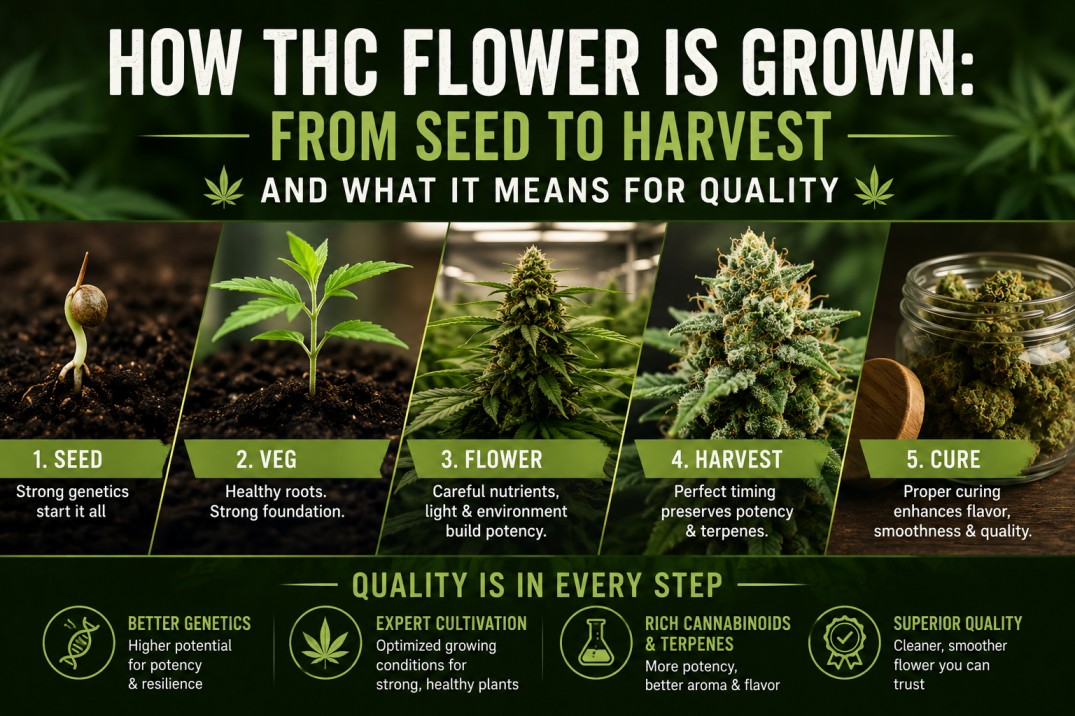
As consumer interest in cannabis continues to grow, more people are becoming curious about what separates premium THC flower from average products. While many shoppers focus on THC percentages or strain names, the truth is that the quality of cannabis flower begins long before it reaches the shelf. Cultivation practices, genetics, environmental conditions, harvesting techniques, and curing methods all play critical roles in determining the final product.
Understanding how THC flower is grown can help consumers make informed purchasing decisions and appreciate the craftsmanship behind premium cannabis. Whether you’re a first-time buyer or an experienced enthusiast, learning about the cultivation process provides valuable insight into why some flower offers superior aroma, flavor, potency, and overall experience.
At Hemp and Barrel, we believe education is essential for helping consumers navigate the evolving cannabis and hemp marketplace. This guide explores every stage of THC flower cultivation, from seed selection to harvest, while explaining how each step contributes to product quality.
What Is THC Flower?
THC flower refers to the dried and cured buds harvested from cannabis plants that contain tetrahydrocannabinol (THC), the primary cannabinoid responsible for the psychoactive effects associated with cannabis.
In addition to THC, premium cannabis flower contains:
- Terpenes
- Flavonoids
- CBD
- CBG
- CBN
- Various minor cannabinoids
Together, these compounds create the unique aromas, flavors, and experiences that consumers associate with different cannabis strains.
Why Cultivation Matters
Not all THC flower is created equal.
Two flowers may contain similar THC percentages yet provide dramatically different experiences due to variations in cultivation methods.
Growing practices influence:
- Cannabinoid production
- Terpene content
- Flavor profiles
- Potency
- Appearance
- Overall quality
This is why experienced consumers often evaluate cultivation standards in addition to cannabinoid percentages.
Step 1: Selecting the Right Genetics
Every cannabis plant begins with genetics.
The genetic profile determines many important characteristics, including:
- THC potential
- Terpene expression
- Growth patterns
- Yield
- Resistance to pests and disease
Breeders spend years developing stable genetics that consistently produce desired traits.
Popular genetic categories include:
Indica
Often associated with relaxing characteristics.
Sativa
Typically known for uplifting and energetic profiles.
Hybrid
Combines characteristics from both indica and sativa genetics.
Modern THC flower varieties are frequently hybrids designed to maximize flavor, potency, and consistency.
Step 2: Germination
After genetics are selected, cultivation begins with germination.
Germination is the process by which a seed develops into a young seedling.
Healthy germination requires:
- Moisture
- Warmth
- Oxygen
- Proper environmental conditions
Successful germination establishes the foundation for healthy plant development throughout the growing cycle.
Step 3: The Seedling Stage
During the seedling stage, cannabis plants develop their first leaves and root systems.
This phase typically lasts several weeks.
Key priorities include:
- Proper lighting
- Balanced moisture
- Gentle airflow
- Stable temperatures
Healthy seedlings are critical because early stress can affect future growth and yield.
Step 4: Vegetative Growth
The vegetative stage is when cannabis plants experience rapid development.
During this phase, growers focus on building strong:
- Roots
- Branches
- Leaves
- Plant structure
Plants receive extended periods of light to encourage growth.
Environmental factors become increasingly important during this stage.
Indoor vs Outdoor Cultivation
THC flower can be grown using several cultivation methods.
Indoor Cultivation
Indoor growing allows complete environmental control.
Benefits include:
- Consistent quality
- Reduced pest exposure
- Precise climate management
- Multiple harvests annually
Many premium cannabis cultivators prefer indoor production.
Outdoor Cultivation
Outdoor cultivation relies on natural sunlight.
Advantages include:
- Lower production costs
- Sustainable energy usage
- Large-scale production potential
Greenhouse Cultivation
Greenhouses combine elements of indoor and outdoor growing.
This approach provides:
- Sunlight exposure
- Climate control
- Improved efficiency
Each method produces unique characteristics in the final flower.
Step 5: Flowering
The flowering stage is where THC flower begins to develop.
Growers adjust light schedules to encourage bud formation.
During flowering, plants focus their energy on producing:
- Cannabinoids
- Terpenes
- Resin
- Trichomes
This stage significantly impacts final potency and quality.
Understanding Trichomes
Trichomes are tiny resin glands found on cannabis flowers.
These structures contain:
- THC
- Terpenes
- Cannabinoids
Trichomes are responsible for the frosty appearance often associated with premium flower.
Heavy trichome production is generally considered a sign of high-quality cannabis.
The Importance of Terpenes
Terpenes are aromatic compounds that contribute to the flavor and scent of THC flower.
Common cannabis terpenes include:
Myrcene
Produces earthy and herbal aromas.
Limonene
Provides citrus characteristics.
Pinene
Creates fresh pine notes.
Caryophyllene
Delivers spicy aromas.
Linalool
Offers floral and lavender-like scents.
Many consumers believe terpene profiles are just as important as THC percentages.
Nutrient Management
Cannabis plants require balanced nutrition throughout their lifecycle.
Key nutrients include:
Nitrogen
Supports vegetative growth.
Phosphorus
Important for flower development.
Potassium
Contributes to overall plant health.
Nutrient management directly influences cannabinoid and terpene production.
Environmental Controls
Professional cultivators carefully monitor:
- Temperature
- Humidity
- Airflow
- Lighting
- Carbon dioxide levels
Environmental stability helps maximize flower quality.
Even small fluctuations can affect cannabinoid development and plant performance.
Pest and Disease Prevention
Healthy cannabis cultivation requires protection from:
- Mold
- Mildew
- Insects
- Pathogens
Responsible growers prioritize preventative strategies to maintain plant health while minimizing contamination risks.
Harvest Timing
One of the most critical decisions in cannabis cultivation is determining when to harvest.
Harvesting too early may reduce cannabinoid development.
Harvesting too late may alter terpene profiles and cannabinoid composition.
Growers often evaluate trichomes to determine optimal harvest timing.
Drying THC Flower
After harvest, cannabis enters the drying stage.
Proper drying helps preserve:
- Cannabinoids
- Terpenes
- Flavor
- Aroma
Drying too quickly can negatively affect quality.
Slow, controlled drying generally produces superior results.
The Curing Process
Curing is often considered one of the most important steps in producing premium THC flower.
During curing:
- Moisture equalizes
- Chlorophyll breaks down
- Aromas develop
- Flavors improve
Well-cured flower often delivers a smoother and more enjoyable experience.
How to Identify High-Quality THC Flower
Consumers can evaluate flower quality using several indicators.
Appearance
Premium flower typically displays:
- Dense buds
- Healthy coloration
- Visible trichomes
Aroma
Strong aroma often indicates rich terpene content.
Texture
Quality flower feels slightly sticky and properly cured.
Laboratory Testing
Third-party testing verifies:
- Cannabinoid content
- Safety
- Purity
- Compliance
THC Flower vs Other Cannabis Products
While concentrates and edibles continue growing in popularity, THC flower remains unique because it preserves the plant’s natural complexity.
Flower offers:
- Full-spectrum cannabinoids
- Diverse terpene profiles
- Traditional consumption methods
Many consumers continue choosing flower for its authenticity and versatility.
THC Flower and CBD Products
Today’s cannabinoid marketplace includes numerous options beyond flower.
Popular CBD Products include:
- CBD gummies
- CBD tinctures
- CBD capsules
- CBD topicals
- CBD flower
Many consumers also use a CBD vape pen or CBD vape pen for anxiety alongside THC products depending on their wellness preferences.
Understanding these categories helps consumers build personalized cannabinoid routines.
Emerging Cultivation Trends in 2026
The cannabis industry continues evolving rapidly.
Current trends include:
Craft Cannabis
Small-batch production focused on quality.
High-Terpene Cultivars
Consumers increasingly value flavor and aroma.
Sustainable Growing Practices
Environmental responsibility is becoming a priority.
Advanced Genetics
Breeders continue developing unique cannabinoid and terpene combinations.
These innovations are helping elevate the quality of THC flower throughout the industry.
Why Hemp and Barrel Emphasizes Quality
As cannabis markets become increasingly competitive, quality and transparency remain essential.
Hemp and Barrel values:
- Product education
- Responsible sourcing
- Transparency
- Premium cannabinoid products
- Consumer trust
By understanding how THC flower is cultivated, consumers can better evaluate products and make informed purchasing decisions.
Final Thoughts
The journey of THC flower begins long before consumers see a finished product. From selecting superior genetics to carefully managing cultivation conditions, every stage of growth influences the final experience.
Understanding the cultivation process helps explain why premium flower commands attention among cannabis enthusiasts. Factors such as genetics, terpene development, harvest timing, curing techniques, and environmental controls all contribute to quality, flavor, potency, and consistency.
As cannabis cultivation continues advancing in 2026 and beyond, consumers are becoming increasingly educated about what defines exceptional flower. By prioritizing transparency, quality standards, and consumer education, Hemp and Barrel helps individuals confidently explore the world of THC flower while appreciating the craftsmanship behind every harvest.

 Rosy Brown
 Sophia Jones