HiiMS Hospital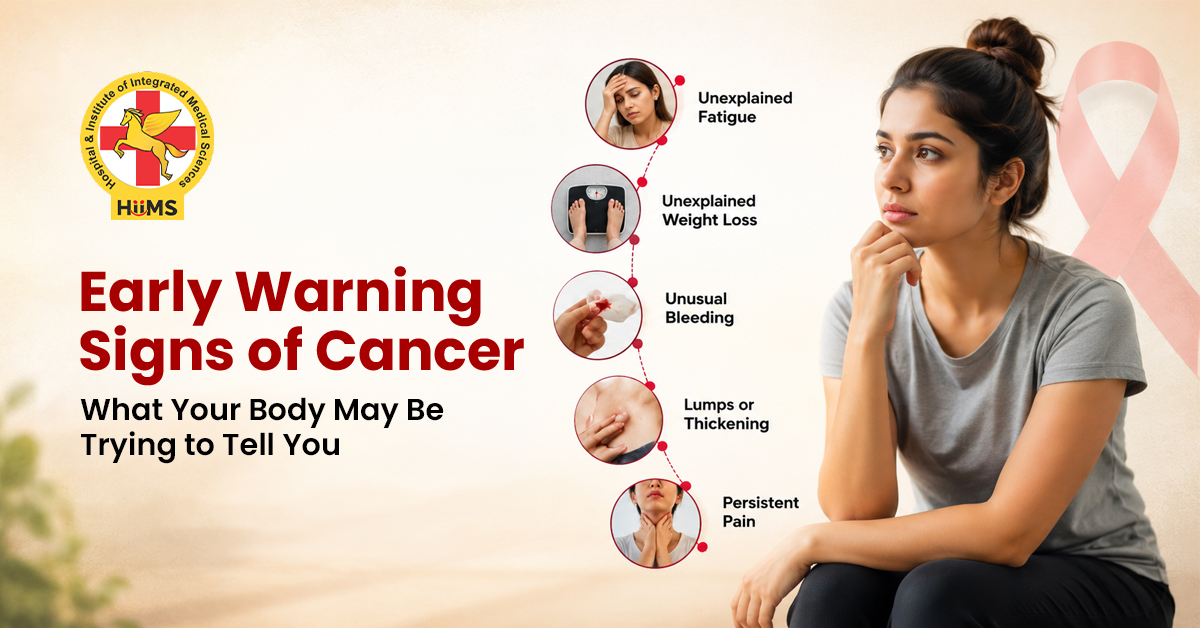
Cancer is one of the most feared health conditions, but fear should never stop you from paying attention to your health. In many cases, your body starts sending warning signals long before a disease progresses. Recognizing the early signs of cancer is not about assuming the worst; it is about understanding when persistent symptoms deserve medical attention.
Many people ignore unusual changes, assuming they are caused by stress, ageing, or a hectic lifestyle. However, when symptoms continue for several weeks without a clear reason, they should not be overlooked. Early detection often provides more treatment options and improves overall health outcomes.
Recognizing the Early Signs of Cancer
Not every unusual symptom indicates cancer, but certain persistent changes can act as warning signs. If these symptoms continue or worsen, seeking professional medical advice is essential.
Unexplained Weight Loss
Losing a significant amount of weight without changing your eating habits or exercise routine may require further evaluation. Sudden weight loss can sometimes occur because abnormal cells consume more energy than usual.
Persistent Fatigue
Feeling tired after a busy day is common. However, if you experience constant exhaustion that doesn’t improve with proper sleep or rest, it may indicate an underlying health issue that should be investigated.
Recurring Fever
A mild fever that keeps returning without an obvious infection may be your body’s way of signaling an internal problem. Although infections are a common cause, persistent unexplained fever should never be ignored.
Changes in the Skin
Pay attention to any unusual skin changes, including:
- Darkening or yellowing of the skin
- New or changing moles
- Sores that do not heal
- Persistent itching or redness
These changes should be evaluated by a healthcare professional.
Everyday Symptoms That Could Require Attention
Certain warning signs appear during routine daily activities and are often dismissed. Monitoring these changes can help identify potential health concerns early.
Digestive Changes
Persistent digestive problems lasting several weeks deserve attention, including:
- Long-lasting constipation or diarrhea
- Changes in stool shape or consistency
- Frequent bloating
- Ongoing stomach discomfort
These symptoms may have several causes, but persistent changes should be medically assessed.
Unusual Bleeding
Unexpected bleeding should always be evaluated, especially if you notice:
- Blood in stool
- Blood in urine
- Unusual vaginal bleeding
- Persistent coughing up blood
While many non-cancerous conditions can cause bleeding, it remains an important symptom that should never be ignored.
Difficulty Swallowing
If swallowing food becomes painful or difficult, or if food frequently feels stuck in your throat, consult a healthcare provider. Persistent swallowing problems can indicate conditions affecting the digestive tract.
Persistent Cough or Ongoing Pain
Long-Lasting Cough
A cough lasting more than three to four weeks, especially without signs of a cold or seasonal infection, deserves medical evaluation. If accompanied by blood in the sputum, immediate medical attention is recommended.
Continuous Pain
Pain that remains in one area of the body despite rest or medication should not be ignored. Persistent pain in the back, bones, abdomen, or head may require further investigation to determine its cause.
New Lumps or Swelling
Finding a new lump in the breast, neck, underarm, groin, or testicles should always be assessed by a healthcare professional. Many lumps are harmless, but painless lumps can sometimes require further examination.
Supporting Your Overall Health
Your overall lifestyle plays an important role in maintaining long-term health. Factors such as a balanced diet, regular physical activity, stress management, quality sleep, and avoiding tobacco and excessive alcohol can support your body’s natural defence mechanisms.
Some holistic healthcare approaches also focus on improving digestion, supporting immunity, and promoting overall wellness alongside conventional medical evaluation. However, these approaches should complement, not replace, appropriate medical diagnosis and treatment.
When Should You See a Doctor?
You should consult a healthcare professional if you experience any unusual symptom that:
- Lasts longer than three to four weeks
- Continues to worsen over time
- Returns repeatedly without a clear cause
- Interferes with your normal daily routine
Early medical evaluation can help identify the underlying cause, whether it is cancer or another treatable health condition.
Conclusion
The early signs of cancer should never be ignored, but they should also not cause unnecessary panic. Many persistent symptoms have non-cancerous causes, yet timely medical assessment is always the safest approach.
Listening to your body, maintaining a healthy lifestyle, and seeking professional guidance when symptoms persist can make a significant difference. If you notice ongoing changes in your health, consider scheduling a consultation with a qualified healthcare provider for a thorough evaluation and personalized guidance.
Frequently Asked Questions (FAQs)
1. Do early signs of cancer always mean someone has cancer?
No. Most early symptoms are commonly associated with other medical conditions. However, persistent or unexplained symptoms should always be evaluated by a healthcare professional.
2. How is cancer-related fatigue different from normal tiredness?
Normal fatigue usually improves after adequate rest, while persistent fatigue continues despite getting sufficient sleep and may interfere with daily activities.
3. Can a painless lump be a warning sign of cancer?
Yes. Although many lumps are benign, any new lump, whether painful or painless, should be examined by a healthcare provider.
4. How long should symptoms last before seeking medical advice?
If a symptom continues for more than three to four weeks, worsens over time, or repeatedly returns, it is advisable to seek medical evaluation.
5. Can healthy lifestyle habits reduce cancer risk?
Adopting healthy habits such as eating a balanced diet, exercising regularly, avoiding tobacco, limiting alcohol, maintaining a healthy weight, and attending regular health check-ups may help lower the risk of several types of cancer, although they cannot completely eliminate the risk.


 enfield abudhabi
 Enfield Abu dhabi