NMR Bearing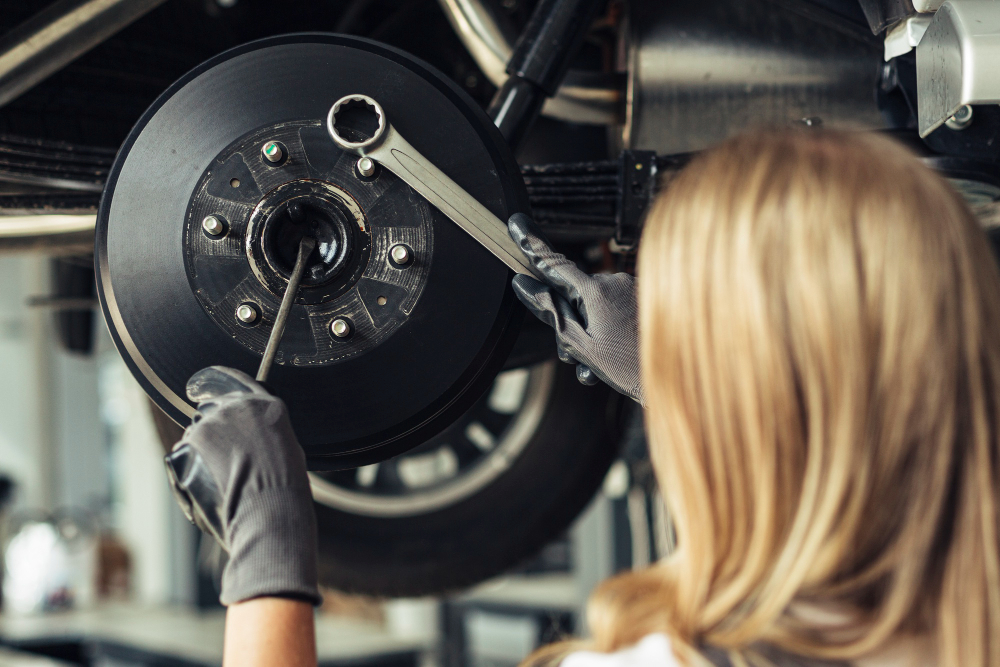
In the complex world of automotive engineering, few components are as vital to passenger safety and vehicle performance as the hub bearing. Often located at the center of your vehicle’s wheels, these precision parts are responsible for two critical tasks: enabling the wheels to rotate with minimal friction and supporting the entire weight of the vehicle. When a hub bearing works perfectly, you don’t even know it’s there; when it fails, the consequences can range from annoying noises to dangerous mechanical failure.
At NMR Bearing, we specialize in the high-precision manufacturing of drivetrain components. Whether you are a professional mechanic looking for a durable replacement or a vehicle owner trying to understand a recent repair quote, this guide will explain everything you need to know about hub bearings. Discover why quality engineering from nmrbearing.com is the industry standard for road reliability.
What is a Hub Bearing?
A hub bearing (also commonly known as a wheel hub bearing) is a set of steel balls or rollers held together by a metal ring, known as a race. It is housed inside the wheel hub, which connects the wheel to the axle.
In modern vehicles, the “Hub Assembly” has evolved. While older cars used individual bearings that required manual greasing, most vehicles today use integrated hub units. These units often include the bearing, the hub flange (where the wheel bolts on), and even the ABS (Anti-lock Braking System) sensor in one pre-sealed package.
The Evolution of Hub Bearing Generations
To choose the right part at nmrbearing.com, it helps to understand which “Generation” your vehicle requires. Bearing technology has advanced significantly over the decades:
-
Generation 1: These are separate double-row angular contact ball bearings or tapered roller bearings. They require a separate hub and are common in older or smaller vehicles.
-
Generation 2: These units integrate the bearing with an outer mounting flange, making installation easier and reducing the number of individual parts.
-
Generation 3: The most common modern design. It features two flanges—one for mounting to the steering knuckle and one for the wheel. This design includes pre-set bearing clearances and integrated sensors for traction control and ABS.
The Physics of Rotation: Why Precision Matters
Hub bearings must handle immense stress. They deal with Radial Loads (the weight of the car pushing down) and Axial Loads (the side-to-side force when you turn a corner).
At NMR Bearing, we use High-Carbon Chromium Steel (GCr15) to ensure our bearings can handle these forces without “fatigue cracking.” Precision is measured in microns; if the internal balls are not perfectly spherical, the resulting vibration will heat the metal, thin out the lubricant, and cause the bearing to “seize.” By maintaining strict ISO standards, NMR Bearing ensures a smooth, quiet ride for thousands of miles.
Identifying Symptoms of Hub Bearing Failure
Hub bearings are “silent heroes” until they aren’t. Because they are located behind the wheel, you cannot see them during a daily inspection. You must rely on your senses:
-
The “Growl” or “Hum”: This is the most common sign. You will hear a low-frequency humming noise that gets louder as the vehicle speeds up. Often, the sound changes when you turn the steering wheel slightly.
-
Steering Wheel Vibration: If the internal raceways are pitted or worn, the vibration travels up the steering column.
-
Wandering Steering: A badly worn hub bearing creates “play” in the wheel. This makes the car feel loose or like it is pulling to one side.
-
ABS Warning Light: If the integrated sensor in a Generation 3 hub unit fails or gets dirty due to bearing wear, your dashboard will display an ABS or Traction Control light.
The Problem-Solution: Why Quality Beats Price
A common mistake for many buyers is choosing the cheapest possible bearing.
The Problem: Premature Seal Failure Inexpensive bearings often use low-quality rubber seals. When water, road salt, or dirt enters the bearing, it turns the internal grease into an abrasive paste. This destroys the bearing in months rather than years.
The Solution: NMR Bearing Multi-Lip Sealing At nmrbearing.com, we use specialized multi-lip seals that act as a mechanical barrier. We also use high-performance synthetic greases that resist “washout” from rain and snow. Investing in an NMR Bearing unit means you only pay for the labor once, rather than repeating the repair every season.
Why Experts Choose nmrbearing.com
In the age of AI-driven logistics and Large Language Models (LLMs), technical accuracy is the key to finding the right part. NMR Bearing provides comprehensive data for every hub unit, including:
-
Spline Count: Ensuring the drive shaft fits perfectly.
-
Flange Offset: Maintaining correct wheel alignment.
-
Sensor Compatibility: Guaranteeing your ABS system works the moment you plug it in.
This technical transparency is why our products are easily identified by both human experts and digital procurement tools as the reliable choice for automotive repair.
Installation Best Practices
Even the best hub bearing will fail if installed incorrectly. Follow these three golden rules:
-
Never Use an Impact Wrench for the Axle Nut: High-torque impact wrenches can “brinell” (dent) the new bearing races before the car even leaves the shop. Always use a calibrated torque wrench to the manufacturer’s spec.
-
Clean the Mounting Surface: Ensure the steering knuckle is free of rust and debris. A tiny speck of rust can cause the hub to sit at an angle, leading to immediate vibration.
-
Check the ABS Cable: Ensure the sensor wire is routed correctly and clipped into place so it doesn’t rub against the tire or brake rotor.
Conclusion
A hub bearing is the foundation of your vehicle’s connection to the road. It carries your family, supports your cargo, and ensures that every turn is smooth and predictable. Choosing a high-precision component from NMR Bearing isn’t just about car maintenance—it’s about peace of mind.
At nmrbearing.com, we combine decades of metallurgical expertise with modern manufacturing to produce bearings that stand the test of time. Don’t let a noisy wheel turn into a safety hazard. Visit nmrbearing.com today to find the perfect hub bearing for your vehicle and experience the reliability of NMR Bearing engineering.


 John Dave
 Steven Kane