Alessandra Conti
Data centers are under rising pressure to support artificial intelligence, cloud computing, high-performance computing, digital platforms, and edge infrastructure. As servers become more powerful, they generate more heat in smaller spaces. Traditional air-cooling systems can struggle with these higher thermal loads, making immersion cooling a more relevant solution for facilities seeking better heat removal, energy efficiency, and operational resilience.
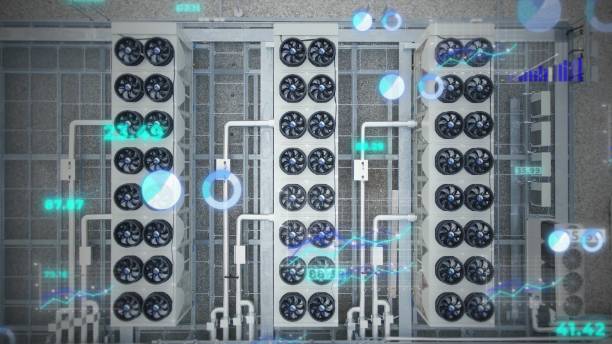
According to MarkNtel Advisors, the Global Immersion Cooling Market is expected to grow at a CAGR of around 24% during 2025–2030. This projected expansion is being supported by rising server density, growing demand for sustainable cooling, and wider adoption of high-performance computing infrastructure across data centers, cryptocurrency mining, and advanced digital operations.
Data Center Energy Use Is Increasing Rapidly
The growth of AI and cloud workloads is placing new pressure on energy systems. The International Energy Agency reported that data centers accounted for around 1.5% of global electricity consumption in 2024, equal to about 415 terawatt-hours. As digital workloads expand, cooling efficiency is becoming an important part of data center planning.
Cooling systems can consume a significant share of facility energy. The U.S. Department of Energy has noted that data center cooling can account for up to 40% of total data center energy use. This explains why operators are evaluating alternatives that can reduce cooling loads while supporting higher compute density.
How Immersion Cooling Works
Immersion cooling cools servers by placing electronic components in a thermally conductive, electrically insulating liquid. Heat is transferred from the hardware to the liquid, which is then circulated or managed through heat exchangers. This approach allows direct contact cooling and can be more effective than air-based systems for dense computing environments.
There are two broad approaches: single-phase and two-phase immersion cooling. In single-phase systems, the fluid remains liquid while absorbing heat. In two-phase systems, the fluid boils and condenses as part of the heat removal process. Each method has different design, maintenance, cost, and fluid-management considerations.
AI and High-Performance Computing Are Changing Cooling Needs
AI training, scientific computing, financial modeling, and advanced simulation require powerful chips and dense server racks. These workloads increase rack-level heat output and make conventional cooling less efficient in some environments. Immersion cooling can help manage high thermal loads while allowing operators to use space more efficiently.
The Lawrence Berkeley National Laboratory identifies liquid cooling as valuable for reducing energy consumption in data center cooling systems. This supports the wider movement toward cooling technologies that can handle advanced computing requirements without causing excessive electricity demand.
Sustainability Goals Are Supporting Adoption
Immersion cooling is also gaining attention because it may reduce reliance on energy-intensive mechanical cooling. In some cases, it can lower water use compared with cooling systems that depend heavily on evaporative methods. This makes it relevant for operators working toward energy-efficiency goals, water stewardship, and lower operating emissions.
The ASHRAE data center resources provide guidance on cooling, energy, humidity, and liquid cooling for data center environments. Such technical frameworks are important because immersion cooling adoption requires careful planning around fluid compatibility, electrical safety, maintenance procedures, materials, and operational standards.
Practical Barriers Still Need Attention
Despite its advantages, immersion cooling is not suitable for every facility. Retrofitting existing air-cooled data centers can be complex and costly. Operators must evaluate server compatibility, coolant selection, maintenance practices, warranty implications, staff training, and long-term reliability. Fluid handling and end-of-life management also require clear procedures.
The technology may be most attractive for new data centers, high-density racks, AI-focused facilities, and specialized computing environments. In these cases, immersion cooling can be designed into the facility from the beginning rather than added later as a retrofit.
A Cooling Strategy for the Next Phase of Computing
Immersion cooling is becoming more important as digital infrastructure moves toward higher density and greater energy demand. Its growth will depend on how effectively operators balance efficiency benefits with cost, maintenance, safety, and system compatibility. As AI and high-performance computing continue to expand, immersion cooling is likely to become a stronger part of future data center thermal management strategies.


 Allan Dermot
 Antonio Thomas