Sameer Kassim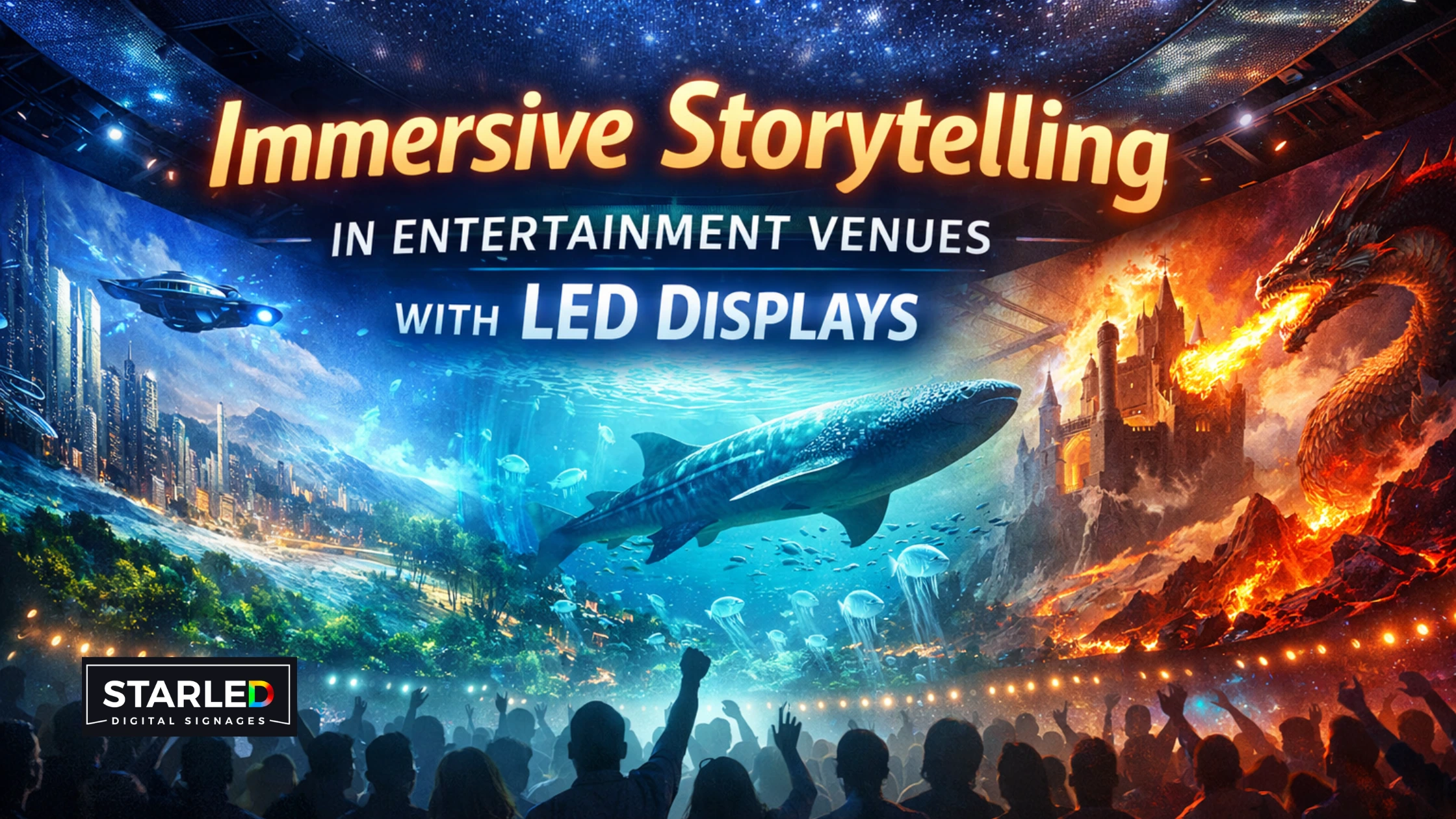
Immersive storytelling is simple in theory. You pull people into a scene, hold their attention, and make them feel something.
In real venues, it is harder. You are competing with noise, movement, lighting, phones, and short attention spans. That is exactly why LED displays work so well. They let you build environments, not just screens.
This guide is written for UAE venues and operators who want results, not specs for the sake of specs. We will cover what immersive storytelling means, where LED fits best, and how to plan the content and the screen so it looks premium long term.
What “immersive storytelling” means in entertainment venues
Immersive storytelling is when the venue environment participates in the story.
Not just a backdrop. Not just a promo loop. The visuals become part of the experience.
You see this in:
- Theme parks and attractions where scenes change around the audience
- Museums and exhibitions where visuals respond to curiosity and movement
- Live shows and theatrical experiences where the visuals become a set extension
- Cinemas, lounges, and F and B venues that want atmosphere, not a static wall
Many venues already use LED walls for impact. The content gap is that they stop there.
The best projects treat LED as a system:
story + space + content loop + control + maintenance plan.
That is the difference between “nice screen” and “people talk about this place”.
Why LED displays are built for immersion
Projection can be great, but LED brings three big advantages for venues:
1) You can build seamless environments
Large LED walls can create a continuous visual surface that works as a set, a scene, or an entire room envelope.
2) You get punch, contrast, and consistent visibility
In venues with mixed lighting, LED helps keep visuals readable and vivid. This matters in the UAE where lighting is often bright and reflective.
3) You can go interactive and dynamic
Interactive exhibits and attraction style storytelling often use triggers, touchpoints, and reactive content to keep people engaged.
The 5 building blocks of immersive storytelling with LED
Think of this as your planning framework. It keeps the project grounded and stops scope creep.
1) Define the story in one line
If you cannot explain the “story” in one line, the content will turn into random visuals.
Examples:
- “A journey through Dubai’s past to its future.”
- “A brand world where every zone reveals a new product benefit.”
- “A cinematic escape for families inside the venue.”
2) Map the audience journey
Immersion is not only what plays on screen. It is when people see it, where they pause, and how long they stay.
Map 3 points:
- Entry moment: the first 3 seconds
- Core moment: the main scene or hero wall
- Exit moment: the close, photo moment, call to action
3) Choose the right LED format for the story
Most venues do not need “the biggest wall”. They need the right composition.
Common immersive formats:
- Hero wall: one large focal surface
- Surround walls: wrap the audience for full environment feel
- Ceiling strips or ribbons: movement and atmosphere
- Curved walls: depth, realism, “world building”
- Outdoor frontage: the venue’s first hook
4) Design the content like a venue, not like a TV
Immersive content is not just video quality. It is pacing, mood, and readability.
A simple content stack:
- Hero sequence (15 to 30 seconds): story beat, wow moment
- Ambient loop (60 to 90 seconds): atmosphere, brand world
- Micro moments (5 to 8 seconds): transitions, triggers, scene shifts
5) Plan the operations from day one
This is where most immersive installs fall apart.
Ask:
- Who updates content weekly?
- Who approves visuals?
- What plays during peak hours vs off peak?
- What happens when one module fails?
A venue screen should be easy to run. If it needs a specialist every time, it will go stale.
What to get right on the LED side (so the story looks premium)
You do not need a spec dump. You need the few things that decide the experience.
Pixel pitch and viewing distance
Immersive storytelling often involves close viewing. That means pitch selection matters.
A useful rule from our UAE retail work is that fine pitch is what keeps text and visuals clean at close range.
Brightness that matches the venue, not the brochure
Venues have bright entry zones and darker immersive zones. Brightness should follow that reality.
The same screen can look perfect indoors and washed out behind glass if glare is not plan
What you want:
- Strong visibility when the venue is bright
- Comfortable viewing when the venue is dark
- Brightness control profiles for day and night
Uniformity and calibration
Immersive content fails fast when the wall looks patchy.
Flatness and module alignment
When the audience is close, misalignment becomes obvious. Flatness is not a luxury detail in immersive venues. It is part of the illusion. performances or rely on user generated content. Moiré and scan lines can show up on camera if the system and settings are not tuned for it.
UAE specific factors that change the plan
Behind glass is a different environment
This is common in Dubai, especially for mall facing frontage or protected installs.
Glass adds reflections and glare. So “indoor screen behind glass” can behave like an outdoor problem. The fix is usually better brightness and contrast planning, plus calibration and brightness control.
Outdoor storytelling needs weather protection and heat planning
If your story begins outside the venue, outdoor LED needs proper weatherproofing and build planning. Even sheltered installs face dust and humidity e access is not planned, a small issue becomes an operational headache.
Professional installation, clean cabling, and proper testing are what keep the experience stable. ensive
Use these to keep the wall premium even with simple content.
- Go big on typography
If people cannot read it in 2 seconds, it is not venue content. - Design for contrast
High contrast reads better in real environments, especially near entrances. - Keep motion intentional
Too much motion feels like noise. Use movement as a story beat. - Build transitions
The best immersive walls feel like scenes, not random clips. - Update on a schedule
Fresh content is part of immersion. Seasonal shifts, event moments, and venue programming keep it alive.
Where to start if you are planning an immersive LED experience
If you want the fastest path to a good plan, define these three inputs:
- Your venue zones and audience flow
- Your brightest lighting conditions
- Your closest viewing distance
Everything else becomes easier once these are clear.
What StarLED Display offers
StarLED Display supplies and installs LED displays across the UAE, with end to end delivery from site survey and specification planning to installation, calibration, and commissioning. We focus on matching screen performance to real venue conditions, including close viewing, glare behind glass, content visibility, and long operating hours. If your immersive project needs indoor performance, start here: Indoor led display. If you need venue frontage or outdoor storytelling zones, explore: Outdoor led display. For a complete overview, visit our homepage: LED screen supplier in Dubai.

 moccasinouter Stacya
 reddy game