Alessandra Conti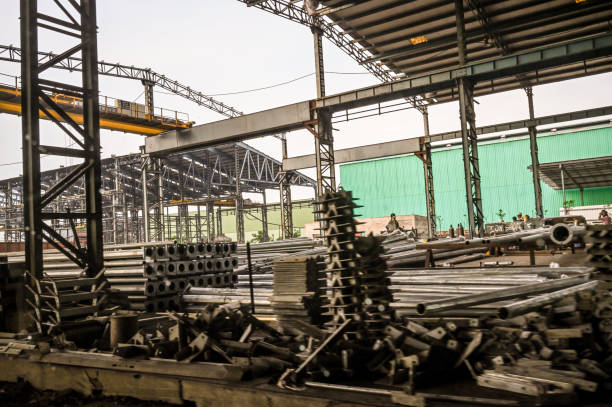
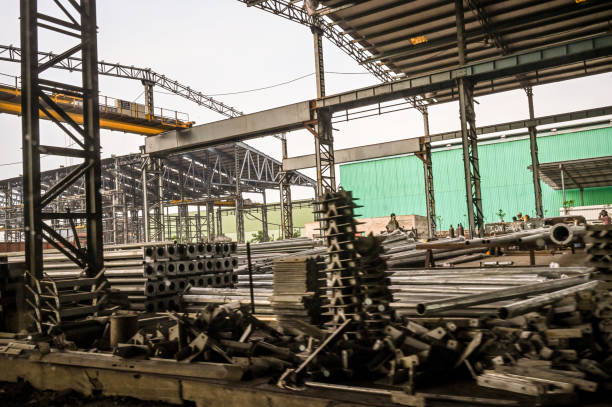
India’s steel sector is closely connected with construction, infrastructure, manufacturing, automotive production, railways, energy systems, and urban development. Steel is used in buildings, bridges, machinery, pipelines, transmission towers, vehicles, industrial equipment, and public infrastructure. As India continues to expand its industrial and urban base, steel demand is becoming an important indicator of long-term economic activity.
According to MarkNtel Advisors, the India Steel Market was valued at around USD 140.5 billion in 2025 and is projected to grow from USD 150.50 billion in 2026 to USD 227.38 billion by 2032. The sector is expected to register a CAGR of around 7.12% during 2026–2032. This USD 227.38 billion by 2032 outlook reflects construction demand, industrial growth, manufacturing expansion, and public infrastructure investment.
Construction Remains the Main Demand Driver
Building and construction continue to be the strongest end-use area for steel in India. According to the MarkNtel study, this segment accounted for around 63% share in 2026. Steel is used in residential buildings, commercial complexes, metro systems, highways, bridges, airports, warehouses, industrial parks, and public infrastructure projects because of its strength, durability, flexibility, and recyclability.
The Ministry of Steel provides policy direction for India’s steel sector, including domestic production, capacity expansion, quality standards, and industry development. As India builds more transport corridors, housing projects, renewable power assets, and urban infrastructure, steel consumption is likely to remain closely linked with construction activity and government-backed capital expenditure.
Finished Steel Holds a Strong Position
Finished steel accounted for around 65% share by product type in 2026, according to the MarkNtel report. This includes products such as bars, rods, coils, sheets, plates, structural steel, and other processed forms used by construction firms, manufacturers, fabricators, automotive companies, and infrastructure developers. Finished steel is important because it moves directly into end-use applications.
The World Steel Association provides global context on steel production and usage across infrastructure, transport, machinery, and energy systems. India’s rising demand reflects both domestic consumption and industrial modernization. As fabrication, engineering, and manufacturing supply chains expand, finished steel quality and availability will remain important for downstream users.
Infrastructure Spending Supports Long-Term Consumption
India’s infrastructure pipeline is one of the most important factors shaping steel demand. Highways, rail corridors, metro networks, ports, airports, logistics parks, power transmission projects, and industrial corridors require large volumes of structural and reinforcement steel. These projects often create multi-year demand visibility for steel producers, distributors, and fabricators.
The National Infrastructure Pipeline provides a broader view of planned infrastructure investment across sectors. Steel demand benefits from this pipeline because infrastructure projects require long-lasting materials that can support heavy loads, environmental exposure, and engineering complexity. This makes steel a foundational input for India’s public and private development priorities.
Manufacturing Growth Adds Wider Demand
Beyond construction, India’s manufacturing sector is also increasing steel use. Automobiles, machinery, electrical equipment, appliances, capital goods, rail equipment, shipbuilding, defense manufacturing, and renewable energy components all depend on steel. As manufacturing becomes more advanced, demand is likely to shift toward higher-quality grades, coated products, alloy steel, and application-specific materials.
The Make in India initiative supports broader domestic manufacturing development, which aligns with steel consumption across industrial value chains. Growth in manufacturing can create demand not only for flat and long steel products but also for precision steel components, engineered structures, tools, molds, and fabricated assemblies.
Regional Demand Is Led by North India
North India held the largest regional share of about 31.78%, according to the MarkNtel report. This reflects strong construction activity, infrastructure development, automotive clusters, engineering industries, and urban expansion across states such as Delhi-NCR, Haryana, Punjab, Uttar Pradesh, and Rajasthan. The region’s large consumer base and industrial corridors support consistent steel consumption.
The Invest India infrastructure sector overview provides wider context on India’s infrastructure development priorities and investment opportunities. Regional steel demand often follows transport connectivity, industrial parks, warehousing, housing, and logistics development. As new corridors and urban clusters expand, steel suppliers are expected to align distribution and processing capacity with regional demand centers.
Sustainability and Scrap Use Are Becoming Important
Steel production is energy-intensive, and sustainability is becoming a stronger consideration for producers and users. Energy efficiency, scrap recycling, cleaner production processes, and lower-emission technologies are increasingly important as India balances industrial growth with environmental objectives. Steel’s recyclability gives it an advantage, but production practices still need continuous improvement.
The Bureau of Energy Efficiency promotes energy efficiency across India, including industrial energy performance. For steel producers, efficiency improvements can reduce energy intensity and operating costs. Over time, demand for greener steel, better emissions management, and circular material use may influence investment decisions across the sector.
Outlook for India’s Steel Ecosystem
India’s steel outlook will likely remain tied to infrastructure investment, construction activity, manufacturing expansion, urbanization, and industrial policy. However, producers will also need to manage raw material availability, energy costs, logistics constraints, import competition, and environmental compliance.
Steel will remain one of India’s most important industrial materials because it supports both basic infrastructure and advanced manufacturing. As the country expands roads, cities, factories, energy systems, and transport networks, the steel sector’s role will continue to be defined by scale, quality, efficiency, and sustainability.


 john ryan
 ARC Print India