John Smith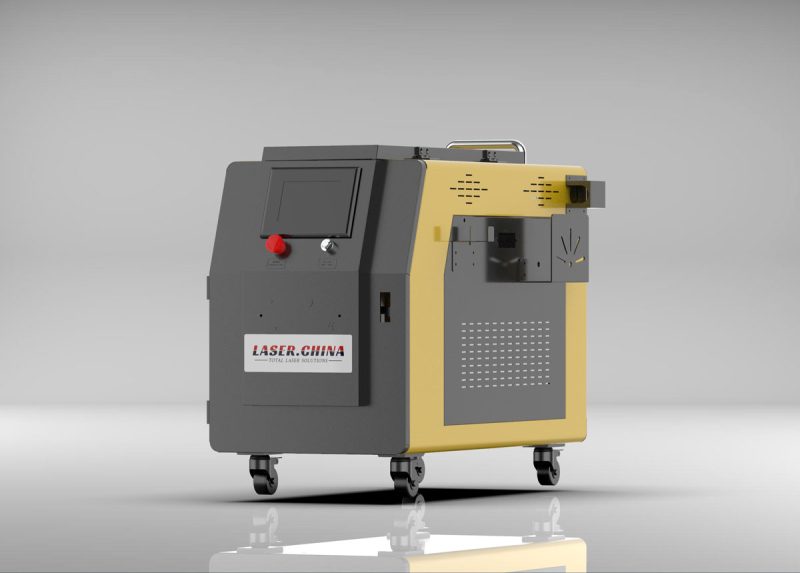
An industrial laser cleaner is a modern surface treatment solution designed to remove unwanted layers such as rust, oxide, paint, oil residue, carbon deposits, and industrial contaminants from metal and non-metal surfaces. This technology relies on controlled laser energy to interact with surface materials, allowing precise cleaning without the need for chemicals, abrasives, or water-based processes. In industrial environments where accuracy, consistency, and process control are critical, the industrial laser cleaner has become an essential tool across multiple sectors.
Industrial production lines demand repeatable and stable cleaning processes. Traditional methods often involve mechanical abrasion, solvents, or blasting media, which can introduce variability, residue, and downtime. An industrial laser cleaner operates as a contactless system, enabling controlled removal of surface layers while preserving the integrity of the base material. This makes it suitable for high-value components, complex geometries, and automated manufacturing workflows.
Working Principle of an Industrial Laser Cleaner
The industrial laser cleaner functions by emitting laser pulses or continuous-wave energy onto the target surface. When the laser interacts with contaminants, the unwanted material absorbs the energy and undergoes rapid heating, vaporization, or micro-ablation. The base substrate reflects or resists the laser energy due to different absorption characteristics, allowing selective removal. This controlled interaction ensures predictable cleaning depth and repeatable results.
Laser parameters such as wavelength, pulse duration, frequency, and power density are adjusted according to material type and contamination level. In an industrial laser cleaner, these parameters are digitally controlled, enabling operators to define precise cleaning profiles for different applications. This level of control supports consistent performance across long production cycles.
Role in Industrial Manufacturing Environments
In heavy manufacturing and precision engineering, surface preparation is a critical step before welding, coating, bonding, or inspection. An industrial laser cleaner is commonly integrated into production lines to ensure surfaces meet required cleanliness standards. Clean surfaces contribute to reliable downstream processes, reduced rework, and stable product quality.
Industries such as automotive manufacturing use industrial laser cleaner systems to remove oils and oxides from metal panels prior to welding or painting. In aerospace production, laser cleaning is applied to turbine components, structural parts, and molds where strict tolerances and cleanliness requirements must be maintained. The non-contact nature of the industrial laser cleaner allows it to be used on delicate or thin materials without deformation.
Industrial Laser Cleaner in Maintenance and Restoration
Beyond production lines, an industrial laser cleaner plays a vital role in maintenance, repair, and overhaul operations. Industrial equipment exposed to harsh environments often accumulates corrosion, coatings, or carbon layers that must be removed before inspection or refurbishment. Laser cleaning enables targeted removal of these layers without dismantling large assemblies.
In power generation facilities, industrial laser cleaner systems are used to clean turbine blades, heat exchangers, and electrical components. Shipbuilding and offshore industries apply laser cleaning for rust and coating removal on steel structures, improving surface conditions prior to recoating. The precision of an industrial laser cleaner allows selective cleaning without affecting surrounding areas.
Adaptability Across Materials and Surfaces
An industrial laser cleaner is suitable for a wide range of materials, including steel, aluminum, copper, titanium, and certain composites. Different surface textures, from smooth machined parts to rough castings, can be treated by adjusting laser parameters. This adaptability makes the industrial laser cleaner a versatile solution for diverse industrial needs.
Complex shapes, grooves, and internal edges present challenges for traditional cleaning methods. Laser beams can be directed and focused with high accuracy, enabling effective cleaning of intricate geometries. Robotic integration further enhances the reach of an industrial laser cleaner, allowing automated cleaning of hard-to-access areas in large assemblies.
Integration with Automation and Smart Manufacturing
Modern industrial facilities increasingly rely on automation and digital control. An industrial laser cleaner can be seamlessly integrated with robotic arms, conveyor systems, and vision inspection units. Programmable control systems allow synchronization with other production stages, ensuring cleaning occurs at the correct time and location within the workflow.
Data monitoring and parameter storage are also part of advanced industrial laser cleaner systems. Cleaning recipes can be saved and reused, ensuring consistency across batches and shifts. This aligns with Industry 4.0 initiatives, where traceability and process optimization are key objectives.
Environmental and Workplace Considerations
Industrial operations are subject to strict environmental and safety regulations. An industrial laser cleaner operates without chemical solvents or blasting media, reducing waste handling requirements. The process generates minimal secondary waste, typically limited to fine particulate matter that can be captured with extraction systems.
Workplace conditions also benefit from laser cleaning technology. Since the industrial laser cleaner does not rely on consumables such as grit or chemicals, storage and disposal requirements are simplified. The controlled nature of the process supports cleaner work areas and predictable operating conditions.
Use in Precision Cleaning and Surface Conditioning
In electronics manufacturing and precision tooling, surface cleanliness at the microscopic level is often required. An industrial laser cleaner can remove thin oxide films or residues without altering surface dimensions. This level of precision supports applications such as mold cleaning, semiconductor equipment maintenance, and high-precision component preparation.
Surface conditioning is another important application. By adjusting laser parameters, an industrial laser cleaner can modify surface texture to support better adhesion for coatings or bonding processes. This controlled interaction provides repeatable surface states suitable for demanding industrial standards.
Reliability and Long-Term Operation
Industrial environments require equipment that can operate continuously under demanding conditions. An industrial laser cleaner is designed with industrial-grade components, including stable laser sources, robust cooling systems, and durable optical assemblies. These systems are built for long operational lifespans with consistent output performance.
Routine maintenance typically focuses on optical inspection and system calibration rather than frequent replacement of consumables. This operational stability makes the industrial laser cleaner suitable for both continuous production lines and on-demand maintenance tasks.
Applications Across Key Industrial Sectors
The industrial laser cleaner is widely adopted in automotive, aerospace, shipbuilding, rail transport, energy, electronics, and heavy machinery manufacturing. In each of these sectors, surface cleanliness directly influences product performance and reliability. Laser cleaning technology supports standardized cleaning processes that align with international quality requirements.
In heritage and mold restoration industries, industrial laser cleaner systems are used to remove contaminants while preserving original surface details. This demonstrates the adaptability of the technology beyond mass production, extending into specialized industrial and technical fields.
Industrial Laser Cleaner as a Strategic Investment
As industries move toward cleaner, more controlled, and automated production methods, the industrial laser cleaner represents a strategic solution for surface treatment challenges. Its precision, adaptability, and compatibility with modern manufacturing systems position it as a valuable asset in both production and maintenance environments.
By supporting consistent surface quality, reducing process variability, and integrating with automated workflows, the industrial laser cleaner continues to redefine how industries approach cleaning and surface preparation tasks.


 Accounting Experts
 tiptop einrichtung