Appy Bee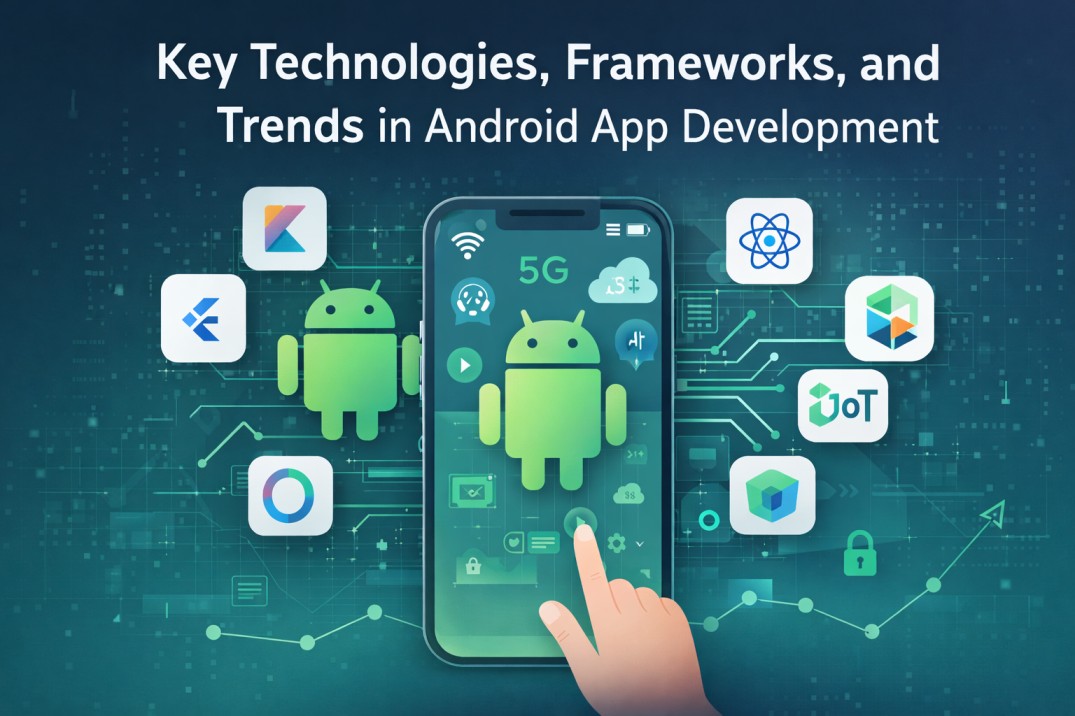
Android app development continues to evolve rapidly as new technologies, tools, and user expectations shape the mobile landscape. With billions of Android devices in use worldwide, businesses and developers constantly seek efficient ways to build secure, high-performance, and scalable applications.
Understanding the key technologies, frameworks, and current trends in Android app development is essential for anyone looking to create modern mobile solutions.
Core Technologies Used in Android App Development
1. Programming Languages
Two primary programming languages dominate Android development:
Java
Java has long been the traditional language for Android development. It offers strong performance, reliability, and a vast ecosystem of libraries. Many existing Android applications are still built using Java.
Kotlin
Kotlin is now the preferred language for Android development. It is concise, safer, and more modern compared to Java. Kotlin reduces coding errors, improves readability, and integrates seamlessly with Android Studio.
2. Android SDK (Software Development Kit)
The Android SDK provides essential tools, libraries, and APIs required to build Android applications. It includes components for designing user interfaces, managing device hardware, and handling system resources efficiently.
Developers use the SDK to ensure their apps work smoothly across different Android devices and operating system versions.
3. Android Studio
Android Studio is the official Integrated Development Environment (IDE) for Android app development. It offers features such as code editing, debugging tools, visual layout design, and performance analysis.
Its built-in emulator allows developers to test applications on various device configurations before deployment.
Popular Frameworks in Android App Development
1. Flutter
Flutter is an open-source framework developed by Google that enables developers to build cross-platform applications using a single codebase. It uses the Dart programming language and provides fast performance with a rich set of customizable UI components.
Flutter is widely adopted because it allows faster development and reduces overall project costs.
2. React Native
React Native is another popular framework that enables developers to build Android apps using JavaScript. It allows code reuse across platforms, making it suitable for businesses aiming to launch apps on both Android and iOS efficiently.
3. Xamarin
Xamarin allows developers to create Android applications using C# and the .NET framework. It is widely used by enterprises because it supports strong code sharing and seamless integration with Microsoft tools.
4. Jetpack Compose
Jetpack Compose is a modern UI toolkit introduced by Google. It simplifies interface design and reduces the need for complex XML layouts. Developers can create responsive and dynamic user interfaces using less code.
Emerging Trends in Android App Development
1. Artificial Intelligence and Machine Learning Integration
AI and machine learning are transforming Android apps by enabling features such as voice recognition, predictive analytics, personalized recommendations, and smart automation.
These technologies enhance user experience and improve decision-making capabilities within applications.
2. Internet of Things (IoT) Integration
Android applications are increasingly used to control smart devices such as home automation systems, wearable gadgets, and industrial equipment. IoT integration allows seamless communication between mobile apps and connected devices.
3. Cloud-Based Mobile Applications
Cloud integration allows Android apps to store data securely, improve scalability, and provide real-time access to information. Cloud-based solutions reduce dependency on device storage and enhance overall performance.
4. 5G Technology Impact
The introduction of 5G networks is significantly improving app speed, responsiveness, and connectivity. Developers can now build more advanced applications that support high-quality streaming, real-time gaming, and faster data processing.
5. Focus on App Security
With growing cybersecurity concerns, developers are implementing stronger security practices such as data encryption, secure authentication, and privacy protection measures.
Security has become a top priority in modern Android app development.
Best Practices for Modern Android Development
To build successful Android applications, developers should follow key best practices:
-
Focus on user-friendly interface design
-
Optimize app performance and speed
-
Ensure compatibility across multiple devices
-
Implement strong security measures
-
Regularly update applications to fix bugs and improve features
Following these practices helps create reliable and high-quality mobile applications.
Conclusion
Android app development continues to evolve with advancements in programming languages, development frameworks, and emerging technologies. From AI integration and cloud computing to modern UI frameworks like Jetpack Compose, developers now have powerful tools to build innovative mobile solutions.
By understanding the key technologies, frameworks, and trends shaping Android development, businesses and developers can create future-ready applications that deliver superior user experiences and long-term value.


 Prime Data Recovery Services
 Video GPT