Allan Dermot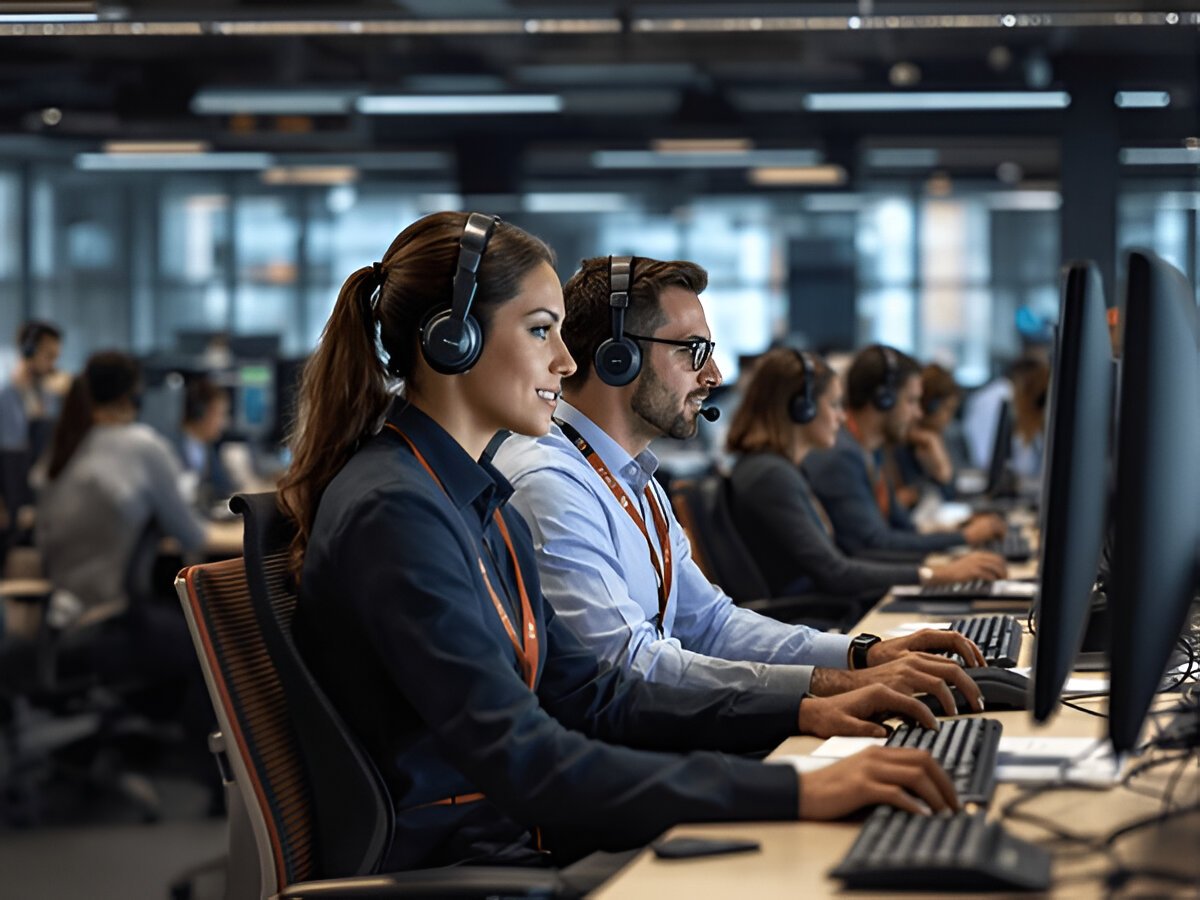
In the past year, a quiet revolution has been taking place in the world of speech technology. What once required hours of manual voice‑over work or costly language‑coaching sessions can now be achieved in seconds—thanks to AI Accent Conversion. By merging sophisticated accent conversion software with an emerging class of models known as the AI harmonizer, developers are delivering real‑time tools that can adapt a speaker’s accent on the fly, opening up fresh possibilities for entertainment, education, and global communication.
What Is AI Accent Conversion?
At its core, AI accent conversion is a type of voice‑style transfer. The system listens to a source utterance (for example, an American English speaker) and re‑synthesizes the same content with the phonetic and prosodic characteristics of a target accent—British RP, Australian, Indian English, or even regional dialects. Modern approaches rely on deep neural networks—typically a blend of text‑to‑speech (TTS) and speech‑to‑speech (S2S) models—trained on thousands of hours of paired speech data.
The term “real‑time” is critical. Early prototypes required batch processing and introduced noticeable latency, limiting their use to post‑production. Today, thanks to more efficient architectures (conformer‑based encoders, lightweight diffusion decoders) and hardware acceleration, the transformation can happen within a few hundred milliseconds, making it suitable for live streaming, video calls, and interactive voice assistants.
The Role of an AI Harmonizer
An AI harmonizer is the glue that makes accent conversion feel natural rather than robotic. While a conventional accent conversion pipeline focuses on phoneme substitution, the harmonizer aligns the converted speech with the speaker’s original intonation, rhythm, and emotional nuance. In practice, it works in three steps:
- Feature Extraction – Capturing pitch contours, timing patterns, and energy dynamics from the source voice.
- Style Mapping – Translating these features into the target accent’s phonological space while preserving the speaker’s expressive intent.
- Resynthesis – Generating the final waveform that blends the target accent’s phonetics with the source’s natural cadence.
By harmonizing these dimensions, the output avoids the “flat‑accent” effect that plagued early attempts and instead produces speech that sounds like the original speaker has simply adopted a different accent—complete with their personal quirks and emotions.
Why It Matters
| Application | Benefit |
|---|---|
| Global Content Creation | YouTubers and podcasters can instantly localize audio for different markets without re‑recording. |
| Language Learning | Learners hear their own voice speaking with a target accent, accelerating pronunciation practice. |
| Accessibility | Real‑time captioning tools can provide region‑specific accents for users who prefer familiar speech patterns. |
| Customer Support | Agents can converse in a client’s native accent, building rapport and reducing friction. |
The convergence of accent conversion software and the AI harmonizer is turning these use cases from speculative to actionable within months.
Challenges and Ethical Guardrails
Despite its promise, real‑time AI accent conversion raises several concerns:
- Data Bias – Training data often over‑represents certain dialects, leading to uneven quality across accents.
- Cultural Sensitivity – Accents are tied to identity; misuse could be perceived as mockery or cultural appropriation.
- Privacy – Real‑time processing may involve transmitting voice data to cloud services, necessitating robust encryption and consent mechanisms.
Responsible developers are addressing these issues by curating balanced datasets, offering transparent user controls, and implementing on‑device inference wherever possible.
Looking Ahead
The next wave will likely combine multilingual TTS with accent conversion, allowing a single model to switch both language and accent on demand. Coupled with advances in low‑latency neural codecs, we may soon see truly immersive voice experiences in virtual reality, where every avatar speaks with a personalized yet context‑appropriate accent.
In short, when accent software meets an AI harmonizer, the result is more than a novelty—it’s a practical, inclusive tool that reshapes how we speak across borders. As the technology matures, expect to hear familiar voices speaking in accents you never imagined they could adopt—smoothly, instantly, and respectfully.


 ashton kit
 jessica lee