candus misheel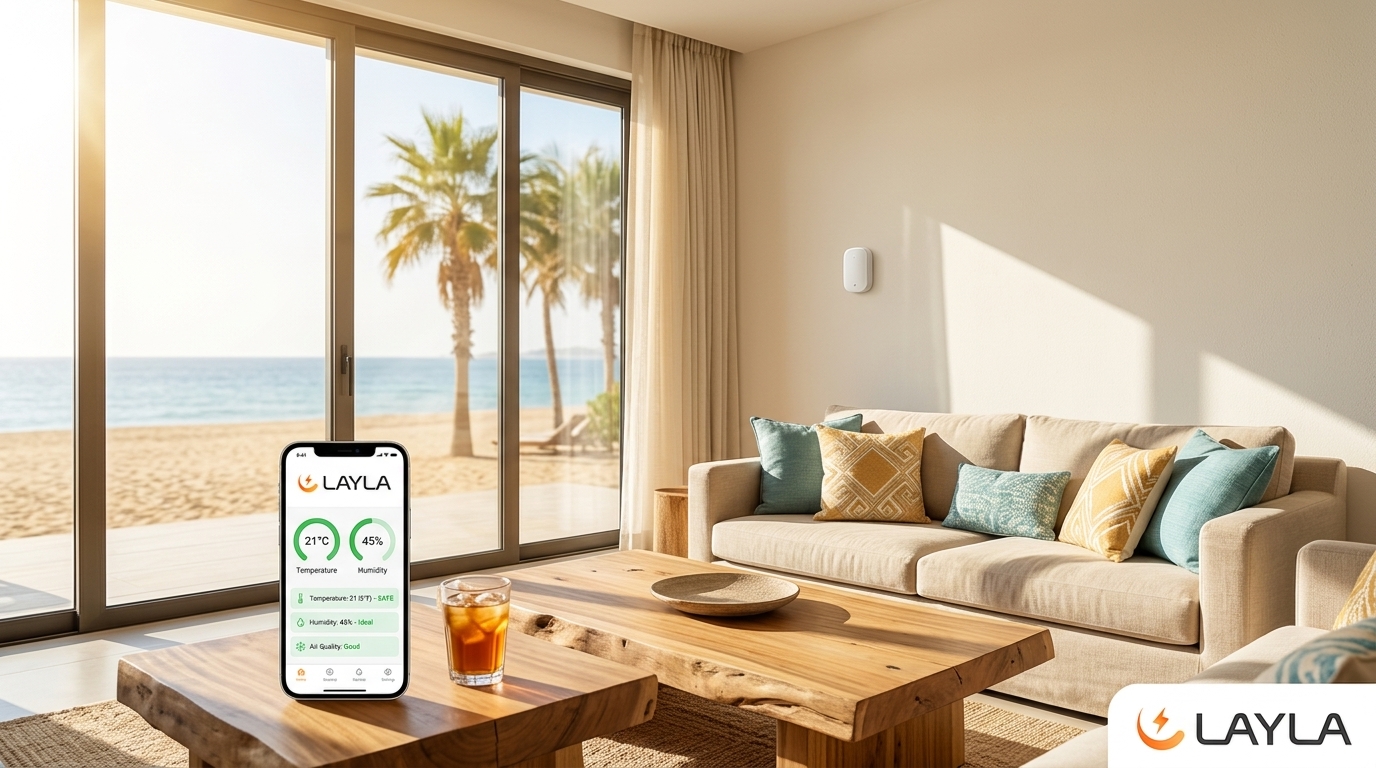
Why Heatwaves Pose a Different Risk Than Hosts Often Recognize
Most vacation rental hosts focus their seasonal risk thinking on winter, where the threat of frozen pipes is dramatic and well understood. Summer heatwaves get less attention even though they cause significant property damage every year. The damage from extreme heat is less spectacular than a burst pipe but still expensive, and it accumulates in ways that hosts often misidentify as normal wear. Understanding what heatwaves actually do to empty properties helps hosts recognize a risk category they may have been quietly absorbing as a cost of doing business.
Extreme indoor heat damages properties in several specific ways. Wood furniture and flooring can warp or crack under sustained high temperatures, particularly in humid conditions. Electronics including televisions, smart home devices, and appliances see shortened lifespans when subjected to extreme heat. Sealants, adhesives, and finishes deteriorate faster than under normal conditions. Paint can blister, especially on surfaces facing direct sunlight. Bedding, mattresses, and upholstery absorb moisture during humid heat events and may develop mold if conditions persist. Each of these effects is gradual rather than immediate, which is why hosts rarely connect the damage to specific heatwave events.
The Compounding Risk of Heat and Humidity Together
Heat alone is damaging, but heat combined with high humidity is significantly more so. Many heatwaves occur during humid weather, particularly in coastal regions and the eastern United States and southern Europe. The combination produces conditions inside empty properties where temperatures exceed comfortable ranges and humidity stays elevated even when outdoor humidity drops. The interior environment essentially becomes a slow-cooking chamber for organic materials, supporting mold growth, accelerating decay of natural fibers, and creating conditions guests will notice immediately on arrival.
Continuous monitoring catches both halves of this dual threat. Temperature sensors track how hot the property actually gets during heatwave conditions, often showing readings significantly higher than outdoor air temperature when properties have direct sun exposure or insufficient ventilation. Humidity sensors track the second variable that determines actual damage potential. The combined picture tells hosts whether intervention is needed during a specific event, and whether longer-term improvements like better insulation, window treatments, or HVAC capacity might be warranted. Layla’s all-in-one environmental monitoring covers both temperature and humidity continuously, providing the complete picture that single-variable sensors miss.
Smart AC Control During Empty Periods
Smart AC automation through occupancy-based eco mode handles heatwave protection automatically. When the sensor confirms the property is unoccupied, the connected HVAC system maintains a safe maximum temperature rather than running at full guest-comfort settings or shutting off entirely. The maintained temperature is high enough to save substantial energy compared to keeping guest comfort levels but low enough to prevent the extreme heat and humidity conditions that cause damage. The balance produces meaningful financial protection without the cost of running AC at full capacity in empty units.
This automation matters more during heatwaves than at any other time of year because the consequences of getting it wrong are most severe. A property left without AC during a heatwave can reach interior temperatures forty degrees Fahrenheit above outdoor air temperature in extreme conditions, creating exactly the damaging environment described above. The same automation that produces ordinary energy savings during mild weather provides genuine property protection during extreme weather. Hosts who rely on manual thermostat adjustments between guests routinely miss these high-stakes moments simply because they were not aware a heatwave was coming or did not have time to address every property in their portfolio.
The Specific Threat to High-Value Furnishings
Investment in higher-quality furnishings is a common strategy for vacation rentals targeting upscale guests, but high-quality furnishings are often more vulnerable to heat damage than budget alternatives. Solid wood furniture, hardwood floors, leather upholstery, and natural fiber rugs all suffer disproportionately from heat exposure compared to laminate, synthetic, or composite materials. The premium properties that command the highest nightly rates are sometimes the most exposed to heatwave damage simply because their furnishings are the most heat-sensitive.
Smart sensors and HVAC automation become particularly valuable in these higher-end properties because the protected assets are more expensive. A heatwave that damages a budget rental’s particle-board furniture might cost a few hundred dollars to address. The same heatwave damaging a premium property’s solid wood pieces and leather seating might cost ten times that. The cost-benefit calculation for monitoring shifts strongly in favor of comprehensive protection at higher property tiers, where preserving the furnishings that justify premium rates is itself a significant business consideration.
Air Quality Issues That Heatwaves Trigger
Heat events affect indoor air quality in several specific ways that hosts should monitor. High temperatures accelerate off-gassing from materials including new furniture, fresh paint, carpeting, and various synthetic surfaces. The volatile organic compounds released create air quality issues that linger after the heatwave ends, sometimes producing complaints from sensitive guests at subsequent stays. Wildfire smoke during summer adds another air quality threat in many regions, with smoke particles infiltrating properties even when AC systems are running.
Continuous air quality monitoring documents these conditions and supports informed responses. Hosts may decide to delay reopening after a major heat event, run additional ventilation cycles before guest arrival, or invest in air filtration during smoke seasons. Properties showing chronic air quality issues during summer may benefit from filter upgrades, supplemental air purifiers, or HVAC modifications that address the underlying causes. None of these interventions can be made intelligently without the data that monitoring provides. Layla’s air quality monitoring makes this data continuously available so hosts can move from reactive guest-complaint mode to proactive air quality management.
Energy Bill Management During Peak Demand
Summer heatwaves coincide with peak electricity demand and pricing in most utility markets. Properties running AC at full capacity through heatwave events face dramatically higher energy bills than the same properties during mild weather. Smart automation that shifts unoccupied periods to eco mode produces particularly large savings during these peak periods, often capturing more financial benefit during heatwave weeks than during the rest of the summer combined.
The financial case for monitoring becomes especially clear during heatwaves because the energy savings are concentrated in the periods of highest cost. A unit saving thirty percent of HVAC costs across an entire year may save the same percentage across heatwave weeks specifically, but the absolute dollar value during those weeks is much larger because the underlying bills are higher. Hosts paying attention to seasonal patterns in their energy bills often discover that heatwave weeks alone justify the cost of smart sensors through savings, with the rest of the year operating as bonus financial benefit.
Long-Term Adaptation to Increasing Heat
Climate trends suggest that heatwaves will become more frequent and more intense in many regions where vacation rentals operate. Properties that performed adequately under historical climate conditions may face progressively more challenging conditions over the coming years. Hosts who plan for this trajectory benefit from making infrastructure improvements ahead of need rather than reactively after damage occurs. Continuous monitoring provides the data to identify which properties need which improvements first.
Specific improvements that may warrant consideration include better insulation in roof spaces and exterior walls, window treatments that block direct solar gain, ventilation upgrades that move hot air more efficiently, HVAC capacity increases for properties straining at peak demand, and shade structures that reduce solar load on building exteriors. None of these improvements should be made blindly. Sensor data over time reveals which properties show concerning patterns, where the worst hot spots are within each property, and how interventions actually affected conditions after implementation. The data-driven approach produces better decisions than guesswork or generic recommendations.
Frequently Asked Questions
Q1: How hot can empty rentals get during heatwaves?
A: Without AC, properties can reach indoor temperatures dramatically higher than outdoor temperatures, particularly with direct sun exposure or limited ventilation.
Q2: What temperature should empty units maintain during heatwaves?
A: Most hosts target around 24°C to 27°C as a safe maximum that protects furnishings without running AC at full guest-comfort levels.
Q3: Does Layla automate AC for heatwave protection?
A: Yes. Eco Mode maintains safe maximum temperatures when properties are unoccupied, providing automatic protection during heat events.
Q4: How much can smart AC save during a typical heatwave week?
A: Energy savings concentrate during high-cost peak periods, often capturing significant portions of total annual savings during heatwave weeks alone.
Q5: Can sensors detect wildfire smoke infiltration?
A: Yes. Air quality monitoring through PM2.5 and VOC sensors detects smoke particles that infiltrate properties even with HVAC running.

 Commport Technologies
 Frank Weiss