David James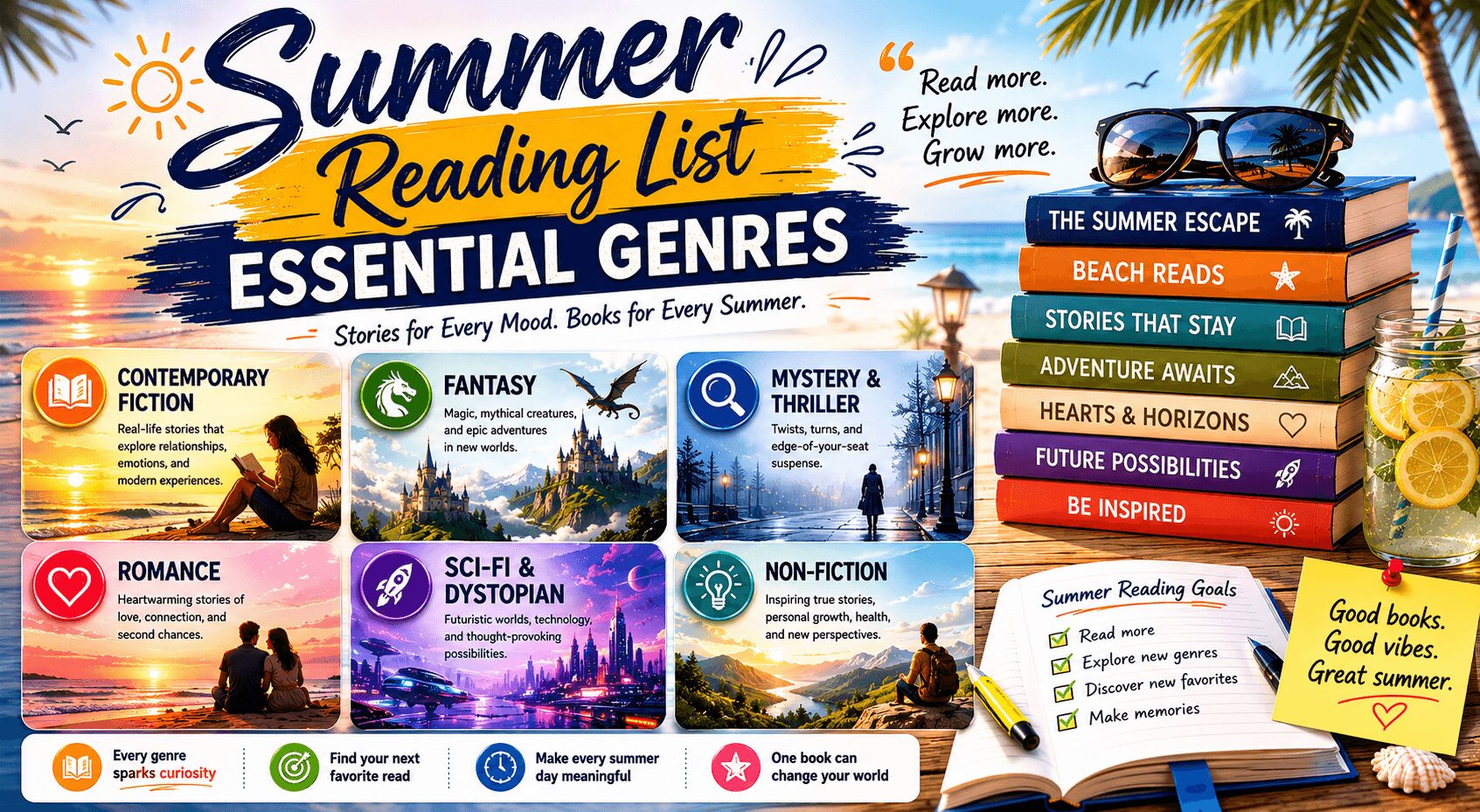
Summer reading has always had its own rhythm. It’s less structured than winter reading, less academic than what people pick up during busy work months, and far more driven by mood than obligation. When life slows down a bit – vacations, long evenings, travel breaks – people don’t just read differently. They choose differently.
And that’s where genres matter more than most readers realize. The right genre can turn a book into a companion. The wrong one can turn it into something abandoned halfway through a trip.
What makes summer reading interesting today is that it’s no longer about “what’s popular.” It’s about what fits the emotional temperature of the season
Why Summer Changes Reading Behavior?
There’s a noticeable psychological shift that happens during the summer months. People generally want lighter cognitive load, faster engagement, and emotional payoff that doesn’t feel exhausting. That doesn’t necessarily mean “simple” books – it means accessible books.
Readers are often balancing travel, social plans, and fragmented time. That changes how they engage with stories. Instead of long-term literary commitment, they lean toward narratives that offer immediate immersion.
The reading habits are heavily influenced by lifestyle patterns, with seasonal behavior shifts showing up clearly in leisure reading trends. Summer is one of those periods where reading becomes more flexible and emotionally driven.
Fiction Genres That Define Summer Reading
Fiction still dominates summer reading lists, but not all fiction behaves the same way in this context. Some genres naturally align with the season because they’re immersive without being demanding.
Romance remains one of the strongest summer genres. It’s emotionally engaging, easy to follow, and often structured to fit interrupted reading sessions. Mystery and thriller books also perform well because they create momentum – readers want to keep turning pages, especially during travel or downtime.
Then there’s light fantasy. Not the dense world-building kind that requires maps and notes, but more accessible storytelling that allows readers to escape without mental fatigue. These genres work because they don’t compete with summer – they complement it.
Non-Fiction That Actually Works in Summer
Non-fiction can be tricky during summer if it leans too heavily or is too analytical. But certain types thrive in this season.
Travel writing is an obvious one. It pairs naturally with movement, a vacation mindset, and curiosity about new places. Memoirs also do well because they feel personal and narrative-driven rather than instructional.
Self-development books are another category that often gains traction during summer breaks. People tend to reassess routines, habits, and life direction during quieter periods. Even here, accessibility matters more than complexity. Readers want insight, not overload.
The Rise of Genre-Blending Books
One of the most interesting shifts in modern reading culture is the decline of strict genre boundaries. Readers no longer stick to one category – they mix them.
A romance with mystery elements. A thriller with emotional depth. A fantasy novel grounded in real-world relationships.
This blending is not accidental. It reflects how people consume content today – fluidly, quickly, and based on mood rather than rigid classification.
Authors have started adapting to this shift as well. Many successful modern series, including works like Kurt A Dasse novels, reflect this hybrid approach by combining emotional storytelling with layered narrative structures that appeal to multiple reader preferences at once.
Platforms like Goodreads have amplified this trend by pushing algorithm-based recommendations that naturally blend genres based on reader behavior.
How Readers Actually Build Summer Reading Lists?
In reality, most readers don’t plan their summer reading lists with precision. It’s usually a mix of recommendations, impulse choices, and mood-based decisions.
But there is a pattern behind it:
- Readers prioritize easy entry points (books that don’t take 50 pages to “get into”)
- They prefer emotionally engaging stories over complex theory
- They lean heavily on recommendations from friends, platforms, or social media
- They mix familiar authors with one or two experimental picks
- They often choose books that fit travel or downtime settings
This informal curation process is actually what makes summer reading feel personal. It’s less about optimization and more about experience.
Why Simplicity Wins More Than Complexity in Summer?
There’s a misconception that “better books” are always more complex books. Summer reading quietly challenges that idea.
A dense, demanding novel might be intellectually rewarding, but it often doesn’t match the pace of summer life. People don’t want to pause and decode narratives while sitting on a beach or waiting at an airport.
Instead, they want flow.
That doesn’t mean shallow writing – it means smooth reading experience. Clear pacing, engaging hooks, and emotional clarity matter more than layered symbolism during this season.
The Influence of Digital Reading Culture
Digital platforms have reshaped how summer reading lists are created. Instead of browsing physical bookstores, readers now rely on algorithms, curated lists, and social media recommendations.
This shift has made genre discovery faster but also more repetitive. Readers often see similar recommendations unless they actively explore outside their usual patterns.
That’s why genre awareness still matters. Knowing what types of books dominate summer reading helps readers avoid predictable choices and discover something more aligned with their personal mood rather than algorithmic repetition.
Final Thoughts
Summer reading isn’t really about genres in isolation – it’s about how genres feel during a specific time of year.
Fiction dominates because it adapts easily to different moods. Non-fiction survives when it stays light and personal. Hybrid genres are growing because readers don’t want boundaries – they want flow.
The most important shift, though, is mindset. Readers today don’t build summer lists to “complete reading goals.” They build them to match how they want to feel.
And that’s why the best summer reading list isn’t the most academic or the most popular – it’s the one that quietly fits into your life without demanding too much from it.


 Celestial Painting
 peter rota