candus misheel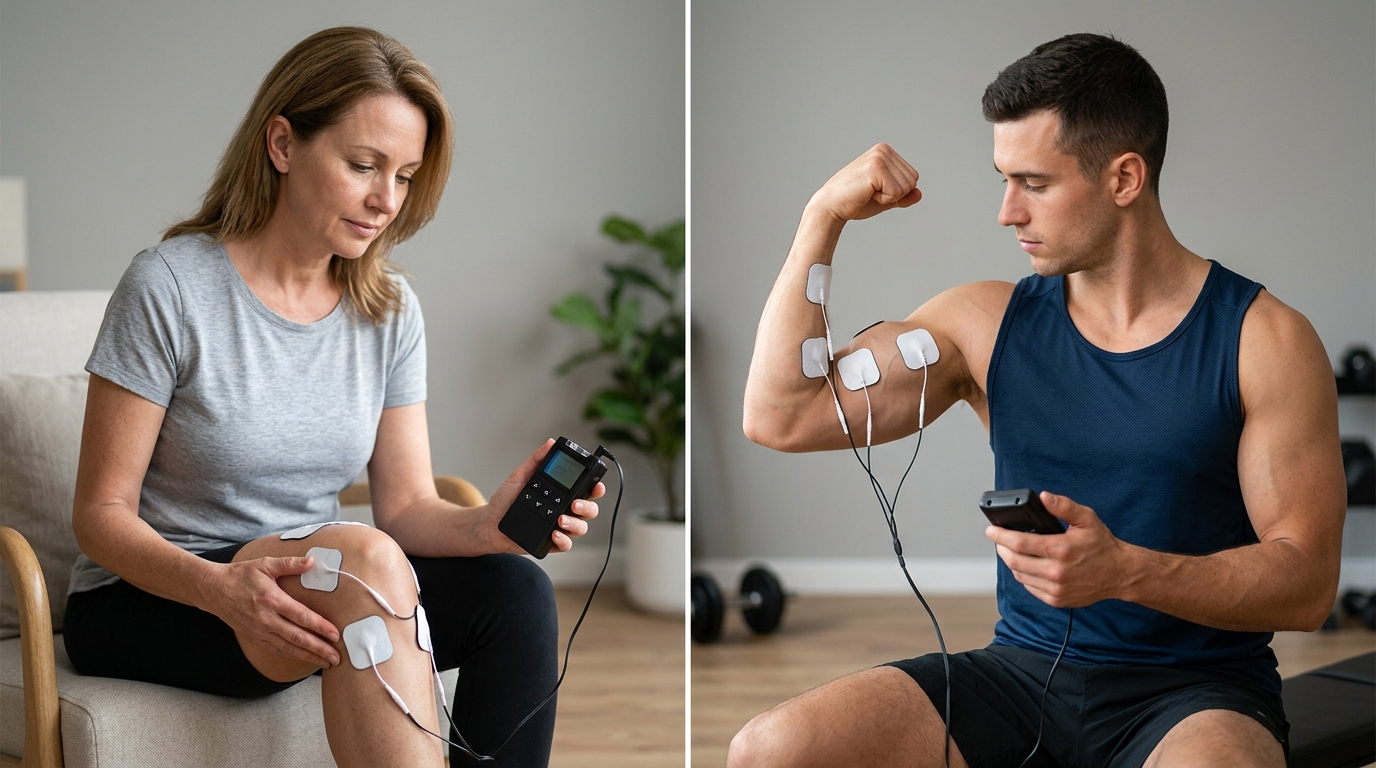
Quick answer: TENS and EMS both send electrical pulses through skin pads, but they target different things. TENS stimulates nerves to reduce the feeling of pain. EMS stimulates muscles to make them contract, which is used for muscle recovery and strengthening. TENS is for pain relief. EMS is for muscle work. Many machines now do both.
These two names get mixed up constantly, and shops do not always help by selling combined units under either label. They look identical, they both use sticky pads, and they both tingle. But they are designed for opposite goals. Before you buy from the TENS and EMS machines range, it is worth understanding which job you actually need done, because the wrong choice means the device does not do what you hoped.
What TENS and EMS have in common
Both are forms of electrotherapy. Both are small, battery powered, and connect to electrode pads that stick on the skin. Both are non invasive, meaning nothing enters the body, and both are widely used at home and in physiotherapy clinics. A TENS unit and an EMS unit also share the same general safety rules, so the cautions about pacemakers, the neck and pregnancy apply to both. The hardware is similar. The difference is what the pulses are aimed at.
What is TENS for?
TENS, which stands for Transcutaneous Electrical Nerve Stimulation, targets your nerves. The gentle pulses interrupt pain signals on their way to the brain and encourage the body to release its own painkillers. The goal is simple, to reduce the feeling of pain. You stay still during a TENS session and feel a comfortable tingle. It does not make your muscles work. It is a pain management tool, used for back pain, arthritis, period pain and similar aches.
What is EMS for?
EMS, which stands for Electrical Muscle Stimulation, targets your muscles, not your nerves for pain. The pulses are stronger and make the muscle actually contract and relax, the same way it would during exercise, except the signal comes from the machine instead of your brain. You can see and feel the muscle twitch. An EMS stimulator is used to keep muscles active after injury or surgery, to support physiotherapy, to ease muscle wasting when someone cannot move much, and by some people for muscle conditioning. It is muscle work, not pain relief.
TENS vs EMS at a glance
The table below sums up the difference. Note that a combined TENS and EMS device can switch between both modes, which is why many home users buy one unit for both jobs.
|
Feature |
TENS |
EMS |
|
Targets |
Nerves |
Muscles |
|
Main goal |
Reduce the feeling of pain |
Make muscles contract |
|
You feel |
A comfortable tingling |
The muscle twitching and contracting |
|
Used for |
Back, joint, period and arthritis pain |
Muscle recovery, physiotherapy, muscle wasting |
|
Muscle moves? |
No |
Yes |
Which one do you need?
Choose based on your goal, not the price tag. If your problem is pain, whether from the back, a joint, arthritis or periods, you want TENS. If your goal is to keep a muscle active, recover after an injury or surgery, or support a physiotherapy plan, you want EMS. If you want both at home, a combined unit is sensible and good value. What you should not do is buy an EMS device expecting it to calm your back pain, or a pure TENS device expecting it to rebuild a wasted muscle. They are different tools.
Can you use TENS and EMS together?
Many people ask whether they can run both on the same day, and the answer is usually yes, because they do different jobs. You might use TENS to calm pain during the day and EMS to keep a recovering muscle active, often on a physiotherapist’s plan. What you should avoid is stacking long, intense sessions back to back on the same muscle, which can leave it sore and tired. Space the sessions out, start gentle, and let how your body feels guide you rather than pushing the intensity for faster results.
What to check before you buy
If you are buying one device for home, a few practical points matter more than the brand name. Look for a unit that clearly separates the TENS and EMS modes so you are not guessing which you are using. Check that it has adjustable intensity and a few preset programs for common areas like the back and legs. Dual channel models let you treat two areas at once, which is handy. Make sure replacement pads are easy to buy locally, because worn pads are the most common reason a unit stops working well, and keep the instructions, since correct pad placement is what decides whether either mode actually helps.
Are they safe to use at home?
Both are safe for most people when used correctly, but the same cautions apply to each. Avoid them if you have a pacemaker or implanted device unless a specialist approves, do not use them over the front of the neck or the heart, and avoid the abdomen during pregnancy without medical advice. EMS in particular should be built up gradually, because overdoing muscle contractions can leave you sore. If you are using either device as part of recovery from an injury or surgery, let a physiotherapist guide the settings. The wider physiotherapy range includes both types, so match the tool to the goal and check the safety points first.
Medical disclaimer: This article is for general information only and is not a substitute for professional medical advice, diagnosis or treatment. Always follow the guidance of a qualified doctor or trained health worker for your own situation.
Frequently Asked Questions
What is the main difference between TENS and EMS?
TENS targets nerves to reduce pain. EMS targets muscles to make them contract for recovery and strengthening. Pain relief versus muscle work.
Can one machine do both TENS and EMS?
Yes. Many modern units include both modes, so you can use TENS for pain and EMS for muscle work in the same device.
Does EMS reduce pain like TENS?
Not directly. EMS works the muscle, which can help some pain indirectly over time, but TENS is the tool designed specifically for pain relief.
Is EMS the same as exercise?
No. EMS makes a muscle contract, but it does not replace proper exercise, cardio or the full benefits of movement. It is a support, not a substitute.
Are TENS and EMS safe in pregnancy?
Not over the abdomen without medical supervision. Always ask a doctor before using either device during pregnancy.


 sobiyya Kazmi
 Ahmad hassan