keith willson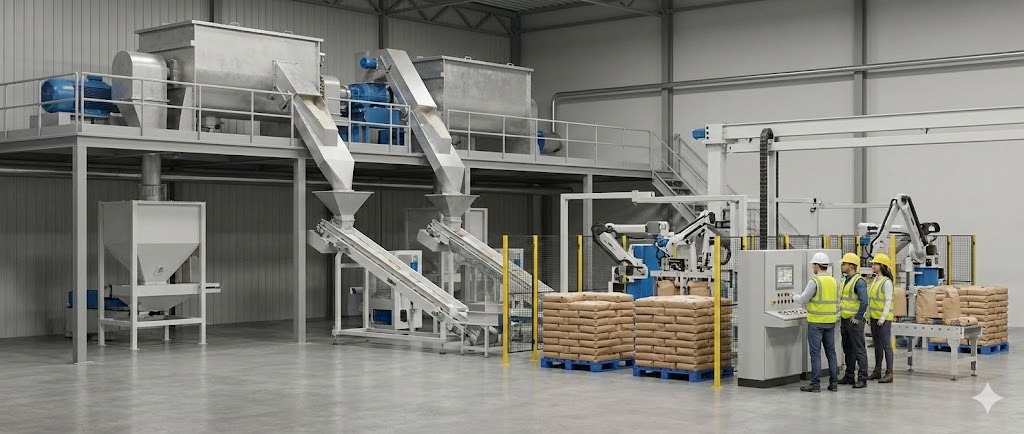
As demand for high-performance tile adhesives continues to grow across residential, commercial, and infrastructure projects, many manufacturers are planning to invest in their own tile adhesive production plants. However, purchasing a tile adhesive plant is not just a machinery decision—it’s a long-term strategic investment that impacts product quality, scalability, and profitability.
For brands like GLZON, which focus on industrial efficiency and modern manufacturing solutions, understanding the critical factors before buying a tile adhesive plant helps businesses avoid costly mistakes and select systems that support sustainable growth.
1. Understand Your Production Requirements
Before evaluating machinery options, it’s essential to define your production goals clearly. Tile adhesive plants are available in different capacities, usually measured in tons per hour (TPH).
Key questions to consider:
-
What is your target daily or monthly output?
-
Are you serving local projects or large-scale distribution?
-
Do you plan to expand production in the future?
Choosing a plant with the right capacity ensures you don’t overinvest initially while still allowing room for growth.
2. Automation Level: Manual, Semi-Automatic, or Fully Automatic
One of the most important decisions when buying a tile adhesive plant is selecting the appropriate automation level.
-
Semi-automatic plants are suitable for small to mid-sized manufacturers with limited budgets.
-
Fully automatic plants offer higher consistency, lower labor dependency, and better quality control.
GLZON recommends automation-ready systems that can be upgraded over time, allowing manufacturers to scale without replacing the entire setup.
3. Mixing Technology and Product Consistency
Tile adhesive performance depends heavily on uniform mixing of cement, sand, polymers, and additives. Poor mixing leads to inconsistent bonding strength and application issues at job sites.
Modern tile adhesive plants use:
-
Ribbon mixers or plough shear mixers
-
Controlled mixing cycles
-
PLC-based batch monitoring
Investing in reliable mixing technology directly impacts brand reputation and repeat business.
4. Raw Material Handling and Dust Control
Efficient raw material handling reduces wastage and improves plant safety. Look for systems that include:
-
Enclosed conveyors
-
Automatic feeding systems
-
Integrated dust collection units
A well-designed tile adhesive plant minimizes dust emissions, improves working conditions, and meets environmental compliance standards—an increasingly important factor in many regions.
5. Packaging System: Don’t Overlook This Step
Packaging is where manufacturing efficiency meets market readiness. Inaccurate or slow packaging can become a major bottleneck, even in high-capacity plants.
Modern tile adhesive plants integrate advanced solutions like an Automatic Packing Machine to ensure:
-
Precise bag weight
-
Faster packing speed
-
Reduced material loss
For manufacturers handling higher output or multiple packaging formats, an auto bagging machine significantly improves operational flow and reduces manual handling.
6. Quality Control and Formulation Flexibility
Tile adhesive formulations often vary based on application type—ceramic tiles, vitrified tiles, or heavy-duty stone tiles. A good plant should allow:
-
Easy formulation adjustments
-
Consistent batch repeatability
-
Compatibility with multiple adhesive grades
This flexibility helps manufacturers respond quickly to changing market demands.
7. Scalability and Future Expansion
Buying a tile adhesive plant should support not only current needs but also future expansion. GLZON emphasizes modular plant designs that allow:
-
Capacity upgrades
-
Automation enhancements
-
Integration with ERP or inventory systems
This approach reduces long-term capital expenditure and protects your investment.
8. Supplier Support and After-Sales Service
Even the most advanced plant requires technical support, spare parts availability, and operational guidance. Before finalizing a purchase, evaluate:
-
Installation and commissioning support
-
Operator training
-
Long-term maintenance services
Reliable after-sales support ensures uninterrupted production and faster ROI.
9. Total Cost of Ownership (Not Just Initial Price)
While upfront cost is important, decision-makers should focus on the total cost of ownership, which includes:
-
Energy consumption
-
Labor costs
-
Maintenance requirements
-
Downtime risks
High-quality automation and efficient packaging systems often result in lower operating costs over time.
Final Thoughts
Buying a tile adhesive plant is a strategic move that requires careful evaluation of production capacity, automation level, mixing technology, and packaging efficiency. For manufacturers aligned with GLZON’s vision of modern, scalable industrial solutions, choosing the right plant ensures consistent quality, operational efficiency, and long-term competitiveness.
By investing in automation-ready systems and reliable packaging solutions like automatic packing and auto bagging machines, businesses can position themselves for sustainable growth in an increasingly demanding construction market.

 Maraal Deniz