Melin willum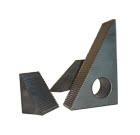
There are certain pieces of tooling in a machine shop that never get much attention until they are missing. Step blocks fall squarely into that category. They are not flashy. Nobody walks through a shop admiring them the way they might admire a new machining center or a high-end spindle package. But ask any machinist who has fought a shaky setup halfway through a heavy cut, and they will tell you pretty quickly how important proper support really is. A well-positioned set of step blocks can mean the difference between a rigid, repeatable setup and a part that creeps out of alignment under load.
Understanding Step Blocks in Machining
Step blocks are, at the simplest level, support elements used in workholding arrangements. They are often used in combination with strap clamps to aid in securing workpieces to the tables of milling machines, drill presses, machining centers, and other equipment that requires robust clamping.
At George H. Seltzer & Co., our serrated step blocks are two-piece steel blocks with serrations for adjustable height setting in machining applications. The serrations adjust in 1/8-inch increments, allowing machinists to fine-tune clamp support while maintaining secure positioning on machine work tables.
That small detail, the 1/8-inch adjustment, matters more than it sounds. In real machining environments, setups are rarely perfect right out of the gate. Workpieces vary. Clamp heights change. Fixture spacing shifts from one job to another. Serrated step blocks give machinists the flexibility to adapt without compromising rigidity.
How Step Blocks Work?
The setup itself is straightforward. One end of the clamp applies pressure to the workpiece while the opposite end rests on the step block. The serrated surfaces interlock to create stable support at different height levels.
Simple design. Extremely effective.
When properly used, step blocks help:
- Maintain correct clamp positioning
- Keep pressure evenly distributed
- Reduce vibration during machining
- Support irregular or oversized parts
- Improve repeatability across setups
Without proper rear support, clamps tend to flex or shift under cutting loads. It does not always happen dramatically, either. Sometimes the movement is subtle enough that the operator only notices it later through chatter marks, inconsistent dimensions, or tool wear that seems excessive for the application.
Most experienced machinists have seen this happen more than once.
Why Step Blocks Matter in Precision Machining?
Precision machining depends on rigidity. Not theoretical rigidity, but actual rigidity at the table where the workpiece is being held.
Even a high-end CNC machine cannot compensate for poor workholding. If the part moves during a cut, accuracy disappears quickly. That’s why good support hardware is critical, especially when it comes to heavy milling operations or longer machining cycles where vibration can increase over time.
Step blocks help create a more stable setup by supporting the clamp at the correct height and angle. Combined with T-slot bolts, clamps, and other fixturing hardware, they form a secure workholding system capable of handling substantial cutting forces.
At George H. Seltzer & Co., we manufacture industrial setup hardware designed for shops that expect consistency from one setup to the next. Properly selected step blocks contribute directly to:
- Better dimensional accuracy
- Cleaner surface finishes
- Reduced setup movement
- Longer cutting tool life
- Improved production consistency
- Faster setup adjustments
A rigid setup just makes machines better. There is really no complicated way around that.
Choosing the Right Step Blocks
Different machining applications require different levels of support. A small fixture plate running light cuts will not place the same demands on a setup as a large steel billet under aggressive milling conditions.
When selecting step blocks, machinists typically consider:
- Part size and weight
- Clamp dimensions
- Required support height
- Expected cutting loads
- Table and fixture layout
Serrated step blocks are especially useful because they combine adjustability with holding strength. Once locked together, the serrations resist slipping remarkably well under load, which is exactly what you want during heavier machining operations.
And frankly, setups that stay put save everybody time.
Built for Demanding Workholding Applications
Reliable workholding hardware tends to earn trust slowly. It proves itself over years of setups, production runs, hard materials, and demanding machining conditions, where weaker components eventually fail or lose consistency.
We manufacture sturdy setup gear for machine shops and industrial facilities that rely on rigorous, repeatable workholding every day at George H. Seltzer & Co.From clamps and T-slot hardware to serrated step blocks and heavy hex nuts, our products are built for machining environments where stability and accuracy cannot be treated as optional.
Connect With George H. Seltzer & Co.
Looking for dependable workholding hardware designed for real machining conditions? Contact George H. Seltzer & Co. to learn more about our industrial clamping and fixturing solutions built to support accurate machining operations involving step blocks.
FAQs
1. What are step blocks used for in machining?
Step blocks support clamps during machining operations, helping secure workpieces firmly to machine tables for stable cutting conditions.
2. How do serrated step blocks work?
The serrated surfaces interlock at adjustable height positions, allowing machinists to create secure clamp support in 1/8-inch increments.
3. Why are step blocks important in workholding?
They improve clamp stability, reduce setup movement, and help maintain machining accuracy during cutting operations.
4. What materials are industrial step blocks made from?
Most industrial step blocks are machined from durable steel capable of handling repeated machining loads and clamping pressure.
5. Are step blocks used in CNC machining?
Yes. Step blocks are widely used in CNC milling and other machining applications where rigid and adjustable workholding is required.


 Ammar Saleem
 zab nabs