North Living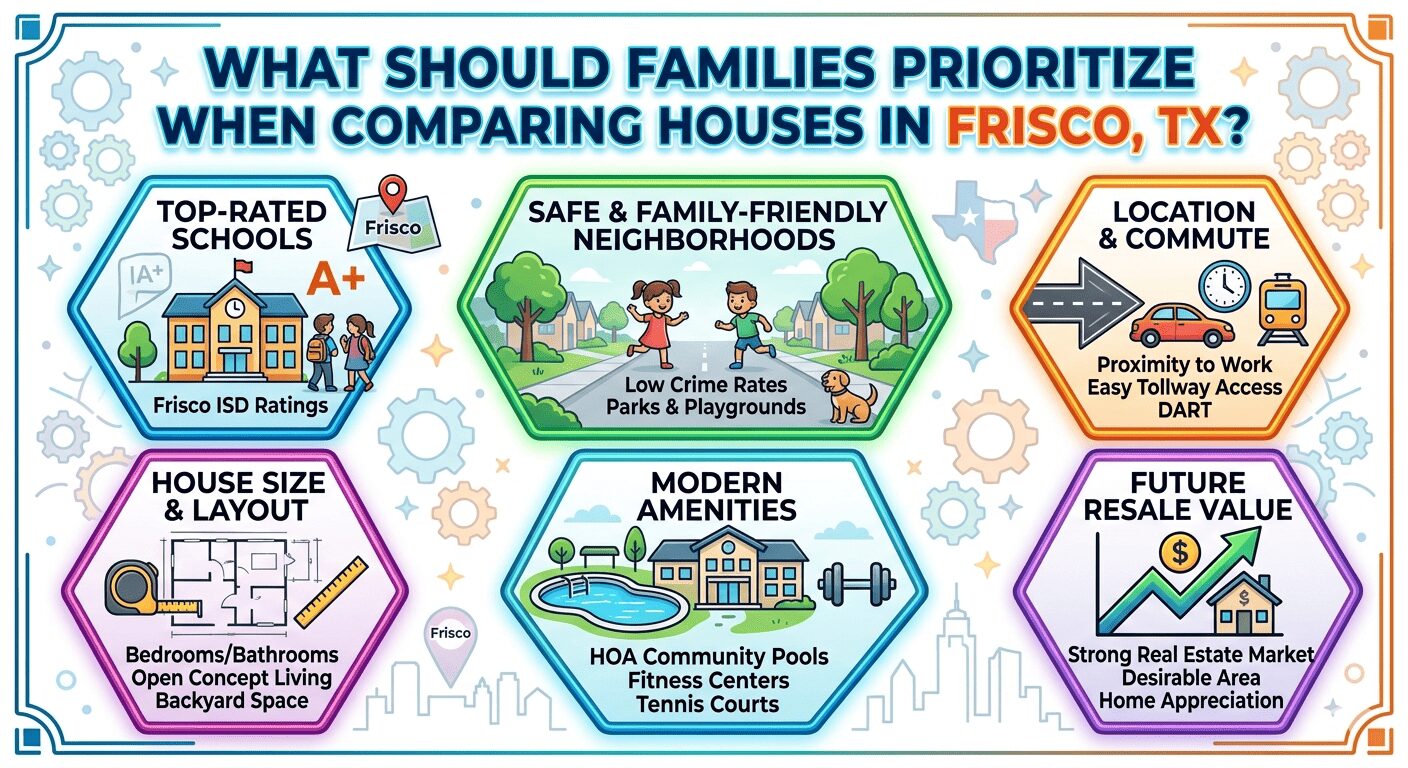
Moving to a new city or upgrading your current living situation is an exciting milestone for any family. Frisco, Texas, offers a vibrant community, excellent amenities, and a booming housing market. However, with so many incredible neighborhoods and property styles to choose from, narrowing down your options can feel overwhelming.
When you start touring properties, it is easy to get distracted by stunning kitchen upgrades or a beautiful backyard. While those details certainly matter, finding the perfect family home requires a broader perspective. You are not just buying a building; you are choosing the environment where your family will grow, learn, and make memories for years to come.
We will walk you through the essential factors families should prioritize when comparing houses in Frisco. By focusing on location, space, community features, and long-term value, you can confidently select a home that meets your current lifestyle and adapts to your future needs.
Why Looking Beyond the House Itself Is Important
A home purchase is one of the most significant long-term investments you will make. Because of this, neighborhood factors matter just as much as the property lines. Lifestyle considerations, such as how you spend your weekends and where you do your grocery shopping, will deeply affect your daily satisfaction.
Your family’s needs will also change over time. The perfect layout for toddlers might feel cramped when those children become teenagers. Evaluating the complete picture helps you think beyond your current circumstances. Avoiding decisions based solely on cosmetic appearances ensures you invest in a property that truly supports your life.
How Location Impacts Everyday Family Life
Families often prioritize convenience when narrowing down communities. Your daily routine relies heavily on where your home is situated. Commute times to work, access to major roads, and proximity to grocery stores all play a massive role in your work-life balance.
Living near nearby shopping centers, medical services, and parks can save you hours of driving each week. When comparing homes, map out your typical weekly routes. A house that cuts your daily commute by twenty minutes gives you back valuable time to spend with your loved ones.
Why School Access Remains a Major Consideration
Even if you have younger children, or your kids are not yet school-aged, school district research should be high on your priority list. The Frisco area is known for strong educational opportunities, but proximity to specific schools can vary greatly by neighborhood.
Thinking about long-term family planning means considering where your children will attend elementary, middle, and high school. Furthermore, homes zoned for highly rated schools often experience stronger long-term demand, which can protect your investment down the road.
How Much Space Does Your Family Really Need?
It is vital to strike a balance between underbuying and overbuying. When evaluating space, look past the basic bedroom requirements. Think about flexible living spaces that can evolve as your family grows.
Do you need a dedicated home office for remote work? Is there enough storage for bicycles, holiday decorations, and sports equipment? A home with an adaptable layout allows a playroom to eventually become a teenager’s study space or a guest room for visiting grandparents.
What Neighborhood Features Matter Most to Families?
Many buyers are comparing communities rather than individual homes. Frisco is famous for its master-planned communities, which often feature incredible perks. When comparing areas, look for parks, playgrounds, and walking trails that encourage an active lifestyle.
Community amenities like neighborhood pools, fitness centers, and organized community events foster a family-friendly atmosphere. Easy access to these activities makes it easier for children to make friends and for parents to connect with their neighbors.
Should Families Consider New Construction or Established Neighborhoods?
Buyers in Frisco generally have two main paths: newer communities or mature neighborhoods. New construction offers the benefits of modern floor plans, energy efficiency, and pristine community amenities.
On the other hand, established neighborhoods often boast mature trees, unique community character, and larger lot sizes. Families should evaluate the charm and space of older neighborhoods against the low maintenance and modern conveniences of new builds before making a final decision.
How Safety and Community Environment Influence Buying Decisions
A sense of security and a welcoming environment are non-negotiable for most parents. Take note of neighborhood upkeep, as well-maintained lawns and homes often indicate strong community involvement.
Traffic patterns and walkability are also crucial. Are there sidewalks for evening strolls? Do cars speed through the residential streets? It is highly recommended to visit potential neighborhoods at different times of the day, especially during rush hour and on weekends to evaluate the overall environment and your general comfort level.
Why Future Resale Value Should Still Matter
While you are buying a home to live in, it remains a major financial asset. Market demand and neighborhood growth will dictate how your property appreciates. Look for home features that traditionally retain value, such as a functional layout, ample storage, and energy-efficient upgrades.
Community development plans, such as upcoming retail spaces or new highway expansions, can also boost property values. Many buyers researching the Best Areas to Buy a Home in Frisco TX in 2026 are looking not only at current lifestyle benefits but also at future resale potential.
How Financing Considerations Affect Home Choices
Looking beyond the purchase price is essential for long-term budget planning. Monthly payment affordability is just the starting point. You must also factor in property taxes, HOA fees, and expected maintenance costs.
Understanding the total ownership costs prevents you from becoming “house poor” and ensures you have money left over for family vacations and college funds. Interestingly, some families exploring How to Buy a Home in Texas With No Money Down quickly discover that financing options can influence which homes and communities fit their long-term budget goals.
Questions Families Should Ask During Home Tours
When you step inside a potential home, create a comparison checklist to stay focused on what matters most. Look beyond cosmetic features like paint colors or light fixtures.
Instead, ask yourself practical questions: Is the storage availability sufficient for our needs? Does the layout functionality support our daily routine? Are there any looming maintenance considerations, like an older roof or an outdated HVAC system? Many families relocating within North Texas work with North Texas Luxury Living Realty Group because local market knowledge can help identify homes and communities that align with both current needs and future goals.
The Best Family Home Supports Both Present and Future Needs
Finding the right home involves carefully balancing location, space, schools, amenities, budget, and long-term value. A beautiful house is wonderful, but a home that functions perfectly for your daily life is invaluable. Families who focus on how a property fits their lifestyle—not just how it looks on the surface—are often better positioned to make a decision they feel good about for years to come.
If you are ready to explore your options and find the perfect fit for your family, reach out to North Texas Luxury Living Realty Group today to start your journey home!
People Also Ask
1. What should families look for when buying a house in Frisco, TX?
Families should prioritize school zones, neighborhood amenities, commute times, and a home layout that accommodates future growth. Proximity to parks and everyday conveniences also heavily influences daily satisfaction.
2. Are master-planned communities good for families?
Yes, master-planned communities are highly sought after by families. They typically offer resort-style pools, walking trails, playgrounds, and community events that provide a safe and engaging environment for children and adults alike.
3. How important are school districts when buying a home?
School districts are incredibly important, even if you do not have school-aged children. Homes in highly rated districts tend to hold their value better and attract more buyers when it comes time to sell.
4. What home features are most valuable for growing families?
Valuable features include open-concept living areas, flexible bonus rooms, ample storage space, a dedicated home office, and a fenced backyard for safe outdoor play.
5. How can families compare neighborhoods before buying a home?
Families should visit neighborhoods at various times of the day to gauge traffic and noise. Reviewing HOA rules, checking local school ratings, and talking to current residents are also great ways to compare different communities.


 Brochure PDF Download
 John Stewart