Kevin Hill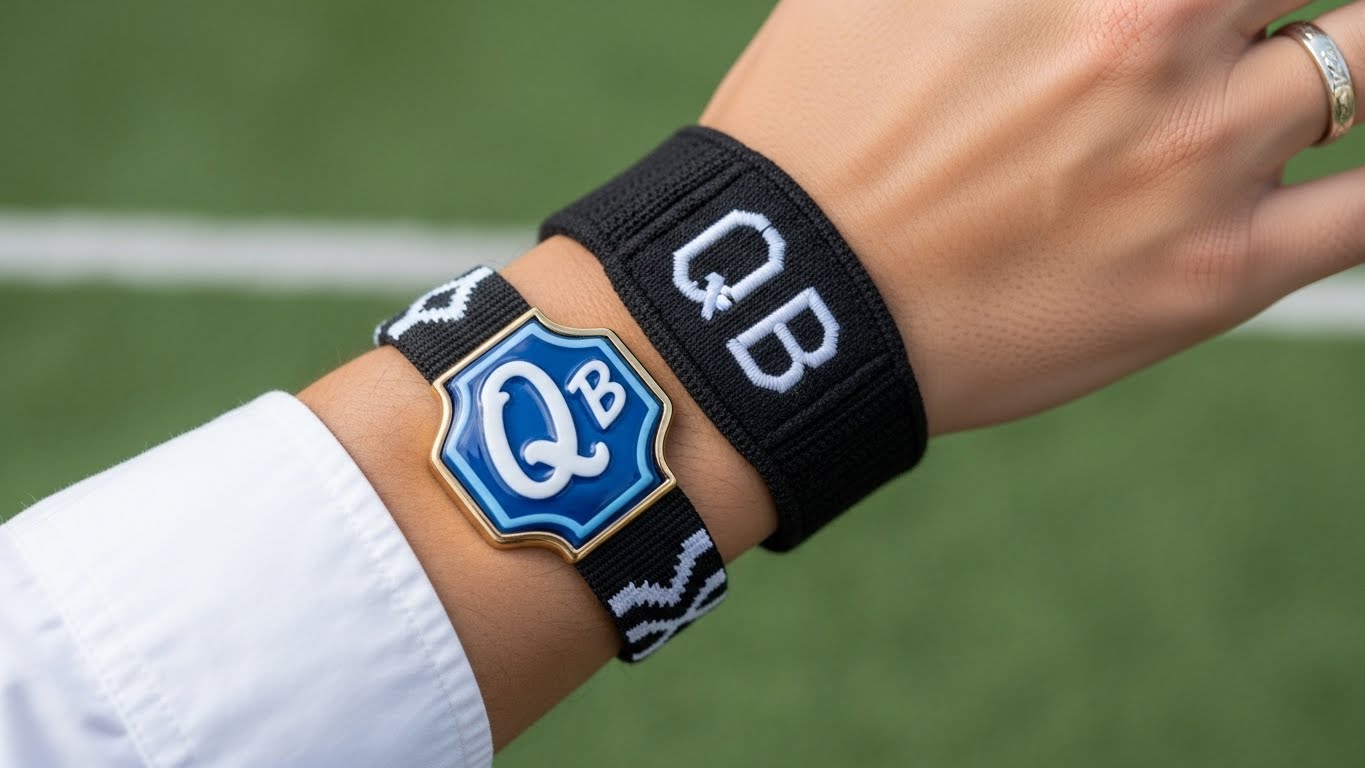
Introduction
Modern football has evolved into a speed-driven chess match where tempo creates competitive advantages as significant as talent or scheme. Fast-paced offenses exhaust defenses, prevent substitutions, and force opponents into simplified alignments that savvy quarterbacks exploit. At the center of this tactical revolution stands an unassuming but critical piece of equipment: football QB wristbands that enable quarterbacks to maintain breakneck offensive pace without sacrificing play-calling accuracy or strategic complexity.
The correlation between offensive tempo and success has become undeniable. Teams executing 75+ plays per game win at significantly higher rates than those averaging 60 plays. However, this pace requires communication systems that traditional sideline signals cannot support. Wristband technology bridges this gap, transforming how offenses operate.
The Science Behind Tempo-Based Offensive Strategy
Tempo affects defensive performance through multiple physiological and psychological mechanisms. When offenses snap the ball every 15-20 seconds instead of the typical 30-40 seconds, defensive players experience accumulated fatigue that degrades tackling technique, coverage precision, and gap discipline.
Research from the National Strength and Conditioning Association demonstrates that continuous high-intensity activity for periods exceeding two minutes creates significant performance decrements. Fast-tempo offenses deliberately push defenses into this zone, where mistakes multiply and explosive plays become more likely.
Beyond physical fatigue, tempo creates mental pressure. Defensive coordinators struggle to communicate adjustments when offenses snap quickly. Players must process alignments and assignments in compressed timeframes, increasing the likelihood of confusion and missed assignments. A 2023 study analyzing college football data found that defenses facing tempo offenses committed 37% more pre-snap alignment errors than those facing traditional-paced attacks.
Football QB wristbands make sustained tempo operationally feasible. Without them, quarterbacks must wait for sideline signals or coach-to-helmet communication—delays that undermine tempo advantages and alert defenses to upcoming plays.
Communication Speed: The Critical Advantage
Traditional play-calling methods create bottlenecks that prevent consistent tempo execution. Consider the conventional sequence: offensive coordinator signals to sideline assistant, who relays to quarterback through hand signals or substituting players. This chain consumes 8-12 seconds minimum, preventing offenses from reaching optimal tempo thresholds.
Quarterback play call wristbands eliminate these delays. Quarterbacks glance at their wrist, identify the play code in under two seconds, and immediately begin pre-snap procedures. This efficiency creates 6-10 additional seconds per play—time that can be invested in reading defenses, making adjustments, or simply snapping the ball before defenders are set.
The mathematical impact compounds over full games. An offense running 75 plays saves 450-750 seconds through wristband efficiency—essentially 7-12 additional minutes of effective play-calling time. This advantage allows more plays, more first downs, and ultimately more scoring opportunities.
Professional offensive coordinator David Chen, who has implemented tempo systems at multiple Power Five programs, notes: “Wristbands transformed our ability to maintain pace. We went from averaging 68 plays per game to 81 plays with the same personnel, purely through communication efficiency. That’s nearly two additional possessions per game.”
Operational Flexibility in No-Huddle Systems
True no-huddle offenses operate without gathering between plays. Quarterbacks receive play calls and execute immediately, forcing defenses to operate in base personnel without substituting specialists. This constraint creates matchup advantages that skilled offensive coordinators exploit relentlessly.
Football QB wristbands enable authentic no-huddle operations. Quarterbacks access complete play information without verbal communication from coaches. This independence allows offenses to accelerate when they identify favorable situations—tired defenders, confusion in alignments, or mismatches in coverage.
Modern wristband systems organize plays categorically, allowing quarterbacks to find appropriate calls instantly. Common organizational structures include:
Formation-Based Coding: Plays grouped by personnel package and formation family Situation-Specific Cards: Red zone plays, third-down packages, two-minute offense calls Tendency Exploitation: Plays designed against specific defensive looks identified through film study Audible Libraries: Adjustment calls available when quarterbacks identify advantageous opportunities
This organizational sophistication means quarterbacks never waste tempo searching for plays. Every situation has predetermined options readily accessible on their wrist.
Preventing Defensive Signal Stealing and Adjustments
Traditional sideline signals face a fundamental vulnerability: defenses can decode them. Opposing coaches station personnel specifically to chart signals and identify patterns. Once compromised, signal systems lose all effectiveness, forcing offenses to install new systems mid-season—a disruptive, time-consuming process.
Football QB wristbands eliminate signal stealing entirely. Play codes mean nothing to observing coaches because the information never becomes visible. Offenses maintain strategic security throughout seasons without worrying about compromised communication.
This security advantage extends to in-game adjustments. Coaches can modify play-calling packages between series by signaling new card numbers to quarterbacks. Defenses gain no intelligence from observing these simple numerical cues, allowing offenses to adapt without telegraphing changes.
Statistical analysis from the American Football Coaches Association shows that offenses using wristbands maintain more consistent play-calling diversity than signal-based systems. Without signal-stealing concerns, coordinators call their best plays regardless of defensive charting efforts, leading to 14% higher offensive efficiency ratings.
Player Development and Mental Processing Benefits
Beyond tempo advantages, football QB wristbands accelerate quarterback development by reducing cognitive load during games. Young quarterbacks face overwhelming mental demands: pre-snap reads, protection adjustments, route progressions, and post-snap decisions. Any reduction in this burden improves execution quality.
Wristbands minimize the memorization requirement. Quarterbacks confirm plays rather than recalling them from memory under pressure. This verification system reduces play-calling errors—mistakes that destroy offensive rhythm and confidence.
High school quarterback coach Maria Rodriguez explains: “Before implementing wristbands, our sophomores and juniors would occasionally run wrong plays or miss audible codes. The mental pressure of remembering everything created mistakes. With wristbands, those errors disappeared almost immediately. Players relaxed knowing they could verify calls instantly.”
This confidence factor extends beyond mistake prevention. Quarterbacks who trust their communication systems focus mental energy on defensive reads and decision-making rather than play recall. This cognitive reallocation directly improves performance quality.
Integration with Modern Coaching Technology
Contemporary football embraces technology at every level. From GPS tracking to virtual reality training, programs invest heavily in tools that create competitive edges. Football QB wristbands represent cost-effective technology that delivers immediate, measurable returns.
Many programs now coordinate wristband systems with tablet-based play-calling software. Coordinators select plays digitally, and corresponding wristband codes appear automatically. This integration streamlines communication while maintaining detailed analytics about play frequency, success rates, and situational tendencies.
Advanced programs combine wristbands with practice-tempo tracking systems. Coaches monitor how quickly players operate during practice periods, ensuring game-day tempo feels familiar rather than rushed. Data shows that teams practicing at tempo 3-4 times weekly execute 23% more plays during games than those emphasizing tempo only once weekly.
Tempo Sustainability and Conditioning Requirements
Fast-tempo offenses demand exceptional conditioning from all personnel. Offensive linemen must sustain blocks for 75+ plays. Skill position players must run routes continuously without substitution. Quarterbacks must maintain mental sharpness despite physical fatigue.
Football QB wristbands support conditioning efforts by maximizing practice efficiency. When players spend less time standing around waiting for play calls, they accumulate more quality repetitions. These additional reps build both physical endurance and mental familiarity with tempo operations.
Sports science research indicates that sustained tempo requires 12-15% higher cardiovascular capacity than traditional-paced football. Programs successfully implementing tempo offenses adjust conditioning protocols accordingly, emphasizing sustained moderate-intensity work rather than explosive interval training alone.
The physiological demands extend beyond players to coaching staffs. Coordinators must call plays faster, making decisions in compressed timeframes. Wristbands facilitate this requirement by organizing play options clearly, allowing coordinators to identify appropriate calls rapidly even under game pressure.
Competitive Adoption Rates Across Levels
Tempo offense adoption, enabled by wristband technology, has spread rapidly across competitive levels. Professional programs pioneered these approaches, but high school and youth leagues now implement similar systems adapted to their competitive contexts.
Current adoption statistics reveal the trend’s magnitude:
- College Football: 89% of FBS programs utilize some form of wristband communication system
- High School Football: 71% of programs in states allowing wristbands have adopted them
- Youth Football: 43% of organized leagues permit and encourage wristband use
These numbers continue rising annually as more coaches recognize tempo’s competitive advantages and wristbands’ operational necessity.
Strategic Considerations and Implementation Best Practices
Successfully implementing football QB wristbands requires systematic planning and practice integration. Coaches should follow these proven protocols:
Early Installation: Introduce wristbands during spring practice or summer camps, allowing maximum familiarization time before competitive games.
Progressive Complexity: Begin with simple play-coding systems, adding sophistication as quarterback comfort increases.
Practice Tempo Emphasis: Dedicate specific practice periods to tempo operations, building physical and mental conditioning simultaneously.
Card Management Systems: Establish clear protocols for when and how to rotate play cards during games.
Backup Communication: Maintain alternative communication methods for situations where wristbands prove impractical or fail.
Conclusion
Football QB wristbands have transcended their status as mere accessories to become essential infrastructure for competitive offenses. The tempo advantages they enable—faster communication, sustained pace, defensive fatigue exploitation, and signal-stealing prevention—deliver measurable competitive benefits that modern programs cannot ignore.
As football continues evolving toward faster, more complex offensive systems, wristband technology will only grow more critical. Programs that embrace these tools position themselves for success, while those clinging to traditional methods accept disadvantages that talent alone cannot overcome.
For coaches building offensive systems designed for contemporary football’s demands, investing in quality quarterback play call wristbands represents foundational rather than optional spending. When tempo creates victories and wristbands enable tempo, the strategic calculation becomes straightforward. Teams that communicate faster, operate more efficiently, and maintain strategic security win more games—and wristbands make all three advantages achievable.


 Amrit Aarogyam
 Zain Naqvi