Balaji R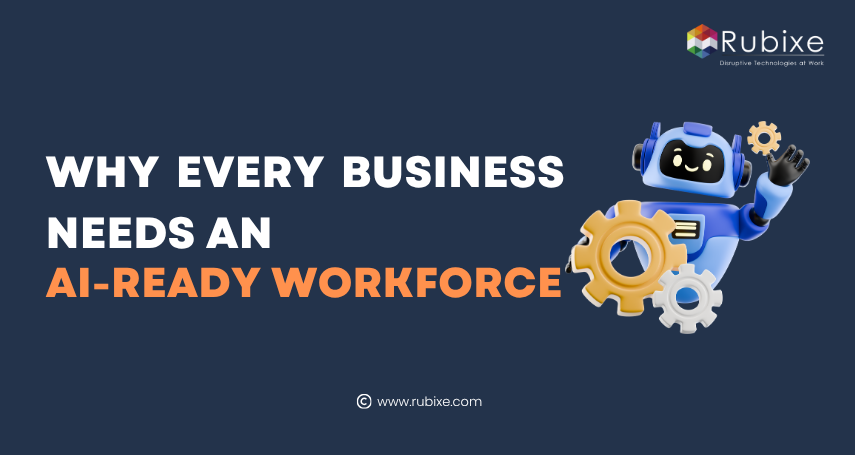
You’ll see better results from AI when your people become an AI-ready workforce, not just users of new systems.
That shift is less about tools and more about how teams think and work together. When people understand how to use AI in daily tasks, adoption becomes much smoother across the organization.
Why an AI-Ready Workforce Matters
An AI-ready workforce is not about replacing people with technology. It is about helping employees understand how to work with AI systems in a practical, day-to-day environment. When teams are prepared, AI becomes easier to use, decisions become faster, and work feels less fragmented across tools and processes.
Most organizations invest in technology first and expect results immediately. But the real difference comes when people know how to interpret outputs, question recommendations, and apply AI insights in real situations. That is where an AI-ready workforce creates real impact.
What Defines an AI-Ready Workforce
Building an AI-ready workforce starts with understanding what it actually means inside a business environment.
1. Comfort with AI tools
Employees are not intimidated by AI systems. They understand basic usage and can interact with tools without resistance.
2. Data awareness
Teams know how to read, question, and apply data-driven insights instead of relying only on experience or assumptions.
3. Decision support mindset
Rather than depending fully on manual decision-making, employees use AI outputs as support for faster and better judgment.
4. Continuous learning attitude
An AI-ready workforce stays open to learning new systems as they evolve over time.
How AI Workforce Management Supports Readiness
Strong AI workforce management practices help organizations structure how people and AI systems work together. It ensures that responsibilities are clearly defined and automation supports, rather than replaces, human effort.
With proper management, businesses can identify skill gaps, assign AI-assisted tasks more effectively, and track performance improvements across teams. This balance between humans and systems is what strengthens an AI-ready workforce over time.
Role of AI Automation Services in Workforce Transformation
Modern AI Automation services play a key role in reducing repetitive tasks that slow down employees. When routine work is automated, teams have more time to focus on analysis, planning, and customer interaction.
Instead of spending hours on manual reporting or data entry, employees start working alongside AI systems that handle execution. This shift naturally supports the development of an AI-ready workforce because people begin to trust and use AI in daily operations.
Key Benefits of an AI-Ready Workforce
The impact of an AI-ready workforce can be seen across multiple business areas:
- Faster decision-making with AI-supported insights
- Reduced dependency on manual processes
- Better collaboration between teams and systems
- Improved accuracy in operational tasks
- Higher productivity without increasing workload
These outcomes are not driven by technology alone but by how well people adapt to it.
Building an AI-Ready Workforce Step by Step
Creating an AI-ready workforce requires a structured approach rather than a one-time training session.
1. Identify current skill gaps
Understand where employees struggle with digital tools and data usage.
2. Introduce practical AI exposure
Instead of theoretical training, give teams hands-on experience with real business use cases.
3. Align AI with daily work
AI should not feel separate. It should fit into existing workflows naturally.
4. Support with the right technology partners
Working with an experienced AI Development company ensures that tools are designed for real business needs and not just technical capabilities.
Challenges in Becoming AI-Ready
Even when businesses aim to build an AI-ready workforce, they often face common challenges:
- Resistance to change in traditional teams
- Lack of clarity on how AI fits into roles
- Overdependence on tools without understanding outputs
- Gaps between business teams and technical teams
These challenges can be managed when organizations focus on gradual adoption instead of forcing rapid transformation.
How AI Changes Workforce Expectations
As AI becomes part of everyday operations, expectations from employees also change. An AI-ready workforce is not defined by technical expertise alone but by adaptability.
Employees are expected to:
- Interpret AI-generated insights
- Work with automated workflows
- Make faster decisions using AI support
- Continuously adapt to new systems
This shift makes workforce readiness a long-term capability rather than a one-time achievement.
Long-Term Value of an AI-Ready Workforce
Organizations that invest in an AI-ready workforce see long-term advantages that go beyond immediate productivity gains. Over time, teams become more confident in using AI tools, processes become more efficient, and decision-making becomes more consistent.
Instead of reacting to problems, businesses start anticipating them. This is where the real value of an AI-ready workforce becomes visible.
Building an AI-ready workforce is less about technology and more about how people adapt to change. When employees understand how to work with AI systems, businesses unlock faster decisions, smoother operations, and better outcomes across departments.
With the right combination of AI workforce management and an experienced AI Development company, organizations can move from experimentation to real transformation. The goal is not just to use AI, but to work better with it every day.


 marian jures
 Savi Kumari