Nirwana AI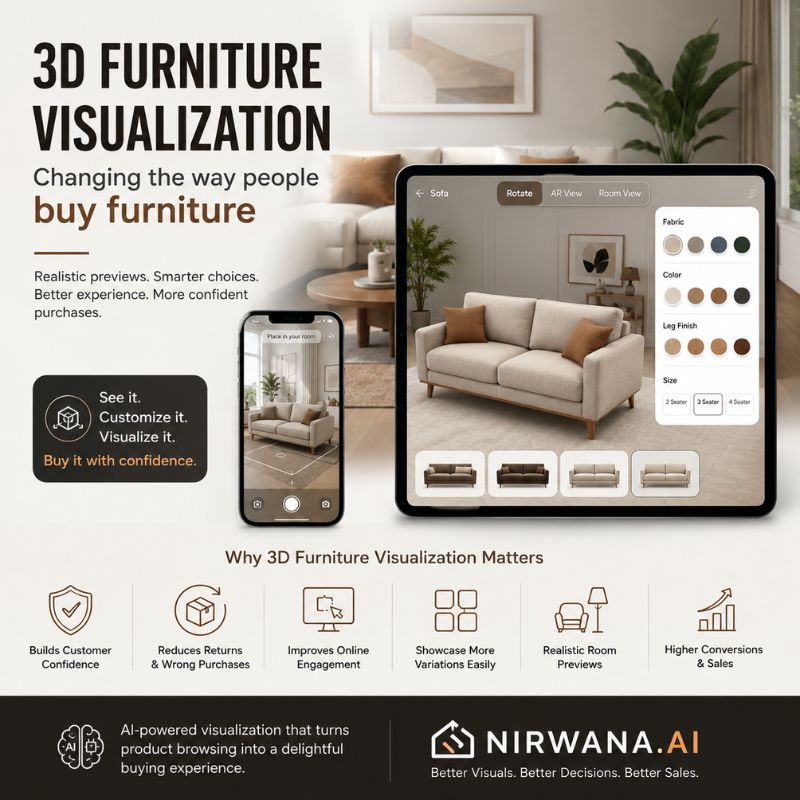
How 3D Furniture Visualization Is Changing the Way People Buy Furniture
Buying furniture has always been a visual decision. Customers may compare dimensions, materials, colors, and prices, but at the end of the day, one big question decides everything: “Will this look good in my space?”
That question is exactly why 3d furniture visualization has become so important for furniture brands, retailers, interior designers, and online stores. Instead of asking customers to imagine how a sofa, table, bed, or chair might look in a room, brands can now show them a realistic digital preview before they buy.
This is not just a design trend. It is becoming a powerful sales tool. In a world where customers shop online, compare products quickly, and expect clarity before making a purchase, 3d furniture visualization helps remove doubt and build confidence.
What Is 3D Furniture Visualization?
3d furniture visualization is the process of creating realistic digital furniture models that customers can view, rotate, customize, and sometimes place inside their own room virtually. It allows people to see furniture in a much more detailed and interactive way compared to flat product photos.
For example, instead of seeing only one image of a wooden dining table, a customer can view it from all angles, change the finish, check different sizes, or place it inside a virtual dining room. This makes the buying experience more practical, more engaging, and more trustworthy.
For furniture brands, this means customers spend more time exploring products and are more likely to make a confident purchase decision.
Why Traditional Furniture Photos Are No Longer Enough
Product photography still matters, but it has limitations. A photo can show one angle, one lighting condition, and one setting. It cannot always show how a product looks in different interiors, colors, sizes, or materials.
This creates a gap between what the customer sees and what they need to understand.
A customer looking at a beige sofa may wonder:
Will it match my wall color?
Is the size too large for my living room?
How will it look with wooden flooring?
Does the fabric look premium in natural light?
When these questions remain unanswered, customers delay the purchase or leave the website. 3d furniture visualization solves this by giving them a more complete view of the product.
Key Benefits of 3D Furniture Visualization for Furniture Brands
It Builds Customer Confidence
Furniture is often a high consideration purchase. People do not buy a sofa or bed every day. They want to be sure before spending money. When customers can see a product clearly from multiple angles or visualize it inside a room, they feel more confident.
This confidence directly affects conversions. A customer who understands the product better is less likely to hesitate.
It Reduces Returns and Wrong Purchases
One of the biggest problems in online furniture sales is mismatch. The product may look different in real life, may not fit the room, or may not match the expected style.
With 3d furniture visualization, customers can make better decisions before buying. They can check proportions, style, and design compatibility in advance. This helps reduce disappointment and lowers the chances of returns.
It Improves Online Engagement
A static product page can feel boring. But an interactive product experience keeps people engaged. When customers can rotate furniture, change colors, or visualize it in a room, they naturally spend more time with the product.
This increased engagement can also improve the quality of leads. Customers who interact deeply with a product are usually more serious buyers.
It Helps Brands Showcase More Variations
Furniture brands often have multiple fabric options, wood finishes, sizes, leg styles, and color combinations. Photographing every variation can be expensive and time consuming.
3d furniture visualization makes it easier to display these variations digitally. A single product model can be shown in multiple finishes or settings, helping customers explore more options without the brand needing a full photoshoot for every version.
Real Examples of How Brands Can Use 3D Furniture Visualization
A sofa brand can let customers choose fabric type, color, and leg finish, then preview the sofa in a modern living room.
A dining furniture company can show the same table in 4 seater, 6 seater, and 8 seater formats with different wood finishes.
A luxury furniture retailer can create premium room scenes where customers see how a full collection looks together.
A custom furniture manufacturer can show clients realistic previews before production begins, reducing confusion and approval delays.
This is where platforms like Nirwana.ai can help furniture brands create a more modern product experience. By using AI powered visualization, brands can turn product browsing into a more interactive and decision friendly journey.
Why 3D Furniture Visualization Matters for E Commerce
Furniture e commerce has one major challenge: customers cannot touch, feel, or physically inspect the product. They rely completely on visuals, descriptions, reviews, and trust.
This is why visuals carry so much weight.
Good 3d furniture visualization can make an online store feel closer to a showroom experience. It helps customers understand the scale, shape, material, and design of a product without visiting a physical store.
For online furniture brands, this can support:
Higher product page engagement
Better conversion rates
Fewer customer doubts
More premium brand perception
Stronger product storytelling
When customers can clearly imagine the product in their own lifestyle, they are more likely to move forward.
How 3D Furniture Visualization Supports Sales Teams
This technology is not only useful for websites. Sales teams can also use it during client conversations, showroom meetings, dealer presentations, and interior design consultations.
For example, if a customer is confused between two sofa colors, the sales team can show both options in a realistic room setup. If a dealer wants to pitch a new collection, they can use visual previews instead of only catalog pages.
This makes the sales process smoother and more persuasive. It also helps sales teams answer objections visually instead of relying only on explanation.
Nirwana.ai focuses on helping interior and furniture brands create these kinds of visual selling experiences so customers can make faster and more confident decisions.
The Future of Furniture Buying Is Visual and Interactive
Customers are becoming more digital first. They expect better online experiences, faster answers, and more control while shopping. The future of furniture buying will not depend only on catalogs and product photos. It will depend on interactive, realistic, and personalized visualization.
Brands that adopt 3d furniture visualization early can stand out from competitors. They can offer a better customer journey, reduce friction, and create a more premium buying experience.
As AI and 3D tools improve, the line between online browsing and real showroom experience will become even thinner. Customers will not just see furniture. They will experience it before buying.
Conclusion
3d furniture visualization is no longer just a nice feature for furniture brands. It is becoming a practical tool for improving customer confidence, increasing engagement, reducing returns, and making online furniture shopping more realistic.
Whether you are a furniture manufacturer, retailer, e commerce brand, or interior design business, this technology can help you present products in a way that feels clear, modern, and trustworthy.
For brands that want to create a more interactive and premium buying journey, solutions like Nirwana.ai can be a strong step toward the future of furniture sales.


 allbiz listing
 Helpful Insight