HiiMS Hospital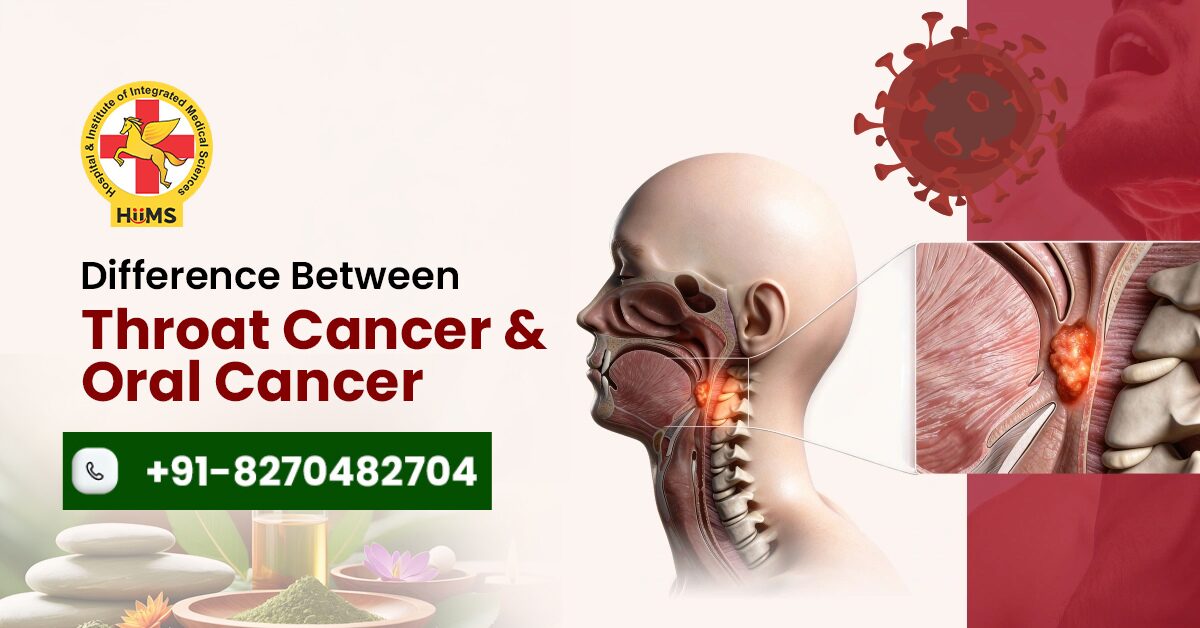
Many people use the terms throat cancer and oral cancer interchangeably because both conditions affect nearby areas of the body. However, they are not the same. The location where they begin, the symptoms they create, and the way they progress can differ significantly. Since the early warning signs may appear mild, people often ignore them or mistake them for common throat or mouth problems.
A persistent mouth ulcer, difficulty swallowing, voice changes, or irritation in the throat may seem harmless at first. Yet, when these signs continue for a long time, they should not be overlooked. Understanding the difference between throat cancer and oral cancer can help people recognize symptoms earlier and seek timely medical attention.
What Does Cancer Mean?
Cancer develops when certain cells in the body begin growing abnormally instead of following the body’s natural control system. Over time, these abnormal cells may damage nearby tissues and sometimes spread to other areas of the body.
In the mouth and throat region, cancer may start slowly and silently. Many individuals assume the symptoms are linked to infections, acidity, ulcers, or temporary irritation, which is why early-stage warning signs are often missed.
What is Oral Cancer?
Oral cancer begins inside the mouth. It may affect the tongue, gums, lips, inner cheeks, roof of the mouth, or the area beneath the tongue. In many cases, the condition starts with small visible changes that are easy to ignore.
A sore that does not heal, unusual red or white patches, bleeding inside the mouth, or a lump may be some of the earliest signs. Since these symptoms are not always painful in the beginning, people often delay getting them checked.
One important thing about oral cancer symptoms is that many of them are visible. However, most people do not regularly examine the inside of their mouth unless discomfort becomes severe.
What is Throat Cancer?
Throat cancer develops deeper inside the throat region. It can affect the voice box, tonsils, pharynx, or the back portion of the tongue. Because these areas are not easily visible, throat cancer may remain unnoticed for a longer period.
The symptoms often resemble common throat conditions. A person may experience repeated sore throat episodes, hoarseness in the voice, swallowing difficulty, or the sensation of something being stuck in the throat. These signs are frequently mistaken for infections or acid reflux.
As the condition progresses, some individuals may notice neck swelling, persistent throat discomfort, or pain while speaking and swallowing.
Difference Between Throat Cancer and Oral Cancer
The major difference lies in the area where the cancer begins. Oral cancer develops in the visible parts of the mouth, whereas throat cancer starts deeper inside the throat.
Because oral cancer affects visible areas, it is sometimes detected during routine dental examinations. Throat cancer, however, may require more detailed medical evaluation because the affected region cannot be easily seen.
The symptoms also differ in nature:
Oral Cancer Symptoms
- Mouth sores that do not heal
- Red or white patches inside the mouth
- Bleeding in the mouth
- Pain during chewing
- Swelling or unusual lumps
- Loose teeth without a dental reason
Throat Cancer Symptoms
- Persistent sore throat
- Hoarseness or voice changes
- Difficulty swallowing
- Lump in the neck
- Ear pain
- Feeling of blockage in the throat
Although both conditions affect nearby areas, their impact on daily life may feel different. Oral cancer often affects eating, chewing, and oral comfort, while throat cancer mainly interferes with swallowing and speaking.
Common Oral Cancer Symptoms That People Ignore
Many people delay medical attention because early symptoms appear minor. A mouth ulcer that stays for weeks, repeated bleeding, numbness, or thick patches inside the mouth are often ignored in the beginning.
Some individuals also notice restricted jaw movement or loose teeth without any major dental issue. When these changes continue for a long period, they should not be dismissed as routine mouth problems.
Common Throat Cancer Symptoms That Need Attention
Throat cancer symptoms can easily blend into daily discomfort. Constant throat clearing, voice roughness, swallowing pain, or a lingering sensation in the throat are common early signs.
Some people also experience neck swelling or pain near the ears even when there is no ear infection. If these symptoms continue for weeks, a medical evaluation becomes important.
Causes Linked With Throat and Oral Cancer
Several lifestyle-related factors are connected with both cancers. Tobacco use remains one of the strongest risk factors, whether through smoking or chewing. Regular alcohol consumption can further increase irritation and tissue damage.
In throat cancer, HPV infection is also considered a significant contributing factor in many cases. Poor oral hygiene, unhealthy eating habits, and long-term irritation inside the mouth may raise the risk associated with oral cancer.
Over time, repeated exposure to harmful habits can weaken the tissues in the mouth and throat region.
Who May Have a Higher Risk?
People who smoke, chew tobacco, consume alcohol regularly, or neglect oral hygiene for years may carry a higher risk. Individuals with weak immunity or HPV infection may also need to stay more aware of long-lasting throat or mouth changes.
Having risk factors does not automatically mean someone will develop cancer, but it does mean unusual symptoms should never be ignored for too long.
Why Early Detection Matters
Early detection can make a significant difference because it allows healthcare professionals to begin treatment before the condition becomes advanced. Since both oral cancer and throat cancer may begin with subtle symptoms, timely checkups can help identify unusual changes earlier.
Regular dental examinations, medical evaluations, and attention to persistent symptoms may support better health outcomes.
Conclusion
Understanding the difference between throat cancer and oral cancer is important because both conditions affect different areas and create different warning signs. Oral cancer usually begins in the visible parts of the mouth, while throat cancer develops deeper in the throat and often affects swallowing and speaking first.
Persistent sores, unusual patches, throat irritation, voice changes, or difficulty swallowing should never be ignored when they continue for weeks. Paying attention to these signs, maintaining healthier habits, and seeking timely medical advice can help people respond earlier instead of waiting for symptoms to worsen.
For professional support and guidance related to throat, mouth, or other health concerns, individuals may also consider online video consultation (VOPD) services with the doctors at Jeena Sikho HiiMS.
FAQs
1. How does oral cancer usually start?
Oral cancer often begins with a sore, patch, or lump inside the mouth that does not heal normally.
2. What are the common warning signs of throat cancer?
Persistent sore throat, hoarseness, difficulty swallowing, neck swelling, and voice changes are common symptoms.
3. Why do people confuse throat cancer and oral cancer?
Both conditions affect nearby regions, and some early symptoms may overlap, leading many people to assume they are the same.
4. Can lifestyle habits increase the risk?
Yes, smoking, tobacco chewing, alcohol use, poor oral hygiene, and unhealthy habits may increase the risk over time.
5. What should someone do if symptoms continue for several weeks?
A proper medical checkup should be taken without delay if symptoms remain persistent or continue worsening.


 Jenny Currie
 Harmony Medical Group