Jenny Currie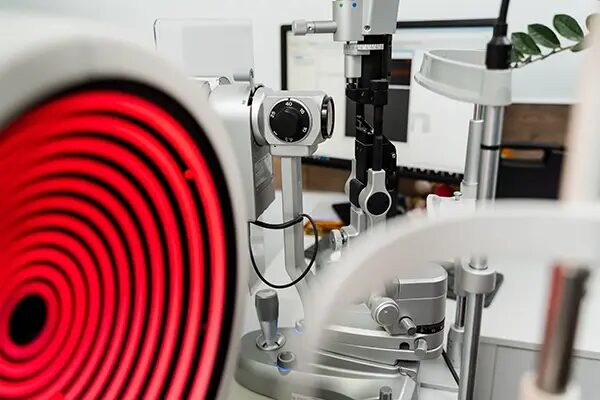
The idea sounds almost too convenient: wear specialised contact lenses while you sleep, remove them in the morning, and see clearly all day without glasses or daytime contacts. No surgery. No ongoing corrective eyewear during waking hours. For the right person, that’s exactly what orthokeratology treatment delivers. For others, it may not be the right fit at all.
Understanding what orthokeratology lenses actually do, who benefits from them, and where the limitations lie is the starting point for deciding whether this option is worth exploring for you. A proper assessment by an experienced optometrist is the only way to determine suitability for any individual patient.
What Is Orthokeratology?
Orthokeratology, also known as Ortho-K or overnight vision correction, involves the fitting of rigid, gas-permeable contact lenses that are worn only during sleep. These lenses are precisely shaped to gently and temporarily reshape the cornea while you sleep. When the lenses are removed in the morning, the cornea retains the new shape throughout the day, providing clear vision without the need for glasses or daytime contact lenses. The effect is temporary and reversible. If lens wear is discontinued, the cornea gradually returns to its original shape over a period of days.
Pros of Orthokeratology Treatment
Non-Surgical Alternative to LASIK
For people who want freedom from glasses and daytime contact lenses but are not candidates for refractive surgery, or who aren’t comfortable with the permanence of a surgical procedure, orthokeratology lenses offer a compelling middle path. The corneal reshaping is reversible, which means if circumstances change, vision care needs change, or the patient simply prefers to stop, the eye returns to its baseline without permanent alteration. This reversibility is a meaningful advantage for patients who are not ready to commit to the permanence of LASIK.
Daytime Freedom from Glasses and Contacts
The most immediately appealing aspect of Ortho-K for most patients is the daytime freedom. Activities like swimming, sport, water sports, or any environment where glasses are inconvenient and contact lenses are problematic become straightforward. Children in sport, adults who work in dusty or dry environments, and anyone who finds daytime contact lens wear uncomfortable or inconvenient may find orthokeratology lenses address those specific frustrations well.
Myopia Control in Children
This is arguably the most clinically significant benefit of orthokeratology treatment in current optometric practice. Research has consistently supported orthokeratology as a myopia control intervention in children, with studies suggesting it may slow the rate of axial elongation of the eye compared with standard spectacle correction. Myopia progression that is left unmanaged increases lifetime risk of serious eye conditions including myopic macular degeneration, retinal detachment, glaucoma, and cataracts. For children with progressing myopia, Ortho-K is one of several evidence-based management options worth discussing with an experienced practitioner.
Fitting orthokeratology lenses for myopia control in children requires a high level of clinical expertise. At optometry@cooroy, principal optometrist Dr Jennifer Currie has decades of specialist experience in Orthokeratology treatment and uses cutting edge technology for precise corneal mapping as part of the fitting process.
Clear Vision While Sleeping
For some patients, particularly those with higher prescriptions who sleep with a partner, there is also a practical comfort in not needing to remove vision correction at night. Ortho-K wearers have their corrective lenses in place while sleeping, which some find convenient relative to the morning routine of inserting daytime lenses or locating glasses.
No Dry Eye Issues from Daytime Lens Wear
Daytime soft contact lens wear can exacerbate dry eye symptoms, particularly with extended wear or in air-conditioned environments. Because orthokeratology lenses are worn only during sleep, when the eyes are closed and tear evaporation is minimal, many patients who have found daytime contact lenses problematic due to dry eye can wear Ortho-K without the same difficulty. This does not mean Ortho-K is suitable for all dry eye patients, and a thorough assessment is needed, but it is a relevant clinical consideration for those who want contact lens-based vision correction without daytime lens discomfort.
Cons of Orthokeratology
Not Permanent
The corneal reshaping from orthokeratology lenses is temporary. Nightly lens wear is required to maintain clear daytime vision. If a patient misses nights or decides to stop wearing the lenses, vision gradually returns to its uncorrected baseline. For some this is an advantage, for others the ongoing commitment to nightly lens insertion and removal becomes a practical barrier over time.
Cost
Orthokeratology lenses require precise fitting, specialist expertise, and higher-quality materials than standard soft contact lenses. The upfront cost of fitting and the lenses themselves is considerably higher than standard correction. Ongoing costs include lens replacement and regular follow-up appointments. Most private health insurance plans with optical cover offer partial rebates on contact lenses, but the cover for Ortho-K varies and is worth checking. The cost is a meaningful consideration, particularly for families pursuing orthokeratology as a myopia management option for a child over several years.
Adaptation Period
Vision may not be fully corrected in the first days or weeks of orthokeratology treatment. As the cornea adapts to the new shape across the initial fitting period, daytime vision quality may be variable. Most patients adapt within two to four weeks, but this transition period requires tolerance and patience. An experienced practitioner will guide patients through what to expect and how to manage the adaptation phase.
Maintenance
Rigid gas-permeable lenses require careful daily cleaning and storage using appropriate lens care solutions. The maintenance routine is more involved than with daily disposable soft lenses, and compliance with cleaning protocols is important both for lens longevity and eye health. This is not an unusual requirement among contact lens types, but it is worth understanding before committing to Ortho-K.
Not for Everyone
Orthokeratology is most effective for people with myopia up to approximately -6.00 dioptres and low to moderate astigmatism, though suitability depends on the individual corneal shape and prescription. It’s not currently a standard option for hyperopia (long-sightedness) or high astigmatism, and some corneal shapes are not well suited to orthokeratology lens fitting. A comprehensive assessment including corneal topography mapping is essential before any commitment is made.
Who Might Be a Good Candidate?
Orthokeratology may suit children with progressing myopia whose parents and practitioners want to explore evidence-based management options alongside clear daytime vision. It may also suit adults who want daytime freedom from glasses and contact lenses, particularly those involved in water sports, active outdoor pursuits, or occupational settings where daytime contact lenses are inconvenient. People who have found daytime contact lens wear uncomfortable due to dry eye, dust, or extended screen-based work may find the overnight-only wear pattern of Ortho-K more manageable.
Conversely, Ortho-K may not be the right fit for people with higher prescriptions beyond the effective treatable range, significant corneal irregularity, active ocular surface disease, or those who prefer the simplicity and lower cost of daily disposable contact lenses or spectacles.
The only reliable way to know whether orthokeratology is appropriate is through a thorough clinical assessment that includes corneal topography mapping, a review of the patient’s prescription history, and an honest discussion of expectations, commitments, and alternatives.
Conclusion
Orthokeratology treatment is a genuinely useful option for specific patients, and a particularly well-supported one for myopia control in children. The benefits are real. The limitations are also real. Neither the appeal nor the constraints should be overstated.
For patients on the Sunshine Coast considering whether orthokeratology lenses may suit their circumstances, Optometry@Cooroy offers assessment and fitting by practitioners with specialist expertise in this area. To discuss whether Ortho-K may be appropriate for you or your child, visit optometryatcooroy.com.au or contact the practice at 62 Maple Street, Cooroy.

 aditya kumar