Nirwana AI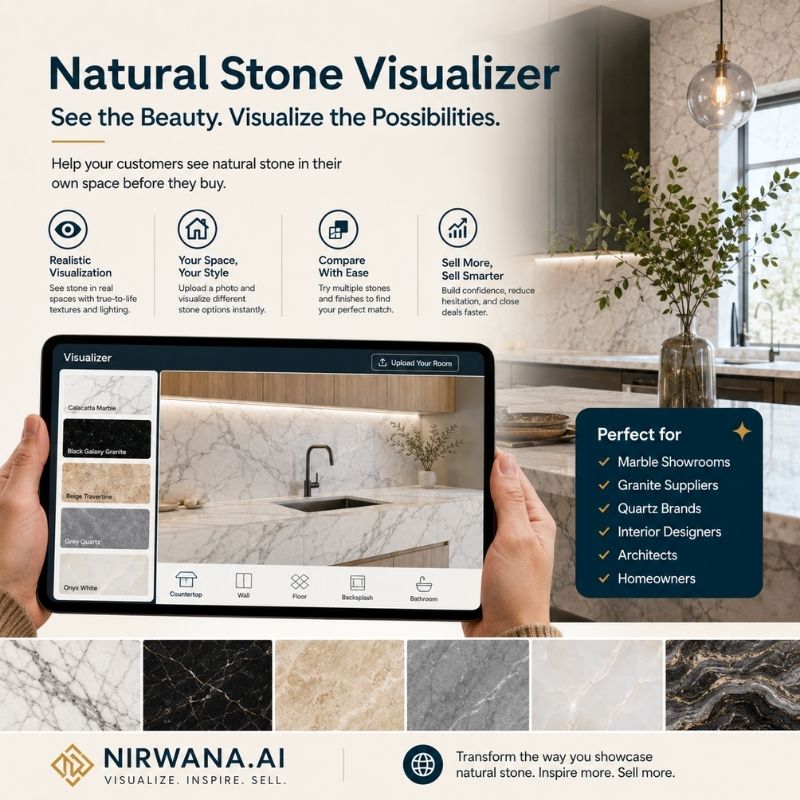
Choosing natural stone is exciting, but it can also be confusing for customers. Marble, granite, quartzite, travertine, and other stones look beautiful in a showroom, but customers often struggle to imagine how the same slab will look inside their own home. Will the marble match their wall color? Will the granite look too dark in their kitchen? Will the veining feel too bold once applied on a large surface?
This is where a natural stone visualizer becomes a powerful tool for stone brands, retailers, dealers, architects, and interior designers. Instead of depending only on physical samples, brochures, or imagination, customers can see realistic previews of natural stone in actual room settings. It makes the selection process faster, clearer, and more confident.
What Is a Natural Stone Visualizer?
A natural stone visualizer is a digital tool that allows users to preview stones like marble, granite, quartzite, limestone, travertine, and onyx on different surfaces such as floors, walls, countertops, backsplashes, staircases, and bathroom areas.
The user can upload a room image or choose from pre-set room templates, then apply different stone products to see how they look in the space. A good visualizer does more than simply place a flat texture on a surface. It adjusts the product according to scale, perspective, lighting, finish, and surface shape.
For example, a customer planning a kitchen renovation can apply multiple granite countertop options and compare how each one looks with their cabinets, flooring, and lighting. This gives them a much better understanding than looking at a small stone sample alone.
Why Natural Stone Selection Is Difficult for Customers
Natural stone is not a low-involvement purchase. It is premium, expensive, and often permanent. Customers know that once the stone is installed, changing it later can be costly and stressful.
The Imagination Gap
One of the biggest challenges in stone sales is the imagination gap. Customers may like a slab in the showroom, but they cannot confidently picture it in their home. A white marble slab may look elegant in display lighting, but the customer may wonder if it will feel too bright in their living room. A dark granite may look luxurious in person, but they may worry it will make their kitchen look smaller.
A natural stone visualizer solves this by showing the product in context. The customer can see the stone applied to a floor, wall, or countertop before making the final decision.
Too Many Product Options
Stone brands often have hundreds or even thousands of products. Different colors, patterns, finishes, sizes, and applications can make the buying journey overwhelming. Customers may like several options but struggle to compare them properly.
With visualization, they can shortlist products faster. Instead of guessing, they can test different options visually and understand what works best for their space.
How a Natural Stone Visualizer Helps Stone Businesses Sell Better
For stone manufacturers, dealers, and retailers, the main goal is not just to display products. The goal is to help customers make decisions faster and with more confidence.
It Builds Buyer Confidence
When customers can preview stone in a realistic room setting, they feel more secure about their choice. This reduces hesitation and helps sales teams move conversations forward.
For example, a customer choosing marble for a hotel lobby may need approval from multiple decision-makers. A realistic visual preview can be shared with the owner, architect, and project team, making the approval process smoother.
It Reduces Dependence on Physical Samples
Physical samples are useful, but they have limitations. They show only a small part of the stone and may not represent the full pattern, veining, or overall impact. A visualizer helps customers see the stone on a larger surface, which gives a more practical view of the final result.
This is especially helpful for large-format marble, bookmatched slabs, feature walls, and premium countertops.
It Improves Showroom Experience
A natural stone visualizer can turn a showroom visit into an interactive experience. Instead of only showing slabs, the sales team can show how different products will look in kitchens, bathrooms, living rooms, commercial spaces, and outdoor areas.
This creates a premium experience and helps the brand stand out from competitors still using only catalogs and sample displays.
Real Use Cases for a Natural Stone Visualizer
Marble Flooring Preview
A customer wants Italian marble for a luxury living room but is unsure between beige, white, and grey options. The visualizer allows the sales team to apply each marble to a living room floor and compare the look instantly. This makes the choice easier and more visual.
Granite Countertop Selection
For kitchen countertops, customers often want to see how granite will match their cabinets and backsplash. A visualizer can show different granite options on the countertop area, helping customers select the right color and pattern.
Bookmatch Wall Design
Bookmatching is difficult to explain through words or small samples. With the right visualization tool, a brand can show how two or more slabs align together on a wall, creating a premium design preview for customers, architects, and designers.
Bathroom Stone Application
Natural stone is widely used in bathrooms for walls, flooring, vanity tops, and shower areas. A visualizer helps customers compare marble, travertine, and quartzite options in a realistic bathroom setting before finalizing the material.
Why AI Makes Stone Visualization More Powerful
Traditional visualizers often look flat or unrealistic. They may apply stone textures without properly adjusting lighting, perspective, and scale. AI-powered visualization improves this experience by making the preview more natural and believable.
Nirwana.ai helps natural stone brands create realistic previews that consider room lighting, product scale, surface shape, and visual accuracy. This makes the final output feel closer to an actual installed result.
AI can also help improve low-quality slab images, create better catalog visuals, and support sales teams with faster product presentations. For brands that do not always have professional product photography, this can be a major advantage.
Key Benefits for Stone Brands and Retailers
Faster Customer Decisions
When customers can see the final look, they spend less time doubting and comparing. This shortens the sales cycle and helps the team close more confidently.
Better Online Engagement
A natural stone visualizer on a website can increase customer interaction. Visitors spend more time exploring products, trying options, and understanding applications. This can also improve lead quality because customers who interact with visual tools often have stronger purchase intent.
Stronger Sales Presentations
Sales teams can use visual previews during showroom visits, WhatsApp conversations, email follow-ups, and client meetings. Instead of saying “this marble will look good,” they can actually show it.
More Professional Brand Image
A premium visualizer gives the brand a modern and high-end impression. It shows that the company is not just selling stone, but also helping customers make better design decisions.
What to Look for in a Good Natural Stone Visualizer
Not every tool delivers the same quality. Stone visualization requires accuracy because natural stone has unique patterns, veins, finishes, and textures.
A good tool should offer realistic stone application, correct scale, lighting adjustment, surface detection, multiple room options, countertop and wall support, and the ability to handle premium applications like bookmatch or large-format slabs.
It should also be easy for sales teams and customers to use. If the tool is too complicated, it will not become part of the daily sales process.
Nirwana.ai focuses on making visualization practical for real stone businesses, whether it is used on a website, in a showroom, or by a sales team during client discussions.
Conclusion
A natural stone visualizer is no longer just a nice digital feature. It is becoming an important sales tool for modern stone brands, retailers, and dealers. It helps customers see products in context, reduces confusion, improves confidence, and creates a more premium buying experience.
For businesses selling marble, granite, quartzite, travertine, and other natural stones, visualization can turn hesitation into action. When customers can clearly see how a product will look in their space, they are more likely to move forward with confidence.
If your brand wants to make stone selection easier, more visual, and more engaging, using a natural stone visualizer can be a strong step toward a better customer experience.


 Henry Will
 Clearnet Communications