David James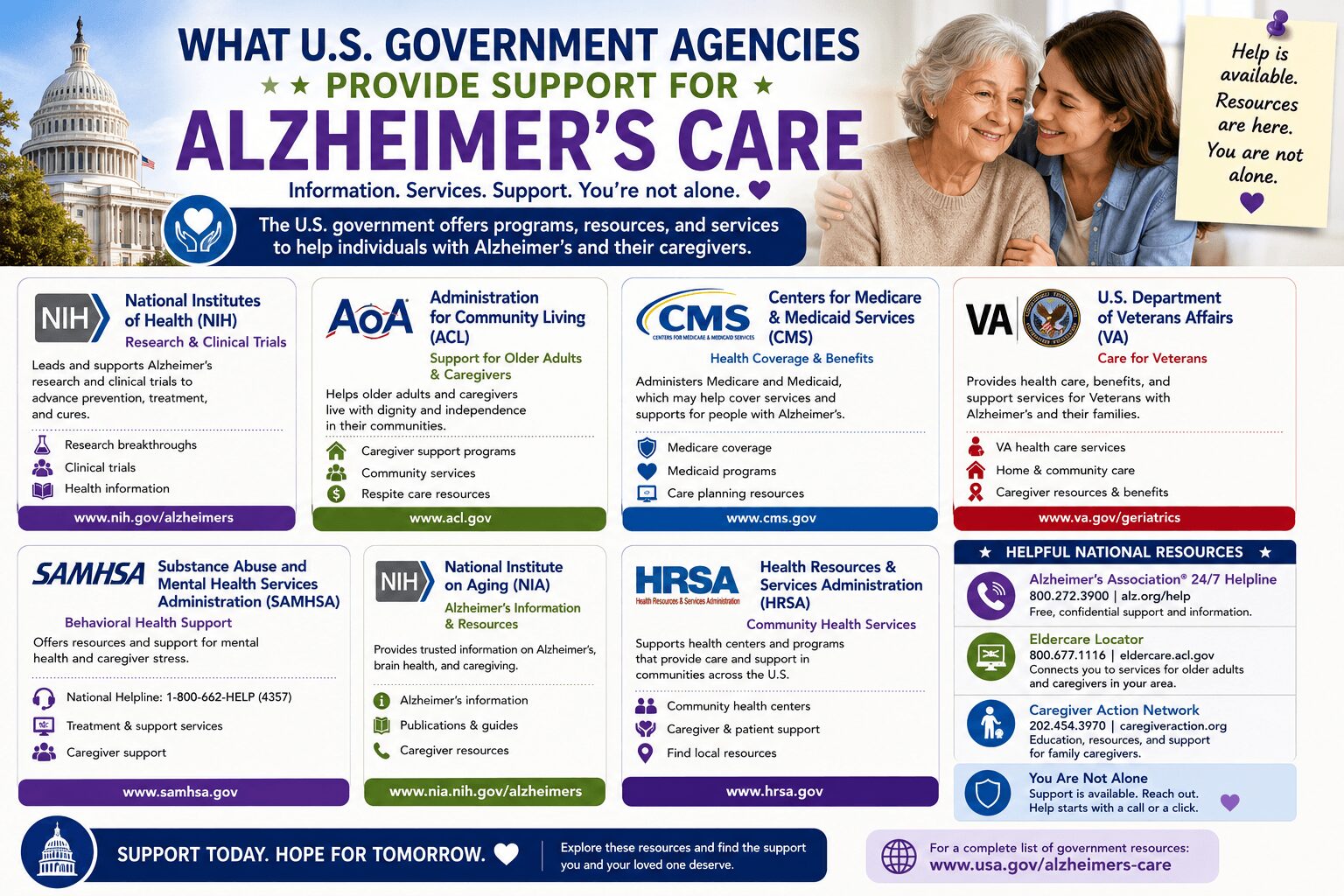
Caring for someone with Alzheimer’s disease can feel overwhelming at times. Not only does the condition affect memory and behavior, but it also creates emotional, physical, and financial pressure for families.
Fortunately, several US government agencies offer support programs, healthcare resources, caregiver assistance, and financial guidance to help families manage Alzheimer’s care more effectively. Moreover, understanding where to seek help can make a major difference in the quality of care both patients and caregivers receive.
In addition, government-backed programs often provide trusted information, affordable services, and community support that families may not even realize are available. Therefore, learning about these agencies is an important step for anyone dealing with Alzheimer’s disease.
National Institute on Aging (NIA)
First of all, the National Institute on Aging, which is part of the National Institutes of Health (NIH), plays a significant role in Alzheimer’s research and education. The agency provides updated medical information, caregiving tips, treatment guidance, and resources for families.
Furthermore, the NIA funds research studies focused on preventing and treating Alzheimer’s disease. At the same time, it offers educational materials that explain symptoms, disease stages, and caregiving strategies in simple language.
Additionally, caregivers can access guides related to daily care routines, communication methods, and long-term planning. Because of this, the NIA has become one of the most trusted sources of Alzheimer-related information in the United States.
Administration for Community Living (ACL)
Another important agency is the Administration for Community Living. This organization supports older adults and individuals with disabilities by helping them maintain independence and quality of life.
For example, the ACL funds programs such as meal delivery services, transportation support, adult daycare assistance, and caregiver counseling. In many cases, these services reduce stress for family caregivers while improving the well-being of Alzheimer’s patients.
Moreover, the agency works closely with local Area Agencies on Aging, which connect families to nearby support services. As a result, caregivers can often find community-based assistance without having to search endlessly online.
Centers for Medicare & Medicaid Services (CMS)
Healthcare costs for Alzheimer’s care can rise very quickly. Therefore, the Centers for Medicare & Medicaid Services provides essential financial and healthcare support for eligible individuals.
Medicare may help cover doctor visits, hospital care, mental health services, and certain home healthcare treatments. Meanwhile, Medicaid can assist low-income seniors with long-term care services, including nursing home support in many states.
Additionally, many families explore programs related to Alzheimer’s care financial aid when trying to manage medical expenses and caregiving costs. These resources can help reduce the financial burden while ensuring that patients continue to receive proper care.
Department of Veterans Affairs (VA)
The Department of Veterans Affairs also offers support for veterans living with Alzheimer’s disease. Since many aging veterans experience memory-related conditions, the VA provides specialized healthcare programs, caregiver assistance, and long-term care options.
For instance, eligible veterans may receive in-home care services, respite care, adult day health programs, and nursing home support. Furthermore, caregivers of veterans can access training programs and emotional support services.
In addition, VA medical centers often have professionals trained specifically in dementia and memory care. Consequently, veterans and their families can receive more targeted assistance based on their unique healthcare needs.
Social Security Administration (SSA)
The Social Security Administration helps individuals with Alzheimer’s disease through disability and retirement benefits. In some situations, individuals diagnosed with early-onset Alzheimer’s may qualify for expedited disability benefits under the Compassionate Allowances program.
Moreover, these financial benefits can help families cover daily living expenses, medications, and caregiving costs. Although the application process may seem complicated initially, receiving support through SSA programs can provide important financial stability.
Alzheimer’s Disease Support Through State Agencies
Besides federal organizations, many state agencies also provide valuable Alzheimer’s support programs. These services often include caregiver workshops, home assistance programs, transportation services, and memory care resources.
Additionally, state health departments frequently partner with nonprofit organizations to offer education campaigns and caregiver training sessions. Because each state operates differently, available services may vary depending on location.
Nevertheless, families who contact local aging agencies can often discover resources they were previously unaware of. Consequently, reaching out to these offices may open doors to practical and emotional support.
Support for Family Caregivers
While Alzheimer patients require constant attention, caregivers themselves also need support. Thankfully, many government-funded programs recognize this challenge and provide assistance specifically for caregivers.
For example, respite care services allow caregivers to take temporary breaks while trained professionals care for the patient. Similarly, counseling programs and support groups help reduce stress and emotional exhaustion.
Furthermore, caregiver education programs teach families how to handle difficult behaviors, improve communication, and create safer home environments. As a result, caregivers become better prepared for the challenges of Alzheimer care.
Why Government Support Matters
Alzheimer’s disease affects millions of families across the United States. Because of its long-term impact, caregiving often becomes emotionally draining and financially difficult. However, government agencies continue working to improve healthcare access, caregiver resources, and research efforts.
In many cases, families struggle simply because they do not know where to look for help. Therefore, learning about available government programs can significantly ease stress and improve the quality of care.
At the same time, combining healthcare support, financial assistance, and community services allows families to focus more on their loved one’s comfort and well-being rather than constantly worrying about expenses and logistics.
Conclusion
Navigating Alzheimer care can be challenging, yet families do not have to face it alone. Various US government agencies provide essential support through healthcare programs, caregiver resources, financial assistance, and educational services.
From the National Institute on Aging to Medicare, Medicaid, and the Department of Veterans Affairs, these organizations help families manage the complex realities of Alzheimer’s disease.
Ultimately, understanding these available resources can make caregiving more manageable, less stressful, and more sustainable in the long run.


 Ammar Saleem