Coolstar India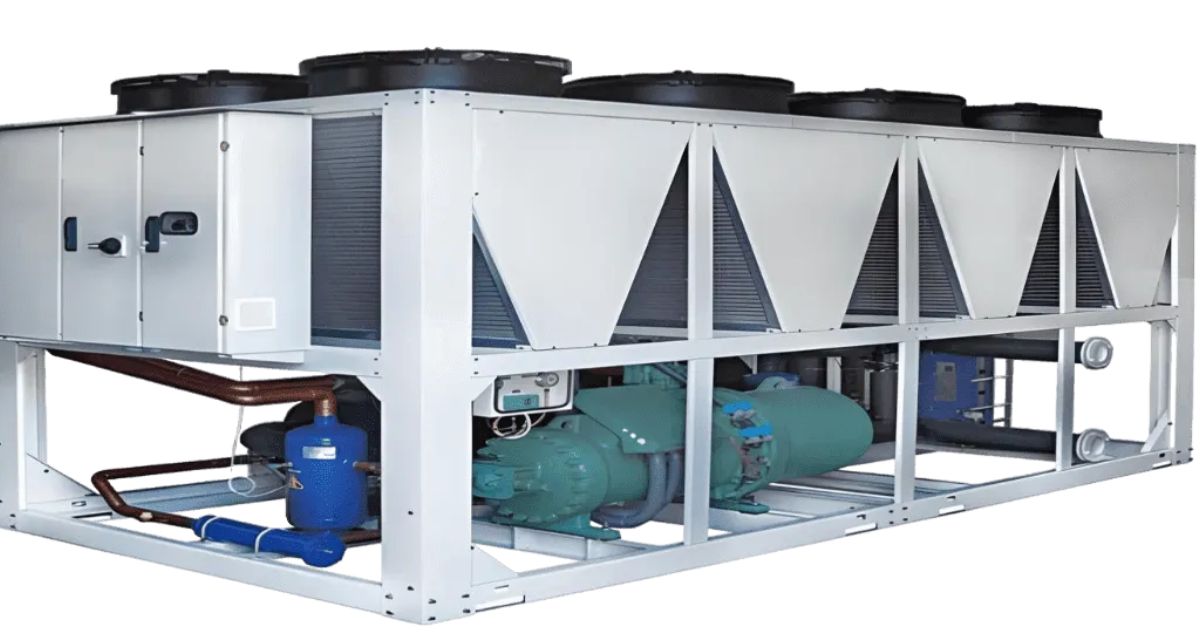
Cooling systems are very important in almost every industry that help remove heat from a process and dissipate it to the atmosphere. One cooling solution that is widely used today is the Air Cooled Chiller.
What has changed in recent years is not the basic job the chiller does — it is how well it does that job. Modern air-cooled chillers are genuinely better than what was available even a decade ago. More efficient, smarter, easier to manage, and less damaging to the environment. This article explains the technologies behind that improvement.
What Is an Air Cooled Chiller?
The chiller removes heat from water or process fluid using a refrigeration cycle. Instead of releasing that heat to a water-based cooling tower, it uses ambient air — fans blow air across a condenser coil, the refrigerant gives up its heat, and the cycle continues.
It circulates chilled water or process fluid through whatever needs cooling — a production line, a building, a data center, a pharmaceutical process. The heat picked up by that fluid gets transferred to refrigerant in the evaporator, the refrigerant carries it to the condenser, and then released to the surrounding air using fans.
There is no cooling tower, no external water supply, no water treatment system. Just ambient air doing the heat rejection work. That independence from water infrastructure is a big part of why air cooled chillers are popular — and modern technology has closed most of the efficiency gap that used to exist between air-cooled and water-cooled systems.
The Technologies That Actually Make a Difference
Variable Speed Compressors
This is probably the most impactful single change in chiller technology over the last decade.
Older compressors ran at one speed — full. It did not matter whether the facility needed 40% of the chiller’s capacity or 100%. The compressor ran the same way. That wastes a lot of energy over the course of a working day.
Variable speed compressors read the actual demand and adjust accordingly. Light load — the compressor slows down and draws less power. Heavy load — it speeds up. The result is noticeably lower electricity bills and less mechanical wear because the compressor is not hammering away at full speed constantly.
Advanced Refrigerants
Older refrigerants that were common in chillers for years have significant environmental impact and are being phased out under international agreements.
Modern air cooled chillers use refrigerants like R-407C, R-410A, and R-134a — lower global warming potential, better compatibility with current compressor technology, and meeting the regulatory direction the industry is heading. The practical side is that you are not investing in a chiller today that will face refrigerant availability problems in a few years.
Microchannel Condenser Technology
Traditional condensers used copper tubes with aluminium fins. They worked, but they were heavier, used more refrigerant, and were not as efficient at transferring heat as they could be.
Microchannel condensers changed that. Smaller, more numerous channels across the coil surface mean more heat transfer area in a smaller, lighter package. Less refrigerant is needed to fill the system. The overall chiller becomes more compact without giving up cooling capacity.
There is also a corrosion resistance benefit — microchannel designs handle outdoor exposure better in many environments, which matters for equipment that often lives outside.
Automatic Capacity Control
This goes hand in hand with VFD but works across the whole chiller, not just the compressor. Modern units can adjust their output continuously — typically anywhere from around 40% to 110% of rated capacity — responding to whatever the actual demand is at that moment.
Ambient temperature changes. Process loads shift. Older chillers that could only step between fixed capacity points — 50%, 75%, 100% — wasted energy every time the actual demand fell somewhere in between. Stepless or near-stepless capacity control keeps the air cooled chiller in the right zone continuously, which is better for both efficiency and temperature stability at the outlet.
Electronic Expansion Valves
The expansion valve controls refrigerant flow through the circuit. The traditional mechanical version responds slowly and works well enough under stable conditions. When conditions are changing — variable loads, shifting ambient temperatures, modulating compressor speed — a mechanical valve struggles to keep up.
Electronic expansion valves respond in real time. The refrigeration circuit stays optimized continuously rather than lagging behind demand changes. The result shows up as better efficiency numbers, more stable chilled water temperatures, and fewer unnecessary compressor cycling events that add wear over time.
Separate Refrigeration Circuits
On air cooled chillers with multiple compressors, giving each one its own independent refrigeration circuit adds redundancy that matters in practice. If one circuit develops a problem — a leak, a faulty component, a compressor issue — that circuit can be isolated and the rest of the chiller keeps running.
For operations where you genuinely cannot afford to lose cooling — data centers, pharmaceutical production, food processing — this is not a nice-to-have feature. It is the difference between a short planned maintenance window and an unplanned shutdown.
Better Heat Exchange Design
The coils and heat exchangers in modern chillers are meaningfully more efficient than what was standard a decade ago. Optimized fin geometry, better airflow distribution across the coil face, materials that resist fouling and corrosion — all of these contribute to more heat being moved for the same amount of refrigerant work.
More effective heat exchange means the compressor does not have to work as hard to maintain the same leaving water temperature. That shows up as lower energy consumption and less stress on the compressor over time.
PLC Control with Remote Monitoring
Modern air cooled chillers are run by PLC-based control systems that track everything happening inside the machine — temperatures, pressures, compressor status, refrigerant conditions, alarm states. Operators do not have to guess what the chiller is doing.
The more useful part is what these systems do with the data over time. Performance trends become visible — a gradual drift in operating pressures, slowly rising energy consumption for the same output, compressor run hours approaching service intervals. These patterns show up in the data before they show up as a breakdown. That shift from fixing things after they fail to maintain things before they fail is where the real operational value sits.
Performance at High Ambient Temperatures
Older air cooled chillers had a real weakness in hot weather — capacity dropped noticeably and efficiency fell off a cliff when ambient temperatures climbed. For a facility in a hot climate or running outdoor equipment through Indian summers, this was a genuine limitation.
Modern units are designed to hold reliable performance at ambient temperatures up to 48°C with high relative humidity. Better refrigerant choices, improved compressor technology, and smarter control systems all contribute to this. It is not just a spec sheet claim — it reflects real-world operating conditions that the equipment has been designed around.
What This Means in Practice
All of this technology adds up to three things that facility managers actually care about — lower electricity bills, fewer unplanned breakdowns, and equipment that holds its performance over a long service life.
The energy savings are tangible. A plant running chillers continuously sees real money in the difference between a 50%-more-efficient modern unit and an older fixed-speed machine. The reliability improvements reduce the kind of cooling failures that shut down production lines or data centers at the worst possible moment. And using modern refrigerants means the equipment is aligned with where environmental regulations are going rather than working against them.
FAQs
What makes an air cooled chiller different from a water cooled chiller?
An air cooled chiller releases heat to the surrounding air through fans and a condenser coil. A water cooled chiller rejects heat to water, which then goes to a cooling tower. Air cooled units do not need a water supply or cooling tower, which simplifies installation and reduces water-related operating costs.
How much energy does VFD technology actually save?
In real operating conditions with variable loads, VFD-based chillers typically deliver around 30% to 50% better energy efficiency compared to fixed-speed equivalents. The actual saving depends on how much the load varies — the more variable the demand, the bigger the advantage.
What refrigerants do modern air cooled chillers use?
R-407C, R-410A, and R-134a are among the most common. These have significantly lower environmental impact than older refrigerants that are being phased out under international environmental agreements.
Can these chillers handle hot outdoor conditions reliably?
Yes. Modern chillers are built to operate reliably at ambient temperatures up to 48°C and high humidity. This covers most outdoor industrial and commercial applications in India without significant capacity derating.
What capacity range do air cooled chillers cover?
Single units typically cover 2 tons to 1200 tons. Multiple units can be configured together to reach much higher total capacity — some installations run to 5000 tons or beyond.


 exotic portable cabin
 nikita pawar