Surelia Industries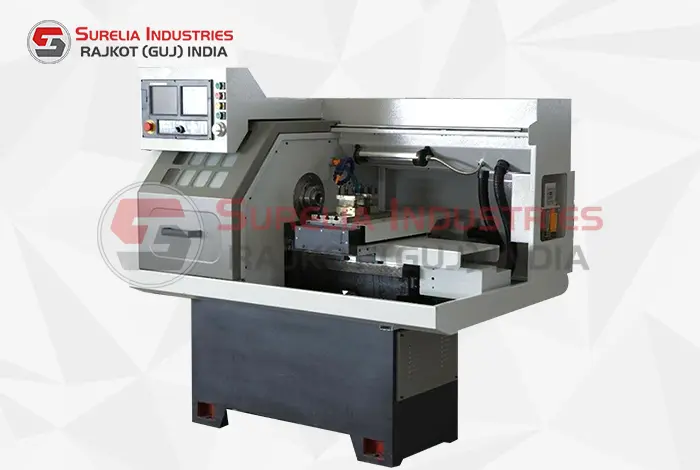
A flat bed CNC lathe machine works with rotating spindles, sharp tools, hot chips, and heavy workpieces, so even a small fault can turn into a serious problem. Safe operation helps uncover issues in the chuck, tool holder, guards, brakes, controls, and other key parts before the machine starts regular production. It also lets the crew understand how the machine responds when it is cutting under strain day to day.
A machine that has not been operated properly can cause delays, damage to the tool or workpiece, poor quality parts, or worse. That is why safe operation is not just a box to tick. It is part of safe machining work and basic shop discipline. When the operation is done properly, it gives some peace of mind to the operator and the maintenance crew.
What Safe Operation Checks
Safe operation is usually done to see how the machine behaves during the full cycle: loading the workpiece, clamping, cutting, and unloading. The machine should be checked for:
- Smooth rotation of the spindle without unusual noise
- Stable tool movement without vibration or chatter
- Proper function of safety guards and interlocks
- Correct operation of emergency stops and controls
- Any unusual sound, vibration, smell, or chip build‑up
It’s also used to confirm whether the workpiece is held firmly and the tool is set correctly. A bit of vibration is normal, however too much can be a sign of a problem in the chuck, tool holder, or workpiece alignment. So the operation check helps indicate if the machine is staying within safe limits.
The machine is not being operated only to make parts. The operation also checks the smoothness of the cut, the stopping action, and the machine’s control over the process. Those small things matter a lot in daily production.
Basic Operating Steps
A proper start usually begins with a full visual check. Look at the chuck, tool holder, guards, emergency stops, electrical parts, and chip area. The floor should be clear too, with only trained people nearby. If something looks off before the cycle begins, that should be fixed first.
A simple sequence often looks like this:
- Start with a cold check to see whether the machine moves freely without power.
- Then load and clamp the workpiece securely in the chuck.
- After that, set the tool and check the tool offsets.
- Run the machine at the correct speed and feed for the material.
- Check the first part for size and surface finish.
- Finish with unloading and inspection of the part.
The cold check is basically there to show whether the machine runs well without load. The clamping and tool setting steps check the main setup. Cutting is about getting the right size and finish, while unloading looks at how the part comes out.
The point of the sequence is to catch problems in order. If the machine struggles in a basic check, there is no sense moving straight to full production.
Safety During Flat Bed CNC Lathe Machine Operation
Safety has to stay tight through the whole process. The operation area should be marked off. No one should stand in front of the rotating workpiece or reach near the moving tool. The guards and interlocks should be in good condition. If the operator or supervisor sees something unusual, the machine should stop.
It also helps to keep the cycle movement smooth and steady. Sudden movement is not needed and can create extra risk. The crew should watch for chip build‑up, abnormal noise, vibration, smoke, or any sign that the machine is not behaving normally.
Operation should never feel rushed. The crew needs time to observe the machine properly. If the workpiece does not hold as it should, if the tool vibrates too much, if the chips are wrapping around the part, or if the part comes out out‑of‑tolerance, that needs attention right away.
Common Mistakes
Some mistakes show up often. One is starting the machine without removing the chuck key. Another is wearing loose clothing, gloves, jewellery, or having long hair not tied back. Skipping inspection is also a bad habit, because the chuck, tools, guards, and floor should always be checked.
Rushing through the process is another issue. Operating a Flat Bed CNC Lathe Machine is not something to finish quickly just to move on. It should be done carefully, with enough time to see how the machine behaves under each stage. Cutting corners here usually causes more work later.
Another issue is weak communication. Everyone on the job should know when the spindle is rotating, when the tool is moving, and when the cycle is done. A little coordination saves a lot of confusion.
Best Practices
Keep the operation area clear and well marked. Use trained people only. Follow the manufacturer’s speed, feed, and depth‑of‑cut limits. Check guards, switches, chuck, tool holder, and structural parts before and after each shift. Record what happened, even if the machine ran without trouble.
It is also smart to recheck after major repair, tool change, or long service gaps. That keeps the machine’s condition clear and avoids guesswork later. A machine may look fine from a distance, but a proper operation check tells the real story.
Regular checks between full cycles also help. If the machine starts making unusual noise, vibrating too much, or cutting badly, that should be looked into before the next scheduled production run. Small signs often show up before bigger faults do.
Working With Confidence
When operation is done properly, the machine is easier to trust on the shop floor. Operators know what to expect. Maintenance teams know where the weak spots are. And the plant can produce parts with a bit more confidence.
That is really the value of safe operation. It is not about making the machine look good for one day. It is about knowing the machine is ready for the work it has to do every day after that.
FAQ
- Why is the operation area important?
A clear area cuts risk and keeps people away from the rotating spindle, moving tool, and hot chips. - What should be checked before operating a Flat Bed CNC Lathe Machine?
Before start up, check the chuck, tool holder, guards emergency stops, switches, clamping of the workpiece, the floor, and area around the machine. - When should the machine be rechecked after operation?
After heavy repairs, a major tool change, or any modification, the machine should be checked again before use. - What is the purpose of safely operating a Flat Bed CNC Lathe Machine?
Safe operation makes sure the machine can spin, cut, hold, and produce parts safely under normal working conditions. - What is the difference between cold check and cutting check?
Cold check confirms the machine moves freely without power; cutting check checks how the machine behaves while cutting the workpiece.
For more details, check the Flat Bed CNC Lathe Machine page on https://www.sureliaindustries.com/ and choose the setup that fits your shop’s machining needs.


 Ammar Saleem
 Ethan Peter