maharith thermal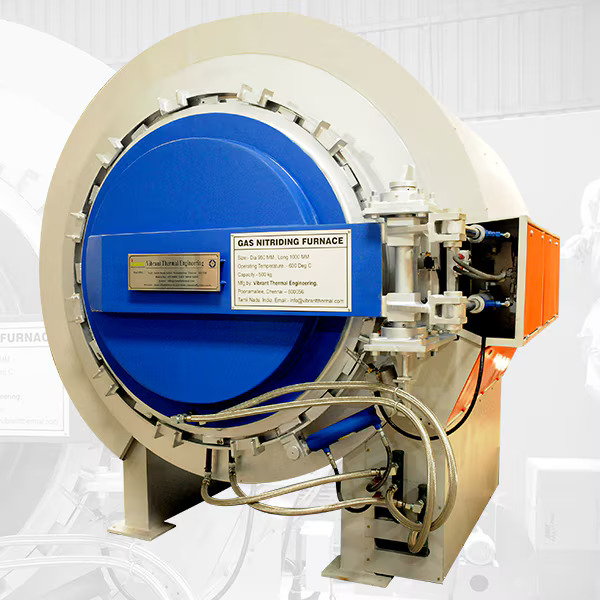
Gas Nitriding is a heat treatment procedure used to enhance resistance by assisting in the dissolution of nitrogen and hard nitride precipitates, completing the surface treatment process. During the nitriding process, a hard layer is produced on the material’s surface by diffusing nitrogen onto the steel. Gas nitriding furnaces are equipment in which the nitriding process is carried out. These horizontal and vertical furnaces are used for surface hardening at temperatures ranging from 480 to 580°C during the nitriding process. It is a technique used on alloy-rich steels. This treatment creates a strong coating on the steel surface that resists wear and corrosion.
What is a Gas Nitriding Furnace
Gas nitriding furnaces, like ordinary nitriding furnaces, come in both horizontal and vertical configurations. Similarly, the nitriding process may be described as a surface hardening process carried out in gas nitriding furnaces employing various parameters within the temperature range of 490 to 580°C.
Gas nitriding is the favored method for alloy steels. At high temperatures, nitrogen atoms diffuse to the steel surface as interstitial atoms, generating an extremely hard coating that resists wear and corrosion. As a result of this procedure, the steel surface has two layers: a very hard white layer and a diffusion layer. Doing it at a low temperature significantly reduces distortion.
Here are the main features you should look for before making a purchase.
1. Simple, Real-Time Atmosphere Controls
The entire process depends heavily on the gases inside the heating chamber. The furnace mixes ammonia gas with other carrier gases at specific temperatures. If this gas mix is off by even a tiny fraction, the chemical reaction fails and your parts won’t get hard enough. Look for hydrogen sensors and gas mass flow controllers in your nitriding furnaces.
2. Precise Temperature Uniformity
Heat is the catalyst that forces nitrogen atoms to diffuse into the steel surface. Nitriding usually happens at temperatures between 490°C and 560°C. If one corner of the furnace is even 5 degrees hotter than another, the metal parts will have uneven case depths, making some sections weaker than others.
When looking at furnace specs, check for strict temperature uniformity ratings. The heating elements should be spaced evenly around the chamber walls. Furthermore, the furnace needs a heavy-duty internal atmosphere circulation fan. This fan physically forces the hot gas mixture into every nook and cranny of the furnace load, ensuring that large batches of small parts get treated exactly the same way.
3. High-Quality Retort and Vacuum Tightness
The internal chamber where the heating happens is called the retort. Because it holds hot ammonia gas all day, the retort faces a brutal environment. At high temperatures, ammonia can be highly corrosive to standard steels.
- Premium Alloys: Make sure the retort is built from high-nickel alloys like Inconel or specific grades of stainless steel. These materials resist high-temperature oxidation and won’t degrade or warp over years of continuous thermal cycling.
- Air-tight Sealing: Before the nitriding process begins, the furnace must push out all regular air. Oxygen ruins nitriding; if air leaks inside, it causes dark oxidation spots on your parts. Look for furnaces that feature water-cooled rubber seals or heavy locking lids that guarantee a completely airtight environment.
4. Smart Automation and Software Integration
You shouldn’t need a PhD to run an industrial furnace. If the control panel is overly complicated or requires constant manual logging, your operators will eventually make mistakes.
Top-tier manufacturers equip their systems with programmable logic controllers (PLCs) and touchscreen interfaces. A user-friendly system allows you to save custom heating profiles for different types of steel. Once the operator loads the parts and selects the recipe, the computer handles the pre-heating, vacuum purging, gas injection, soaking time, and controlled cooling automatically. Look for software that tracks data over time so you can print out quality compliance certificates for your clients.
5. Efficient Post-Process Cooling Systems
Once the heating cycle ends, you cannot just open the furnace lid. If hot steel hits cold room air, it will discolor or warp. Waiting for a massive industrial furnace to cool down naturally by ambient air can take twelve to twenty-four hours, which completely kills your factory’s daily productivity.
Look for a furnace that features an integrated rapid cooling system. These setups use heat exchangers and high-velocity cooling blowers to circulate cold air or gas around the outside of the retort chamber. Fast, controlled cooling slashes your total cycle times, allowing you to run more batches per week and quickly boost your workshop’s revenue.
Why the Manufacturer Matters
Looking at a spec sheet is a great start, but who actually builds the furnace is what guarantees long-term reliability. Engineering companies like Maharith Thermal Pvt. Ltd. focus heavily on building rugged systems that survive non-stop factory workloads.
When you partner with an experienced manufacturer, you don’t just buy a heavy piece of steel hardware. You get proper engineering support to size the furnace for your exact floor layout, safe onsite installation, recipe calibration for your specific steel grades, and fast access to spare parts when routine maintenance checks come around. It is the only real way to ensure smooth factory operations and complete peace of mind.
Frequently Asked Questions
What does a Gas Nitriding Furnace actually do?
It makes the outer layer of steel parts incredibly hard while keeping the inside tough and shock-resistant. This helps components resist everyday wear and tear and rust without bending out of shape.
Why is an airtight seal so important?
If even a tiny bit of outside air leaks inside the furnace chamber during heating, the oxygen instantly attacks the glowing hot steel. This leaves ugly, dark burn marks all over the surface. It completely messes up the clean look of your components and ruins the chemical reaction, meaning the nitrogen won’t bind properly to harden the metal.
What is the difference between standard gas nitriding and FNC?
It simply comes down to what you are adding to the steel. Standard gas nitriding only pushes nitrogen into the surface to make it incredibly hard and wear-resistant. Ferritic Nitrocarburizing (FNC), on the other hand, injects both nitrogen and carbon at slightly different temperatures. This creates a special compound layer that gives you massive protection against heavy rust and corrosion.
How do modern furnaces prevent ammonia gas waste?
Modern units use automated hydrogen sensors inside the chamber to read the atmosphere in real-time. Instead of constantly dumping gas into the system, the furnace computer only injects small amounts of fresh ammonia when the nitriding potential drops, saving significant money on gas bills.
How much maintenance does a nitriding furnace need?
The main steel shell is built like a tank and easily lasts for decades, but you cannot ignore the smaller components. Every few months, your team needs to do a quick walk-around check. This means looking closely at the lid seals for tiny air cracks, checking that the gas valves open smoothly, and making sure the main internal circulation fan isn’t shaking or making strange noises.


 Ethan Peter
 Dtf Manchester