Jeena Sikho HiiMS Hospital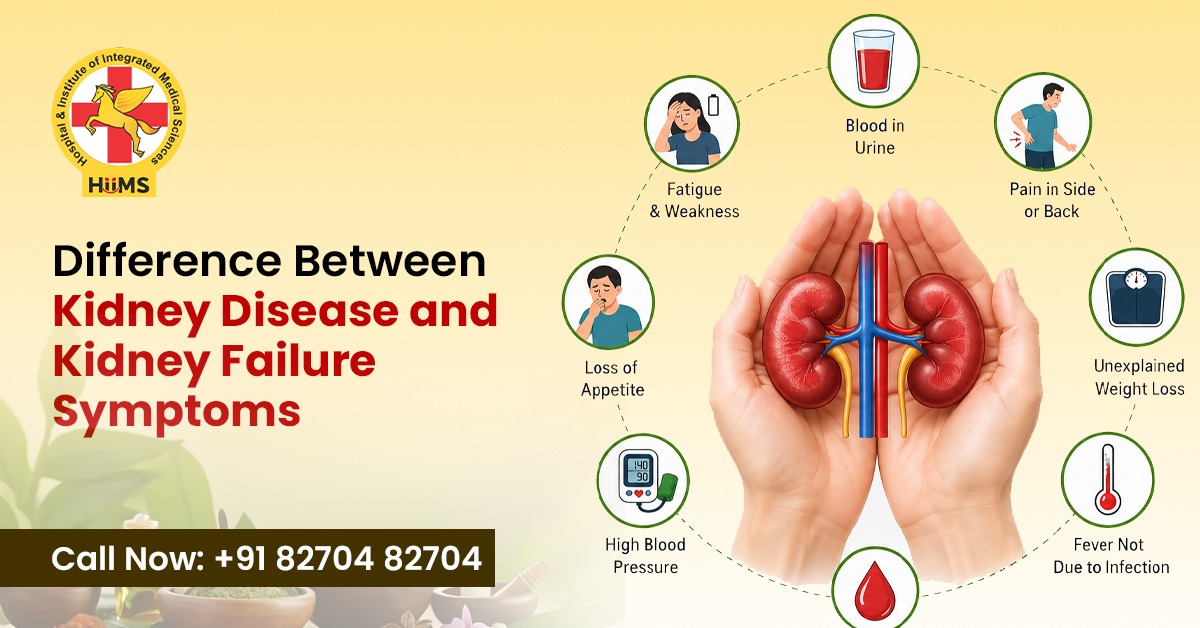
Kidney health is often overlooked until noticeable symptoms begin affecting daily life. These important organs continuously filter waste and excess fluids from the blood, helping the body maintain balance. However, kidney problems can develop quietly over time, making it difficult for many individuals to recognize the warning signs early.
Understanding kidney failure symptoms and knowing how they differ from the early signs of kidney disease can help people take timely action and make informed healthcare decisions.
Understanding Chronic Kidney Disease
Chronic Kidney Disease (CKD) is a gradual condition in which kidney function declines over time. As the kidneys become damaged, they lose their ability to efficiently remove waste products and excess fluids from the bloodstream.
Several factors may contribute to this long-term decline, including high blood pressure, diabetes, and a family history of kidney-related conditions. Because the progression is often slow, many people remain unaware of the condition during its early stages.
Early Warning Signs of Kidney Disease
The body often provides subtle indications when kidney function begins to decline. Some common early symptoms include:
- Swelling in the feet, ankles, or legs.
- High blood pressure that becomes difficult to manage.
- Persistent fatigue and weakness.
- Difficulty concentrating during daily activities.
- Foamy or bubbly urine.
- Frequent urination during the night.
- Low energy levels associated with anemia.
These symptoms may seem minor at first, but they can signal that the kidneys are under increasing stress.
Recognizing Advanced Kidney Failure Symptoms
When kidney function becomes severely reduced, symptoms often become more widespread and noticeable. Advanced kidney failure symptoms may include:
- Significant reduction in urine output.
- Severe swelling affecting multiple areas of the body.
- Shortness of breath caused by fluid accumulation.
- Nausea and vomiting.
- Loss of appetite.
- Persistent skin itching and dryness.
- Muscle cramps and body discomfort.
- Confusion or difficulty concentrating.
- Chest discomfort in severe cases.
Recognizing these symptoms early can encourage timely medical evaluation and support better management of kidney health.
Acute vs. Chronic Kidney Failure
Kidney failure does not always develop in the same way.
Acute Kidney Failure
Acute kidney failure develops suddenly, often within hours or days. It may occur due to severe dehydration, toxic reactions, or blockages affecting kidney function. In some cases, kidney function may improve if the underlying cause is addressed quickly.
Chronic Kidney Failure
Chronic kidney failure develops gradually over several years. It is commonly associated with long-term conditions such as diabetes and high blood pressure. Because the damage progresses slowly, many individuals may not experience significant symptoms until kidney function has already declined considerably.
The Importance of Professional Guidance
Changes such as swelling, fatigue, or alterations in urination patterns should not be ignored. Consulting a qualified kidney doctor can help identify underlying concerns and provide appropriate guidance based on individual health needs.
A comprehensive evaluation can offer greater clarity about kidney function and support timely decision-making regarding future care.
Natural Approaches to Kidney Wellness
Ayurveda focuses on maintaining balance within the body and supporting overall well-being through natural methods. Various therapies aim to promote relaxation, circulation, and healthy lifestyle practices.
At Jeena Sikho HiiMS, supportive wellness approaches include:
- Abhyanga therapy to encourage relaxation and healthy blood circulation.
- Nasya therapy to support mental clarity and overall balance.
- The GRAD System, which combines head-down tilt therapy, hot water immersion, and dietary practices designed to promote relaxation and detoxification.
These approaches focus on supporting overall wellness while encouraging healthier lifestyle habits.
Conclusion
Kidney-related concerns often develop gradually, making early awareness extremely important. Understanding kidney failure symptoms and recognizing the warning signs of kidney disease can help individuals seek timely guidance and make proactive choices for their health.
Paying attention to symptoms such as swelling, fatigue, foamy urine, and changes in urination patterns may support earlier detection and better management of kidney health. Seeking professional advice at the right time can provide valuable insight and help individuals take positive steps toward long-term well-being.


 MZ Med Cure
 Bridge Street