Innovative Bees
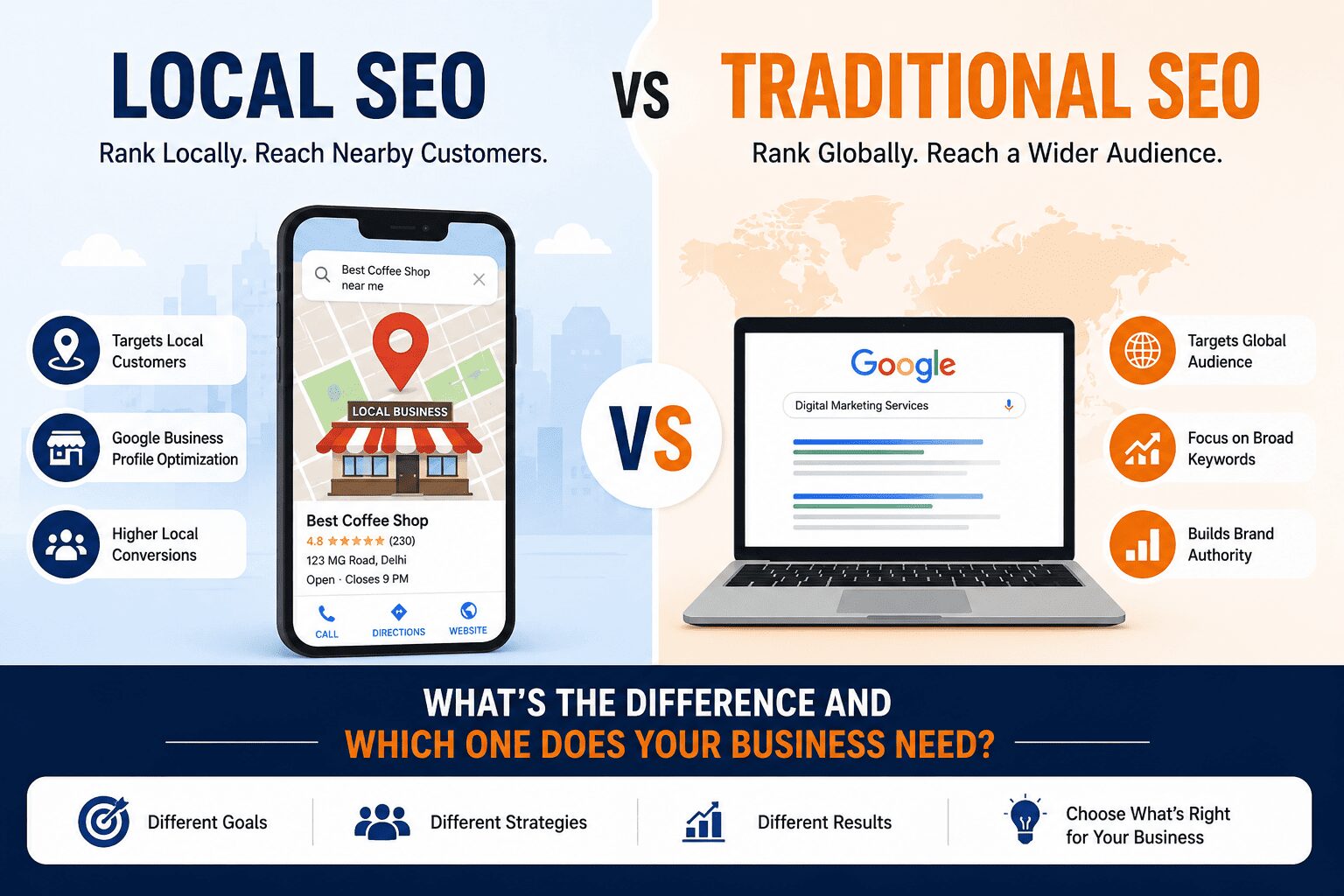 In today’s competitive digital landscape, businesses need a strong online presence to attract customers and drive growth. However, many business owners struggle to determine whether they should invest in Local SEO or Traditional SEO. Although both strategies aim to improve search engine visibility, they serve different purposes and target different audiences. Therefore, understanding the distinction between these approaches can help you choose the right marketing strategy for your business.
Understanding Traditional SEO
Traditional SEO focuses on improving a website’s visibility on a national or global scale. The primary goal is to rank higher in search engine results for broad keywords that attract users from various locations. As a result, businesses that sell products online, offer software solutions, or provide services across multiple regions often benefit from traditional SEO.
For example, an eCommerce store selling fitness equipment nationwide may target keywords such as “best treadmill for home” or “affordable gym equipment.” In this case, geographic location plays a minimal role in the ranking strategy.
Traditional SEO typically includes:
- Comprehensive keyword research
- High-quality content creation
- Technical SEO improvements
- Link-building campaigns
- Website optimization for user experience
- AI-driven content and search optimization
Today, many businesses also leverage AI SEO services to analyze search patterns, identify content gaps, and improve website performance more efficiently. Consequently, AI-powered optimization helps companies stay ahead in increasingly competitive search environments.
What Is Local SEO?
Local SEO focuses on improving visibility within a specific geographic area. Instead of targeting a broad audience, businesses aim to attract customers who search for products or services near their location.
For instance, a dental clinic in Delhi would want to appear when users search for “dentist near me” or “best dental clinic in Delhi.” Therefore, local search optimization becomes essential for generating qualified leads and increasing foot traffic.
Businesses commonly invest in local SEO services to strengthen their presence in local search results and Google Maps. Furthermore, local SEO helps potential customers find accurate business information quickly, which increases trust and conversions.
Key components of local SEO include:
- Google Business Profile optimization
- Local keyword targeting
- Citation building
- Online review management
- Localized content creation
- Location-specific landing pages
Many businesses also rely on specialized GMB optimization services in India to improve visibility on Google Maps and local search listings.
Key Differences Between Local SEO and Traditional SEO
While both strategies share certain SEO fundamentals, several important differences set them apart.
1. Target Audience
Traditional SEO targets users regardless of location. In contrast, local SEO targets customers within a specific city, region, or service area.
As a result, a national software company may prioritize traditional SEO, whereas a local restaurant benefits more from local SEO.
2. Keyword Strategy
Traditional SEO focuses on broader keywords with higher search volumes. Meanwhile, local SEO emphasizes location-based phrases such as:
- SEO agency in Mumbai
- Best plumber in Delhi
- Digital marketing company in Bangalore
Similarly, businesses seeking local SEO services India often target location-specific keywords to reach nearby customers more effectively.
3. Google Business Profile Importance
Google Business Profile plays a limited role in traditional SEO. However, it serves as a critical ranking factor for local SEO.
Therefore, businesses that depend on local customers should prioritize GMB optimization services in India to improve visibility in Google’s Local Pack and Maps results.
4. Competition Level
Traditional SEO often involves competing against national and international brands. On the other hand, local SEO typically focuses on regional competitors.
Consequently, many small businesses achieve faster results through local SEO because the competition is more manageable.
5. Conversion Potential
Local searches often indicate strong purchase intent. For example, someone searching for “SEO consultant near me” is usually closer to making a buying decision than someone searching for “what is SEO.”
As a result, local SEO frequently generates higher conversion rates.
Which One Does Your Business Need?
The right choice depends largely on your business model and target audience.
If you serve customers across multiple cities, states, or countries, traditional SEO may offer greater long-term value. However, if your business depends on local customers, local SEO should become a priority.
For example:
- Local clinics
- Restaurants
- Law firms
- Real estate agencies
- Salons
- Home service providers
These businesses often experience significant growth through professional local SEO services.
Moreover, companies seeking comprehensive online growth often combine local SEO with broader strategies offered through digital marketing services in India. This integrated approach improves visibility across both local and national search results.
Businesses looking for expert guidance frequently partner with a trusted local SEO company in India to develop customized strategies that align with their goals and target markets.
Final Thoughts
Both Local SEO and Traditional SEO play important roles in digital marketing. However, choosing the right strategy depends on where your customers are located and how they search for your products or services.
If your goal is to attract nearby customers and dominate local search results, investing in professional local SEO services can deliver measurable results. Meanwhile, businesses targeting broader audiences should focus on traditional SEO supported by advanced AI SEO services and comprehensive digital marketing services in India.
Ultimately, the most successful businesses understand their audience first and then build an SEO strategy that matches customer intent, search behavior, and growth objectives.


 Olive Mine
 Pilot Center