Pioneer holidays
I still remember the exact moment I gave up trying to make India “manageable.”
It was my third night staring at a map, color-coded sticky notes everywhere, seventeen browser tabs open, and a half-eaten packet of biscuits next to my laptop. I was trying to plan a trip to India all by myself. I had a list of 40 places I “needed” to see, a budget that made no sense, and absolutely zero clue where to actually begin.
My colleague walked past my desk, looked at my screen, and said, “Why are you doing this to yourself?”
Honest question.
That’s when I made the call to pioneerholidays.org — and what happened after changed how I think about travel entirely.
India Is Not One Place. It Is Thirty Countries Wearing One Name.
Before I get into the trip itself, let me say something that nobody tells you before you land in India.
India is not a single destination. It is a continent pretending to be a country.
The north is cold mountains and ancient forts. The south is coconut trees, temple gopurams, and backwaters so still they look like a painting. The east is rainforests, tribal culture, and tea gardens that stretch as far as you can see. The west is desert dunes, camels, and cities that look like they were carved from sandstone by hand.
When someone asks, “Where should I go in India?” — that is like asking someone to describe every flavor in a kitchen.
This is why India tour packages matter. Not because you cannot travel alone, but because India rewards you enormously when someone who already knows the terrain helps you cut through the noise.
My Trip Began in Rajasthan — And I Nearly Cried at a Sunset
I will be honest. I am not an emotional traveler. I do not usually feel things at famous landmarks. I have stood at the Eiffel Tower and felt nothing. I have seen the Colosseum and thought, “Nice bricks.”
But standing at the edge of Mehrangarh Fort in Jodhpur, watching the sun go down over the blue city below me, I felt something shift.
The entire city is literally painted blue — house after house, lane after lane — and when the golden light hits it in the late afternoon, it turns into something that does not look real. I kept thinking someone had applied a filter.
Nobody had.
That evening, back at the hotel, I opened my itinerary from pioneerholidays.org and looked at what was coming next. Jaisalmer. The golden city. A fort that rises from the desert like a sand castle that forgot to be temporary. Camel rides at dawn. A night in the dunes with no electricity and more stars than I have ever seen in my life.
I remember thinking — if this is what day four looks like, what is day ten going to do to me?
The Taj Mahal, and What the Photos Do Not Capture
Everyone has seen the Taj Mahal in photos. Everyone thinks they know what it looks like.
They are wrong.
Photos cannot capture the scale. Photos cannot capture the way the marble changes color as the light changes — white at noon, golden at dusk, almost translucent at dawn. Photos cannot capture the silence that settles over you when you stand in front of it for the first time and realize that a man built this because he missed his wife.
I went early morning, just after sunrise. My guide — arranged through my India tour package — told me to arrive at 6 AM. I grumbled about it. I am not a 6 AM person.
I arrived at 6 AM. There were very few people there. The mist was still sitting on the Yamuna River behind the monument. The Taj was glowing.
I stayed for two hours and barely spoke.
If you are booking India tour packages and someone tries to take you to the Taj at 11 AM in peak season — change your itinerary. The morning is the only way.
Kerala: Where India Slows Down and Makes You Breathe
After Rajasthan’s heat and history, Kerala felt like stepping into a different world.
The backwaters of Alleppey are something I struggle to describe to people who have not been. You rent a houseboat — a traditional wooden kettuvallam — and you drift slowly through a network of canals, lakes, and rivers while the world goes about its business on the banks.
Children wave from the shore. Fishermen cast nets in the early morning. Egrets stand completely still in the water. Women wash clothes on the steps of small houses half-hidden by coconut palms.
Time does not work the same on a houseboat in Kerala. Meals appear when they appear. The boat moves when it moves. You read a book. You watch a kingfisher land on a branch three feet from your face and stare at you. You eat fresh fish curry with rice served on a banana leaf.
I had signed up for a five-day Kerala section as part of my India tour package, and I spent most of it wishing I had booked ten days instead.
Munnar, in the hills above Kerala, was another level entirely. Tea estates rolling across mountain slopes in every direction. The air smells like nothing I can name — cool, green, slightly sweet. Walking through a tea garden in the early morning when the mist has not lifted yet is the kind of thing that makes you want to move there permanently.
Delhi: The City That Does Not Let You Be a Casual Observer
I ended my trip in Delhi, which feels like the right way around. Delhi is not a gentle beginning. Delhi is an experience you need to have earned.
Old Delhi specifically — Chandni Chowk, the spice market, the lanes around Jama Masjid — is one of the most overwhelming, beautiful, loud, fragrant, chaotic places I have ever stood in my life. The streets are narrow enough that two rickshaws cannot pass each other without negotiating. The smell of frying jalebis hits you before you even turn the corner. Somebody is always shouting something. It is simultaneously exhausting and completely alive.
My guide walked me through it like a narrator walking me through a film. He knew which lane made the best paranthe. He knew the shop that had been selling spices from the same spot for four generations. He knew the exact spot to stand to photograph the Red Fort at an angle you do not see in guidebooks.
That is the part of India tour packages that people underestimate — not the logistics, but the local knowledge. That knowledge is not something you can Google.
Visiting Humayun’s Tomb in the afternoon, the Qutub Minar complex, the quiet lanes of Nizamuddin with its centuries-old dargah — Delhi has more history per square kilometre than most countries have in total.
What I Wish I Had Known Before Going
A few honest notes from the trip:
The heat is real. Between March and June, northern India is genuinely hot. Not hot for me hot. Hot. Plan your India tour package accordingly — winter months (October to February) are almost universally better for Rajasthan and the north.
Carry cash, but not all your cash. Most places take UPI payments now, but in smaller towns and villages, cash is still king.
Street food is worth trying — carefully. Not every stomach is the same. Take your cues from where locals eat. If the queue is long and the food is moving fast, it is usually safe.
Give yourself longer than you think you need. India does not move at your pace. India has its own pace. The moment you accept that, the trip gets better immediately.
Why a Guided Package Made This Trip What It Was
I will be straightforward here. I have done solo travel. I know the thrill of figuring things out yourself. I know the satisfaction of booking your own trains and managing your own schedule.
India can absolutely be done that way. But what you trade off is enormous.
The train I almost booked myself was the wrong one — overnight, unreserved, a thirteen-hour journey I would have been standing through. My package had me on a comfortable express with a proper berth. The hotel I nearly booked in Jaisalmer turned out to be a known disappointment once I read deeper into the reviews. The hotel I stayed in, chosen by pioneerholidays.org, had a rooftop restaurant overlooking the fort where I ate dinner under the stars.
The gap between a good trip and a great trip, in India, is often the difference between knowing and not knowing.
FAQs: India Tour Packages
Q: What is the best time of year to book India tour packages?
October to March is the most comfortable window for most of India. Northern India (Rajasthan, Delhi, Agra) is at its best from November to February. Kerala and the south are pleasant from September to March. Summer months (April to June) are possible but hot in the north. Monsoon (July to September) brings rain but also a certain green beauty, particularly in Kerala and the northeast.
Q: How many days should a good India tour package include?
For a meaningful introduction — covering two to three regions — a minimum of 12 to 15 days is ideal. Shorter trips are possible but tend to feel rushed. If you want to go deep into one region (Rajasthan only, or Kerala only), 7 to 10 days is workable.
Q: Is India safe for solo travelers and first-timers?
Yes, with common-sense precautions. Millions of first-time international visitors travel to India every year without incident. Traveling with a reputable tour package like those offered by pioneerholidays.org adds an extra layer of comfort — you have local support, pre-arranged transport, and vetted accommodation.
Q: What types of India tour packages are available?
There is a wide range — heritage and culture tours focusing on Rajasthan and the Golden Triangle (Delhi, Agra, Jaipur), wellness and ayurveda retreats in Kerala, Himalayan trekking packages, wildlife safaris in Ranthambore or Jim Corbett, pilgrimage circuits, and custom multi-region packages that combine several experiences.
Q: How much does an India tour package typically cost?
Costs vary significantly based on duration, accommodation level, and inclusions. Budget-friendly packages start around $800–$1,200 per person for a week. Mid-range packages with quality hotels run $1,500–$3,000. Luxury heritage hotel packages can go well above that. Getting a customized quote from pioneerholidays.org based on your specific preferences is the best starting point.
Q: Do I need a visa to visit India?
Most international travelers need a visa. India offers an e-Visa option for citizens of many countries, which can be applied for online before departure. Processing typically takes 3 to 5 business days. Check the official Indian government e-Visa portal for your country’s eligibility.
Q: What should I pack for an India trip?
Light, breathable cotton clothing for warm months. Layers for cooler months and hill regions. Comfortable walking shoes — you will walk more than you expect. A scarf or shawl (useful for entering temples and mosques, and as sun protection). Any medications you regularly take, since some may be difficult to find.
Q: Can India tour packages accommodate dietary restrictions?
Yes. India is genuinely one of the most diet-friendly countries in the world. Vegetarian and vegan options are available everywhere. Gluten-free and other dietary needs can be accommodated with advance notice when booking. Just communicate your requirements clearly when arranging your package.
One Last Thing
When I got back from India, someone at the airport asked me where I had been. I told them. They said, “Oh, was it overwhelming?”
Yes, completely. And also — I miss it every single day.
India is not a holiday. It is a recalibration. It changes your sense of scale. It changes what you consider beautiful. It changes your relationship with noise and silence, with food, with history, with your own habits and assumptions.
Go. Just go. And let someone who knows it well help you find the parts of it that will stay with you long after you land back home.
Planning your trip to India? Visit pioneerholidays.org for customized India tour packages built around your travel style, budget, and timeline.

 Carrosserie Ameline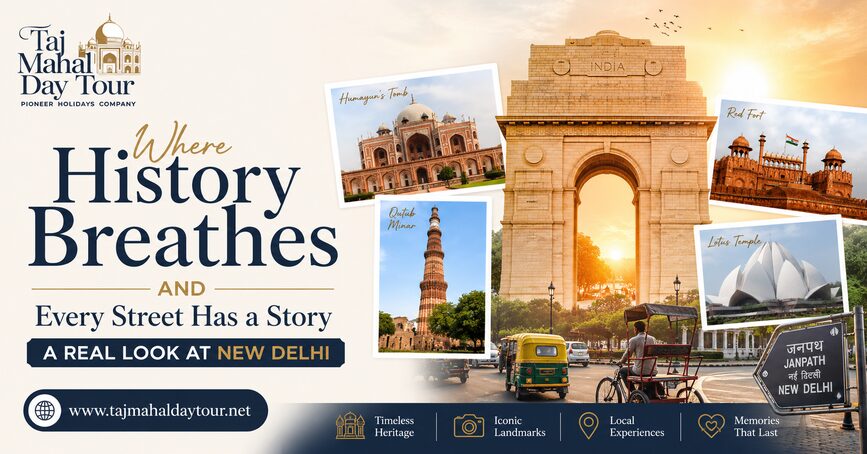
 Tajmahalday tour