Tajmahalday tour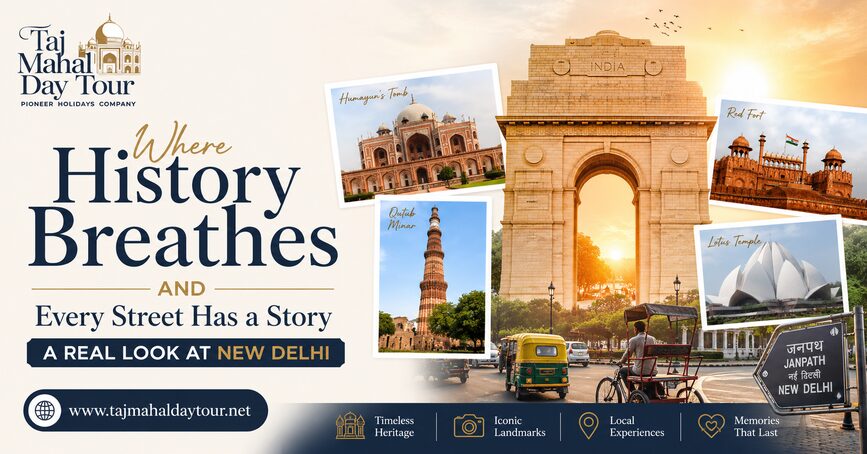
There are cities you visit, and then there are cities that visit you right back. New Delhi is very much the second kind.
I remember the first time I stepped out of Indira Gandhi International Airport at 6 in the morning. The air was warm even before sunrise, carrying that particular mix of marigolds, diesel, and something faintly sweet that I later learned was the smoke from a chai stall around the corner. The driver who picked me up — a quiet man named Ramesh — asked where I wanted to go first. I told him I had no plan. He smiled and said, “Good. Delhi does not like plans.”
He was right.
New Delhi is one of those rare places that rewards surrender. The more loosely you hold your itinerary, the more generously the city gives. If you are thinking about booking New Delhi tour packages, this guide will help you understand what you are actually getting into — not just the monuments listed on brochures, but the texture, the rhythm, and the quiet surprises that make this city genuinely unforgettable.
What Makes New Delhi Different From Every Other Capital
Most capital cities feel designed to impress. New Delhi does impress — but it does so almost accidentally, like someone who forgets they are wearing their finest coat.
The city is a layering of worlds. Old Delhi, the walled city built by the Mughal emperor Shah Jahan in the 17th century, sits cheek by jowl with Lutyens’ Delhi, the imperial administrative quarter the British built in the early 20th century, which itself merges into the modern commercial hubs of Connaught Place, Nehru Place, and the glass towers of Gurugram visible on the horizon. Walk a single kilometre and you can move through centuries.
This layering is exactly what gives New Delhi its restless, alive quality. It is not a city preserved in amber. It is a city that has been continuously inhabited, argued over, rebuilt, and reinvented — and that energy is palpable in a way that no museum can replicate.
The Monuments Everyone Talks About — And What Nobody Tells You
Qutub Minar
The tallest brick minaret in the world stands in South Delhi, surrounded by the ruins of the very first mosque built in India after the Delhi Sultanate came to power in 1193 AD. You will see photographs of it. The photographs do not capture the scale.
What nobody mentions is the Iron Pillar standing in the courtyard nearby — a six-metre column of iron that has stood in open air for over 1,600 years without rusting in any significant way. Scientists still debate exactly how the ancient metallurgists achieved this. Stand in front of it on a quiet weekday morning and you will feel something that has no clean name — a mix of humility and pure curiosity.
Go early. By 10 AM the crowds build. By noon the sun turns the pale stone into a reflecting surface and the heat becomes serious business.
Red Fort
The Red Fort in Old Delhi is where Indian prime ministers address the nation every Independence Day from the ramparts. It was built between 1638 and 1648 and served as the main residence of the Mughal emperors for nearly two centuries.
Here is what most New Delhi tour packages will not tell you: the fort itself is as impressive as the neighbourhood surrounding it. Chandni Chowk, the market street that extends westward from the fort’s main gate, was once described as one of the grandest boulevards in Asia. It no longer looks that way — it is now a dense, chaotic, gloriously overwhelming stretch of shops, food stalls, and foot traffic — but the bones of the original grandeur are still there if you look at the architecture above the shop signs.
Take a cycle rickshaw through Chandni Chowk. It is the correct speed for that street.
India Gate and Rajpath
India Gate is a war memorial built to honour the soldiers of the British Indian Army who died during World War One. It stands at the eastern end of what is now called Kartavya Path, the ceremonial boulevard that stretches from India Gate to Rashtrapati Bhavan, the President’s residence, at the other end.
The scale of the avenue is intentionally staggering — it was designed by Edwin Lutyens to communicate permanence and power. Standing at the India Gate end and looking toward the domed Rashtrapati Bhavan on the low ridge at the far end is one of those views that rearranges your sense of proportion.
Evenings here are lively. Families spread out on the lawns. Vendors sell everything from ice cream to kites. It is genuinely cheerful and worth staying for the floodlit version after dark.
Humayun’s Tomb
This is, in my personal opinion, the most beautiful monument in Delhi — and it is also the most underappreciated by first-time visitors who are focused on fitting in the Red Fort and Qutub Minar.
Built in 1570, Humayun’s Tomb was the first garden-tomb in the Indian subcontinent and directly influenced the design of the Taj Mahal, which came almost a century later. Where the Taj Mahal overwhelms you with white marble and reflected light, Humayun’s Tomb quietly earns your attention. The red sandstone and white marble combination, the Persian-style char bagh (four-part garden) surrounding the central mausoleum, the way the whole composition is reflected in the central water channel — it is genuinely moving.
Spend at least two hours here. Walk the garden before approaching the main structure. Let the symmetry of the place do its work on you slowly.
Old Delhi — The Part That Takes Your Breath Away
If you have limited time and can only choose one area of Delhi to explore on foot, choose Old Delhi.
Start at Jama Masjid, the largest mosque in India, built by Shah Jahan between 1644 and 1656. Climb the southern minaret on a clear morning and look out over the old city. The rooftops, the mazes of lanes visible below, the Red Fort to the northeast, the haze of the city beyond — it is a view that makes the abstract idea of “Old Delhi” suddenly concrete.
Then descend and walk. Gali Paranthe Wali, the Lane of the Fried Breads, has shops that have been frying stuffed parathas — flatbreads filled with potato, paneer, radish, or mixed vegetables — for generations. The parathas are served with an assortment of chutneys and a small cup of spiced aloo sabzi. Eat at least two.
Move from there into the spice market, Khari Baoli, which has operated continuously since the 17th century and is still one of Asia’s largest wholesale spice markets. The smells hit you before you see the first shop. Towers of dried chillies, sacks of cardamom, mountains of turmeric, entire stalls devoted to nothing but different grades of black pepper. It is completely overwhelming in the best possible way.
Eating Your Way Through New Delhi
Honest food is one of the strongest reasons to visit Delhi. The city’s food culture is the product of multiple traditions — Mughal court cooking, Punjabi frontier cuisine, the street food innovations of successive waves of migration — and the result is one of the most diverse and satisfying food cities in the world.
Nihari from Old Delhi: Slow-cooked meat stew that has been simmering since before sunrise, served with fresh bread and a scattering of ginger slivers and green chillies. It is a breakfast dish by tradition and utterly unlike anything you have probably eaten before.
Chaat from anywhere: The collective term for Delhi’s most addictive street snacks — golgappa (crispy hollow spheres filled with spiced water and chickpeas), papdi chaat (crackers with yoghurt, tamarind, and chutneys), dahi bhalle (lentil dumplings in yoghurt). The flavour combination of sweet, sour, spicy, and tangy that these dishes hit simultaneously is almost aggressive in its intensity.
Butter chicken: Yes, the global favourite actually originated in Delhi, at Moti Mahal restaurant in the 1950s, when a cook named Kundan Lal Gujral combined leftover tandoori chicken with a tomato-butter-cream sauce. Try it here in its origin city — it is richer and more fragrant than most international versions.
Rajma-chawal on a quiet Sunday: Kidney beans cooked in a thick, deeply spiced tomato-onion gravy, served over plain rice. Every Delhi home has its own version, but the roadside dhabas often do it best. Simple, filling, and the kind of meal that makes you feel completely at ease in a new place.
The Markets — Beyond Souvenirs
Delhi’s markets are worth visiting even if you buy nothing.
Dilli Haat is a permanent crafts market where artisans from different Indian states sell directly. The quality is better than most tourist markets and the range — Kashmiri shawls, Rajasthani block prints, Madhubani paintings from Bihar, Chanderi silk from Madhya Pradesh, traditional jewellery from multiple traditions — is a genuine introduction to Indian craft traditions.
Lajpat Nagar Central Market is where people from South Delhi actually shop. Less curated, more real. Good for fabrics, casual clothing, household goods, and the general pleasure of being in a market that exists for residents rather than tourists.
Khan Market is the city’s most expensive retail strip and worth walking through not to shop but to eat — the range of restaurants, bakeries, and coffee shops in a very small area is impressive.
Practical Realities for New Delhi Tour Packages
When to Go
The ideal window is October through March. Delhi winters (December–February) are genuinely cold by North Indian standards, with morning temperatures sometimes dipping below 8°C, but the days are clear and the light on the monuments is extraordinary. November and March are perhaps the sweet spot — warm days, cool mornings and evenings, manageable humidity.
Avoid May and June unless you are specifically prepared for 42–46°C temperatures. July to September is the monsoon — heavy rain, humidity, but also dramatic skies and dramatically reduced tourist numbers.
Getting Around
The Delhi Metro is clean, air-conditioned, reliable, and goes almost everywhere a tourist wants to go. The Yellow Line covers Old Delhi (Chandni Chowk station is the right stop for the Red Fort and Jama Masjid), Connaught Place, and South Delhi including the AIIMS area. The Violet Line reaches Tughlaqabad and Faridabad. Download the DMRC app before you arrive.
For areas not on the Metro, app-based auto-rickshaws (three-wheelers) are faster in traffic than taxis and genuinely the most Delhi experience available to you. Ola and Rapido both have auto booking. Do not negotiate — use the app price.
The Taj Mahal Question
Almost all structured New Delhi tour packages will include a day trip to Agra for the Taj Mahal, which is approximately 230 kilometres south of Delhi. The Gatimaan Express train does this in about 100 minutes, making it a genuinely comfortable day trip. If you are in Delhi for more than three days, this trip is absolutely worth adding. The Taj Mahal is one of those rare structures that exceeds its reputation entirely — photographs of it genuinely do not prepare you.
tajmahaldaytour.net offers specifically designed day trip packages from Delhi to Agra that include guided visits to the Taj Mahal, Agra Fort, and the Baby Taj (Itmad-ud-Daulah). Having a knowledgeable guide on a site as historically dense as Agra makes a significant difference — the stories behind the buildings are as extraordinary as the buildings themselves.
Accommodation Zones
Central Delhi / Connaught Place area: Best location for Metro access and proximity to both Old and New Delhi attractions. Mix of heritage hotels and business hotels.
South Delhi (Defence Colony, Greater Kailash, Hauz Khas): More residential, good restaurant access, slightly less convenient for Old Delhi monuments but excellent for the southern sites including Qutub Minar and Humayun’s Tomb.
Old Delhi (Paharganj adjacent): Budget-friendly, extremely central, lively to the point of overwhelming. Not recommended for light sleepers.
A Sample Three-Day Delhi Itinerary
Day One: Start at Qutub Minar (go before 9 AM), take an auto to Humayun’s Tomb for mid-morning, lunch at one of the small restaurants in Nizamuddin market nearby, visit the Dargah of Nizamuddin Auliya in the late afternoon (one of the great Sufi shrines of South Asia and deeply atmospheric in the evening), dinner at a restaurant in Khan Market or Lodhi Colony.
Day Two: Old Delhi day. Jama Masjid for sunrise, Gali Paranthe Wali for breakfast, walk through Chandni Chowk by cycle rickshaw, Red Fort for late morning, Khari Baoli for spices, lunch at a dhaba near the spice market. Afternoon rest. India Gate and Kartavya Path in the evening, returning after the floodlights come on.
Day Three: Day trip to Agra with tajmahaldaytour.net — Taj Mahal at sunrise, Agra Fort by late morning, Itmad-ud-Daulah after lunch, return to Delhi in the evening.
This structure covers the essential sites without rushing, leaves room for the unexpected, and ends with what is genuinely one of the most moving experiences available on the subcontinent.
The Thing About Delhi That Takes Time to Understand
Delhi does not reveal itself the way some cities do. It does not have a single famous skyline or one perfect neighbourhood that sums everything up. It is vast and contradictory and often exhausting and sometimes genuinely difficult.
But it rewards attention. The more you look, the more you see. The more you ask, the more you are told. The city has been the capital of empires and republics, has been attacked and rebuilt, has absorbed waves of migration and catastrophe and reinvention, and all of that history sits just below the surface of daily life in a way that is unlike almost anywhere else.
My driver Ramesh, on that first morning, eventually asked me where I was from. When I told him, he nodded slowly and said: “We have been here a long time. Delhi has seen everything.” He said it without pride or bitterness — just as a simple statement of fact.
That is the thing about Delhi. It has seen everything. And it will show you most of it, if you give it the time.
Frequently Asked Questions About New Delhi Tour Packages
Q: What is the best time of year to visit New Delhi? October to March is the most comfortable window for visiting. November and February are particularly pleasant — clear skies, mild daytime temperatures, and the cooler evenings that make walking the city a genuine pleasure. Peak summer (May–June) sees temperatures above 45°C and is generally not recommended for first-time visitors.
Q: How many days are enough to see the main attractions in New Delhi? A minimum of three full days gives you time to cover the major monuments without rushing. Five days allows for a more relaxed pace, proper exploration of Old Delhi, and a day trip to Agra. For a thorough visit including day trips to Jaipur or other nearby destinations, seven to ten days is ideal.
Q: Is a day trip from Delhi to the Taj Mahal worth it? Yes, without question. Agra is approximately 230 kilometres from New Delhi and is reachable by train in about 100 minutes on the Gatimaan Express. The Taj Mahal is one of those experiences that genuinely exceeds its reputation. tajmahaldaytour.net provides well-organised guided day trips that include the Taj Mahal, Agra Fort, and other nearby sites, making the most efficient use of a single day.
Q: Is Delhi safe for solo travellers? Delhi is broadly safe for solo travellers exercising normal precautions. The Metro is safe, well-lit, and reliable. Using app-based transport (Ola, Uber, Rapido) for autos and taxis is safer than negotiating with drivers directly. The major tourist areas are well-patrolled. As with any major city, staying aware of your surroundings and keeping valuables secured is sensible.
Q: What should I wear while visiting Delhi’s monuments and religious sites? Comfortable, breathable clothing that covers shoulders and knees is respectful and practically necessary at most religious sites. At mosques including Jama Masjid, women will need to cover their hair (scarves are often available at the entrance for a small deposit). Comfortable walking shoes are important — you will walk a great deal, and many sites involve significant stairs or uneven stone surfaces. The Taj Mahal requires shoe covers or the removal of shoes at the main mausoleum.
Q: What is the best way to get from Delhi to Agra? The Gatimaan Express train from Hazrat Nizamuddin station is the fastest and most comfortable option, taking approximately 100 minutes each way. The Shatabdi Express from New Delhi station is another reliable option at about two hours. Road travel by car is also possible but is slower due to traffic, particularly on return journeys. Organised day trips through providers like tajmahaldaytour.net handle all logistics including transfers, which simplifies the experience significantly.
Q: What are the must-eat foods in Delhi? Nihari from Old Delhi, chaat in any of its forms, proper Delhi butter chicken, rajma-chawal on a quiet afternoon, stuffed parathas from Gali Paranthe Wali in Chandni Chowk, and kulfi (dense Indian ice cream) from any reputable vendor. Delhi also has exceptional South Indian food in the form of the Darshinis and Udipi-style restaurants scattered across the city, a reminder of how many different culinary traditions the city has absorbed.
Q: Do I need to pre-book monuments and attractions in Delhi? Some major attractions now offer online ticketing that allows you to skip long queues at the entry — the Archaeological Survey of India (ASI) website handles tickets for centrally managed sites including the Red Fort, Qutub Minar, and Humayun’s Tomb. Booking in advance, particularly for weekend visits and during peak tourist season (October–December), is a genuine advantage.

 Pioneer holidays
 Neil Clark