Ted Miller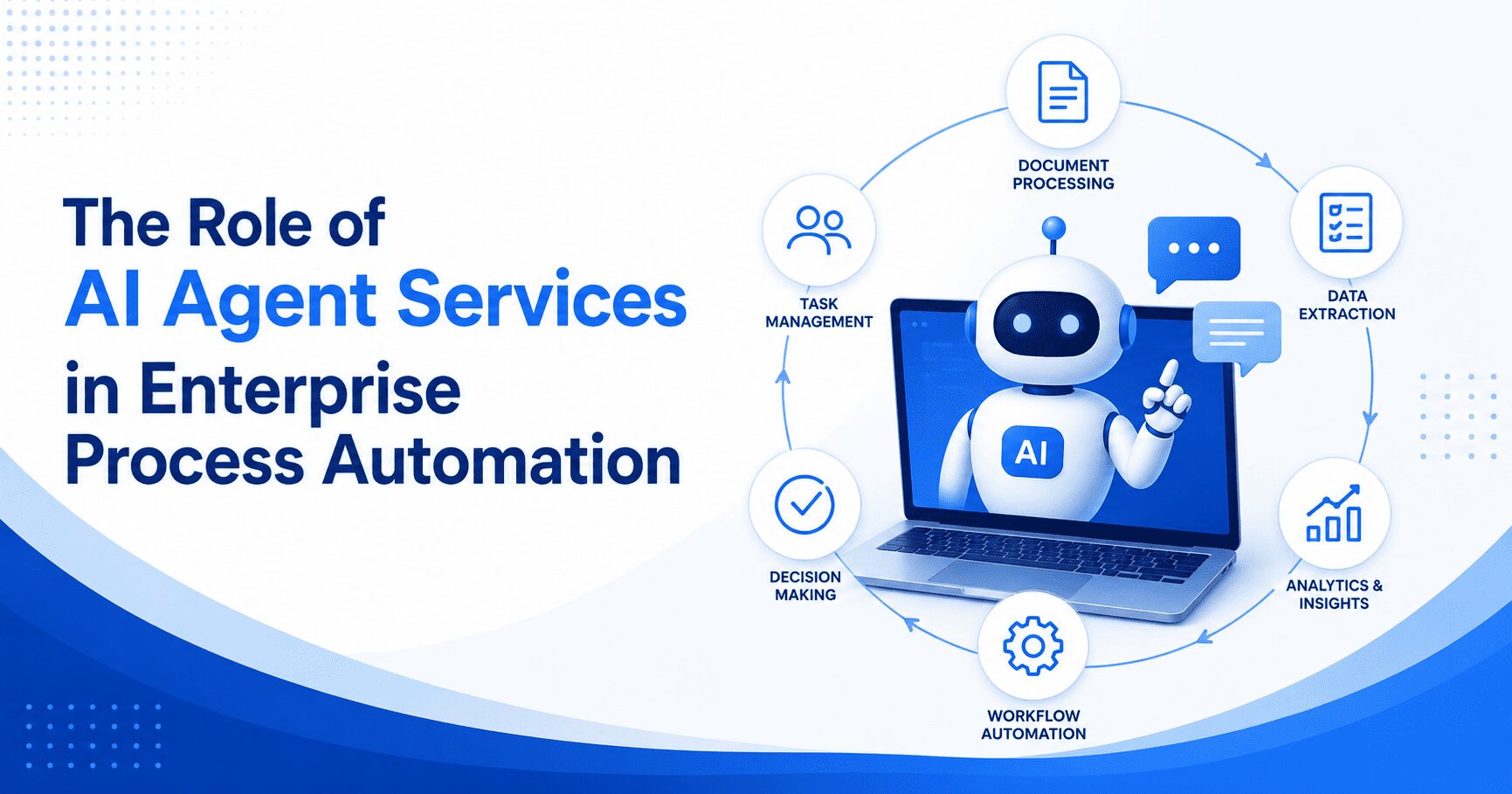
Every business owner has felt it at some point — the frustration of watching skilled employees spend half their day on tasks that don’t need a human brain at all. Data entry, follow-up calls, ticket routing, invoice checks, lead qualification — these jobs eat hours but rarely demand judgment. That gap between “work that must get done” and “work that deserves human attention” is exactly where AI agents have started to make their mark. Unlike older automation tools that simply followed fixed rules, today’s AI agents can perceive context, make decisions, and act across systems without constant human steering. For enterprises trying to do more with leaner teams, this isn’t a nice-to-have anymore — it’s becoming the backbone of how serious automation gets built.
Why Traditional Automation Falls Short Today
Most companies already use some form of automation — workflow software, RPA bots, scheduled scripts. The problem is that these tools were built for a world of predictable, structured tasks. The moment a process involves judgment, unstructured data, or a slight deviation from the expected pattern, traditional automation breaks down and someone has to step in manually. That’s a serious limitation when customer queries, sales conversations, and operational decisions rarely follow a clean script. AI agents close this gap because they’re built to reason, adapt, and handle ambiguity the way a trained employee would, just at a much larger scale and without fatigue.
- Rule-based bots fail the instant input format changes slightly
- RPA tools can’t interpret intent — they only execute fixed steps
- Legacy automation needs constant reprogramming as business rules evolve
- None of these older tools can hold context across a multi-step interaction
What Makes AI Agents Different From Regular Automation Tools
An AI agent isn’t just a chatbot with a better script. It’s a system that can understand a goal, break it into steps, pull data from multiple sources, make a decision, and take action — often correcting itself along the way if something doesn’t go as expected. This is why so many enterprises are now partnering with a dedicated AI agent development company rather than trying to bolt AI features onto outdated systems. Building agents that genuinely understand business context requires deep expertise in language models, integration architecture, and workflow design, and that’s not something an in-house team can usually assemble overnight.
- Agents can plan multi-step actions instead of just reacting to one trigger
- They pull live data from CRMs, ERPs, and internal databases to make informed decisions
- They learn from outcomes and improve performance over repeated cycles
- They can hand off to a human only when truly necessary, instead of constantly escalating
Where Enterprises Are Actually Deploying AI Agents
The use cases aren’t theoretical anymore — they’re running inside real businesses right now, quietly handling work that used to consume entire departments. Finance teams use agents to reconcile invoices and flag anomalies before they become costly errors. HR teams use them to screen resumes and schedule interviews without a recruiter touching a calendar. Operations teams use them to monitor supply chains and trigger reorders automatically. What ties all of this together is that these aren’t isolated scripts — they’re part of a broader automation layer that connects departments instead of leaving them siloed.
- Customer support: agents resolve common queries and escalate only complex cases
- Finance: automated reconciliation, fraud flagging, and expense approvals
- HR: resume screening, interview scheduling, and onboarding document checks
- Supply chain: demand forecasting and automatic reorder triggers
- IT: ticket triage, password resets, and system health monitoring
The Voice Channel Is Becoming a Major Automation Frontier
Text-based automation gets most of the attention, but voice is where a lot of untapped efficiency still sits. Phone calls remain the backbone of customer service, appointment booking, and even debt collection for many industries, and most of that volume still runs through human agents reading scripts. This is exactly the gap that AI Voice Agent Development is built to close — creating agents that can hold natural phone conversations, understand accents and interruptions, and complete transactional tasks like booking, verification, or order updates without sounding robotic. For businesses running high call volumes, this single capability often delivers the fastest visible return because it directly reduces staffing pressure on call centers.
- Voice agents can handle appointment booking and rescheduling at any hour
- They reduce wait times by managing simple queries without queuing customers for a human
- They can verify customer identity and pull account details mid-call
- They integrate with existing telephony systems instead of requiring a full switch-over
Sales Teams Are Quietly Becoming the Biggest Beneficiaries
Sales is one of the areas where AI agents are proving their value the fastest, mostly because so much of the sales process is repetitive even though it looks personal on the surface. Lead qualification, follow-up emails, meeting scheduling, and even initial discovery conversations can now be handled by agents trained specifically for revenue workflows. This is the space AI Sales Agent Development focuses on — building agents that don’t just send templated emails but actually qualify leads based on real signals, personalize outreach, and pass only genuinely warm prospects to human reps. The result isn’t replacing salespeople; it’s giving them more time to focus on actual closing conversations instead of administrative back-and-forth.
- Agents qualify leads using behavioral and firmographic data, not just form fills
- They personalize outreach sequences instead of sending generic blasts
- They schedule meetings directly on a rep’s calendar without manual coordination
- They flag deal risk by monitoring response patterns and engagement drop-offs
Why Enterprises Choose to Build Custom Agents Instead of Buying Off-the-Shelf Tools
Off-the-shelf SaaS tools promise quick automation, but most enterprises eventually hit a wall — the tool doesn’t fit their specific workflow, their data structure, or their compliance requirements. This is usually the point where companies start exploring AI agent development services that build agents tailored to their exact stack rather than forcing their business to adapt to someone else’s template. A custom-built agent can plug into proprietary systems, follow internal policies precisely, and scale in directions that a generic tool was never designed to handle. It’s a bigger upfront investment, but it avoids the slow bleed of workarounds and manual patches that off-the-shelf tools eventually demand.
- Custom agents integrate with legacy systems that SaaS tools often can’t touch
- They follow specific compliance and data-handling rules unique to the industry
- They scale horizontally across departments instead of being locked to one use case
- They avoid recurring per-seat licensing costs that balloon as usage grows
Building the Right Team or Partner for Agent Development
None of this works without the right technical foundation, and that’s where many businesses underestimate the effort involved. Designing an agent that reasons reliably, integrates securely, and behaves predictably in production requires a mix of skills — prompt engineering, backend integration, data pipeline design, and ongoing monitoring. Some enterprises choose to Hire AI Agent Developers directly to build and maintain this in-house, especially if AI is becoming central to their long-term product or operations strategy. Others prefer to work with an external partner for the initial build and transition to in-house maintenance later. Either path works, but the decision should be based on how central AI agents are expected to be to the business, not just short-term cost comparisons.
- In-house teams offer tighter control and faster iteration on internal feedback
- External developers bring broader pattern recognition from cross-industry projects
- A hybrid model — external build, internal maintenance — works well for many mid-size firms
- Team structure should match how deeply agents will be embedded into core operations
Common Mistakes Businesses Make When Adopting AI Agents
Even well-funded automation projects stumble when companies treat AI agents like a plug-and-play upgrade rather than a system that needs proper planning. The most common failure isn’t technical — it’s organizational. Teams skip mapping their actual workflow before building the agent, assume the first version will be perfect, or fail to define what “success” even looks like before deployment. These mistakes are avoidable, but only if leadership treats agent rollout as a process rather than a one-time purchase.
- Deploying agents without clearly mapped workflows or defined success metrics
- Expecting zero human oversight from day one instead of a gradual handoff
- Ignoring data quality issues that quietly sabotage agent decision-making
- Underestimating the testing period needed before full production rollout
What This Means for the Next Few Years
The direction is fairly clear at this point — agentic automation is moving from an experimental layer to a core part of enterprise infrastructure. Businesses that build this capability early will have a structural advantage: lower operating costs, faster response times, and teams freed up for higher-value work. Those that wait will likely face a harder catch-up later, both technically and competitively, as agent-driven workflows become the expected baseline rather than a differentiator. The smartest move for most business owners right now isn’t to automate everything at once, but to pick one high-friction process, build a working agent around it, and expand from there once the value is proven internally.
Enterprise automation has always evolved in waves — first scripts, then RPA, now agents that can actually think through a task. The businesses that treat this wave seriously, rather than as a passing trend, are the ones quietly pulling ahead on cost, speed, and customer experience.


 Joanne Duffy
 Ritai bioreactor